
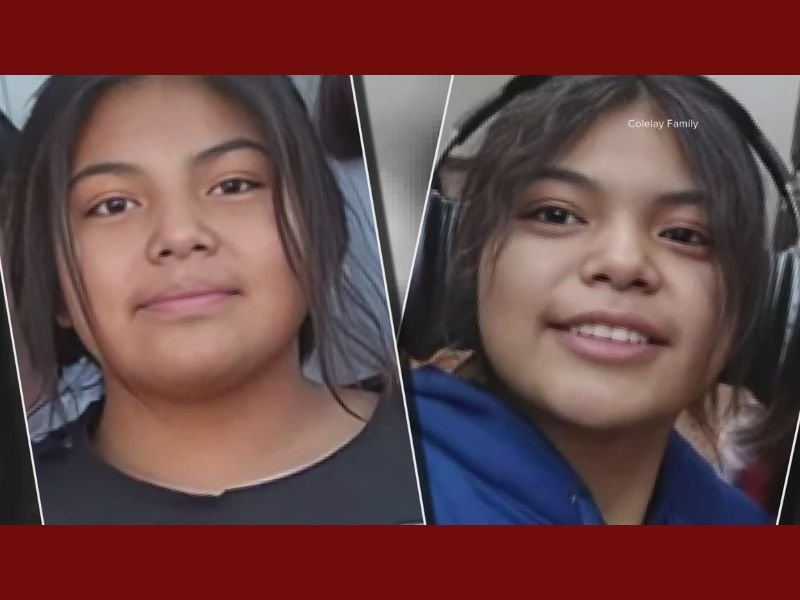
Remains of Missing Arizona Teen Challistia “Tia” Colelay Identified After Weeks-Long Search Near Whiteriver
WHITERIVER, Ariz. — The search for 16-year-old Challistia “Tia” Colelay, a White Mountain Apache teen who had been missing since October 27, ended in heartbreak after authorities confirmed that human remains found near the Knots Landing area in Whiteriver earlier this month belong to her. Officials have now launched a criminal investigation into her death, bringing together multiple law enforcement and tribal agencies.
Authorities Confirm Identification of Teen’s Remains
According to the Navajo County Sheriff’s Office, Colelay’s remains were discovered near the Knots Landing area in early November. Forensic teams confirmed her identity days later, ending weeks of uncertainty for her family and community.
Police have classified the case as a criminal investigation, with officers from tribal police, federal agents, Arizona game rangers, and Navajo County Search & Rescue actively combing the area for additional evidence. Authorities have urged residents to stay clear of the search zone so that investigative teams can continue their work safely and without interference.
“This is a devastating outcome,” said one investigator close to the case. “Our focus now is on finding out what happened to Tia and ensuring justice for her and her family.”
Questions Raised Over Missing Alert System
One of the most troubling aspects of the case is that no Turquoise Alert — Arizona’s system designed to help locate missing Indigenous individuals — was ever issued for Tia after her disappearance.
The Bureau of Indian Affairs (BIA) has directed questions back to tribal police as to why the alert wasn’t activated, despite Tia’s disappearance meeting several qualifying criteria. Advocates for missing Indigenous people say the lack of an alert may have slowed community awareness during crucial early search days.
“This is exactly why the Turquoise Alert system exists — to help find missing Native youth,” said a local advocate for Indigenous safety. “Every hour counts in these cases. There has to be accountability.”
Family and Community Devastated
Tia’s family shared that she would have turned 17 years old on December 1. Instead of planning a celebration, they are now organizing a candlelight vigil and balloon release in her honor.
Her sister described Tia as “the youngest of 12 siblings,” a fun-loving, artistic, and outgoing girl who loved being outdoors with her family.
“She was always smiling, always laughing,” her sister said. “She loved painting, music, and being outside. She didn’t deserve this.”
The family has since launched a GoFundMe campaign to help cover funeral expenses and other costs as the investigation continues. Community members across the White Mountain Apache Tribe have offered prayers, food, and donations in support.
Investigation Ongoing as Agencies Coordinate Efforts
Authorities say several agencies — including the FBI, Navajo County Sheriff’s Office, and tribal police — are working together to piece together Tia’s final movements and determine how she ended up in the remote area where her body was found.
Investigators have not released any details about a possible suspect or cause of death, citing the ongoing nature of the case. However, they confirmed that evidence collected from the site is being analyzed at a federal crime lab.
“Every lead is being followed,” said a spokesperson for the Navajo County Sheriff’s Office. “We are treating this as a criminal case until proven otherwise.”
Residents of Whiteriver have been asked to report any suspicious activity or information that may help investigators.
A Broader Crisis: Missing Indigenous Women and Girls
Tia’s death adds to a growing crisis of missing and murdered Indigenous women and girls (MMIWG) across the U.S. According to the Urban Indian Health Institute, Indigenous women are murdered at rates more than 10 times the national average in some regions — yet many cases go underreported or unresolved due to jurisdictional gaps and lack of coordination among agencies.
Advocates say Tia’s case is another painful example of systemic neglect.
“When alerts aren’t issued and investigations are delayed, families lose precious time,” said an MMIWG activist. “Tia’s story deserves national attention — and change must follow.”
Community Plans Candlelight Vigil
A candlelight vigil will be held on December 1, the day Tia would have turned 17. Family and friends plan to gather at sunset to release balloons and share memories of her life.
Organizers say the vigil will also serve as a call for stronger protections and faster response systems for missing Indigenous youth.
“We want justice for Tia,” said one community member. “But we also want to make sure this never happens to another Native girl again.”
Anyone with information about the case is urged to contact the Navajo County Sheriff’s Office or the White Mountain Apache Police Department.
What do you think — should states enforce mandatory alerts for all missing Indigenous minors to prevent cases like this from falling through the cracks? Share your thoughts and join the conversation at NapervilleLocal.com.

Naperville is a community with stories that deserve to be told — both the serious ones about safety and justice, and the lighter ones that capture our culture and daily life. I focus on covering crime reports and court updates while also highlighting the traditions, events, and social trends that shape who we are. Through my reporting, I want to give readers a fuller picture of Naperville — the challenges we face and the character that keeps our city strong.