
California Power Outage Leaves Driverless Waymo Cars Frozen in San Francisco Intersections, Creating Widespread Traffic Gridlock
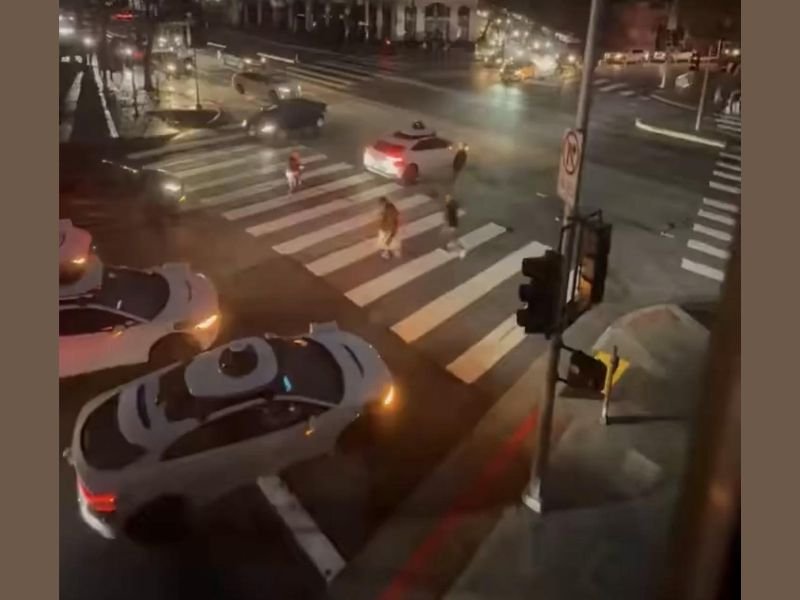
San Francisco, California — A large-scale power outage across San Francisco caused an unusual traffic disruption this week when dozens of autonomous Waymo vehicles froze in intersections after traffic lights went dark. Without functioning signals to guide them, the driverless cars switched into safety mode and stopped abruptly, leaving several intersections partially blocked and adding to the city’s already heavy nighttime traffic.
Why the Waymo Vehicles Stopped During the Blackout
The outage disabled numerous traffic lights at the same time, removing a major data point that autonomous systems rely on. Although Waymo vehicles use lidar, cameras, mapping, and environmental sensors, traffic signal information remains a central element of their decision-making. When the cars detected inconsistent or missing data, they defaulted to a complete stop, a programmed precaution to avoid collisions.
Video from the scene shows vehicles stuck mid-turn, some halted directly in crosswalks, and others frozen in the center of active lanes. With no human operator inside to override the system, the vehicles stayed motionless, effectively becoming obstacles in intersections that were already difficult to navigate due to the blackout.
Traffic Impact Across San Francisco Neighborhoods
The sudden paralysis of multiple driverless cars created immediate traffic backups. Pedestrians were forced to weave around stalled vehicles, while human drivers attempted to maneuver through intersections without traffic signals or predictable flow. Several major streets quickly descended into gridlock as cars backed up in every direction.
Although no injuries were reported, the situation highlighted how autonomous fleets can unintentionally complicate emergency conditions, especially when infrastructure failures occur across large sections of a city. In this case, the blackout turned a normally manageable street network into a confusing mix of stalled vehicles and uncontrolled intersections.
What This Incident Means for the Future of Autonomous Vehicles
San Francisco has long been a testing ground for self-driving technology, but this incident renewed questions about whether autonomous systems are prepared for widespread deployment in dense urban areas. Critics argue that companies must develop more resilient failover protocols, while supporters maintain that moments like these simply identify areas for improvement.
Transportation officials and engineers are expected to review the outage and assess whether additional safeguards or updated software behaviors are needed to prevent similar disruptions. As cities adopt more autonomous fleets, the ability of driverless cars to respond effectively during power failures will remain a central issue.
For continuing coverage of major technology incidents, transportation developments, and safety updates affecting communities, visit NapervilleLocal.com for the latest reports.
I’ve lived in Naperville long enough to see how quickly our community changes — from new developments downtown to sudden shifts in our Midwest weather. Reporting on Naperville news and daily forecasts gives me the chance to keep neighbors informed about what really matters. My goal is simple: deliver clear, timely updates so you always know what’s happening in our city and what to expect from the skies above.