
Massive Bomb Cyclone Intensifies Over the Great Lakes and Michigan Region, Bringing Heavy Snow, High Winds, and Blizzard Potential Across the Midwest
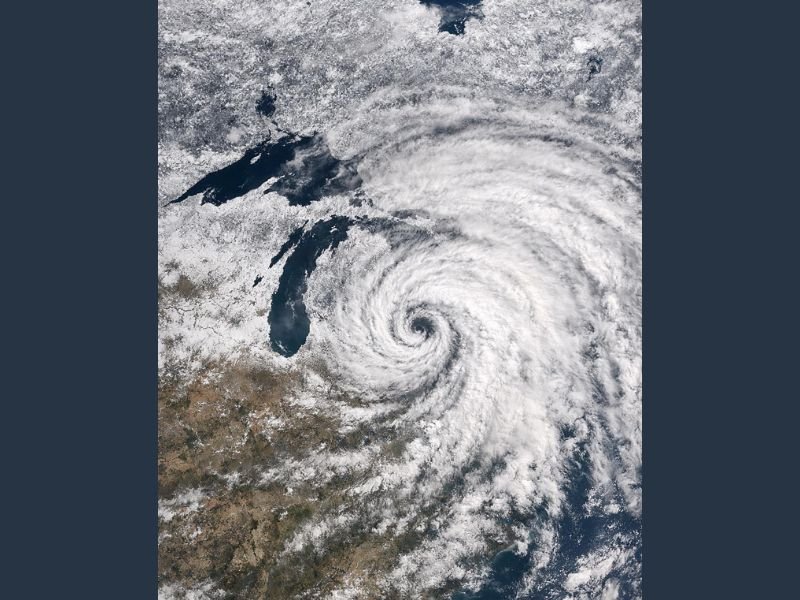
MICHIGAN — A rapidly intensifying bomb cyclone is strengthening over the Great Lakes and Michigan region, producing massive cloud bands visible even from the International Space Station and driving dangerous winter conditions across several states. The storm’s deepening low-pressure center is sending powerful bands of snow and wind spiraling around its core, a classic hallmark of a high-impact mid-latitude cyclone.
Forecasters warn that Winter Storm Ezra is now generating heavy snow, damaging wind gusts, and the potential for blizzard conditions across parts of the Midwest. The strengthening system poses significant risks for travel, infrastructure, and power reliability as it continues to evolve.
Rapid Deepening Signals One of the Strongest Systems of the Season
Meteorologists classify a storm as a “bomb cyclone” when surface pressure drops rapidly within 24 hours, intensifying wind fields and expanding the storm’s reach. Satellite imagery shows a pronounced spiral formation indicating strong atmospheric dynamics at play.
The storm’s large and tightly wound cloud structure, captured clearly from space, reflects the explosive deepening occurring over the Great Lakes. This strengthening process often leads to widespread impacts, especially when combined with Arctic air and moisture wrapping into the system.
Snowfall has begun increasing in intensity across northern Illinois, Michigan, Wisconsin, and surrounding areas as the storm strengthens further.
Midwest Facing Heavy Snow, Damaging Winds, and Blizzard Risk
Winter Storm Ezra is pushing bands of heavy snow through the Midwest, with some regions expected to experience whiteout conditions. The combination of strong winds and steady snowfall may produce blizzard-like conditions even in areas not under official blizzard warnings.
Wind gusts associated with the cyclone could reach damaging levels, with forecasters noting the potential for tree damage, scattered power outages, and hazardous travel. Drifting snow is likely across rural corridors, especially where winds funnel through open fields and over frozen terrain. Authorities urge drivers to avoid unnecessary travel as visibility may drop suddenly along highways, including major stretches near the Great Lakes.
Storm Expands Eastward With Ice and Snow Threat to the Northeast
As the system continues deepening, colder air on its western side is colliding with Atlantic moisture along its northeastern flank. This interaction is expected to produce a mix of snow and ice across parts of Pennsylvania, New York, and New England.
The risk of slick roads, flight delays, and hazardous conditions increases sharply as the storm pushes eastward. Travel disruptions may expand into major metropolitan areas depending on the storm’s exact path over the next 12 to 24 hours.
Even a slight southeastward shift could place millions from Pennsylvania through Virginia within reach of blizzard conditions and damaging wind impacts.
Track Uncertainty Could Lead to Major Differences in Impact Zones
Meteorologists emphasize that small changes in the cyclone’s track could dramatically shift impact areas. A southeast deviation would bring heavier snow and stronger winds into the mid-Atlantic region, while a more northern track would focus the strongest effects on Michigan and the central Great Lakes.
Residents across the Midwest and Northeast are urged to monitor forecast updates closely. Given the scale of this storm, impacts to power grids, road networks, and air travel may be widespread regardless of the final trajectory.
As Winter Storm Ezra continues to intensify, NapervilleLocal.com will track new forecasts, regional alerts, and local impacts throughout the storm’s evolution. Check back for continuing updates as this powerful system moves across the Great Lakes and into the eastern United States.

I’ve lived in Naperville long enough to see how quickly our community changes — from new developments downtown to sudden shifts in our Midwest weather. Reporting on Naperville news and daily forecasts gives me the chance to keep neighbors informed about what really matters. My goal is simple: deliver clear, timely updates so you always know what’s happening in our city and what to expect from the skies above.