
United States Will See 13 Full Moons in 2026 Including a Rare Blue Moon and Three Supermoons
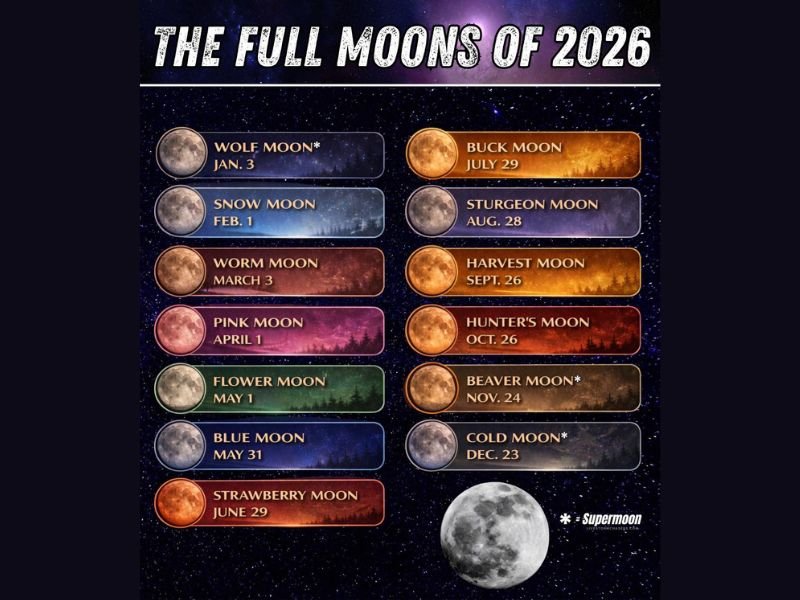
UNITED STATES – Astronomical data for 2026 shows that skywatchers across the country will experience 13 full moons throughout the year, an above-average total that includes two full moons in May, making the second one a Blue Moon, along with three Supermoons when the moon appears larger and brighter than usual.
The calendar confirms that full moons will occur in every month, with several carrying traditional seasonal names tied to agriculture, wildlife, and historical observation patterns.
Full Moon Breakdown for 2026 by Month
The year begins with the Wolf Moon on January 3, followed by the Snow Moon on February 1 and the Worm Moon on March 3, marking the seasonal transition toward spring. April 1 brings the Pink Moon, a name linked to early spring blooms.
May stands out astronomically with two full moons. The Flower Moon occurs on May 1, followed by the Blue Moon on May 31, a rare event that happens when two full moons fall within the same calendar month. Summer features the Strawberry Moon on June 29, the Buck Moon on July 29, and the Sturgeon Moon on August 28, traditionally associated with peak fishing seasons.
Fall full moons include the Harvest Moon on September 26 and the Hunter’s Moon on October 26, historically used to track crop harvesting and hunting cycles. The year concludes with the Beaver Moon on November 24 and the Cold Moon on December 23.
Supermoons Will Make Several Full Moons Appear Larger and Brighter
The data also indicates that three of the 2026 full moons will be Supermoons, meaning the moon will be at or near its closest point to Earth during its full phase. These events cause the moon to appear noticeably larger and brighter in the night sky, especially when rising or setting near the horizon. The first Supermoon occurs early in the year, with additional Supermoons appearing later in the calendar, offering multiple opportunities for enhanced sky viewing across the United States.
Why 2026 Is Notable for Moon Watchers
Having 13 full moons in a single year, combined with a Blue Moon and multiple Supermoons, makes 2026 an especially active year for lunar observation. These events are visible nationwide, weather permitting, and do not require special equipment to enjoy. Astronomy experts note that years like this often generate increased public interest due to the rarity of dual full moons in a single month and the visual impact of Supermoons.
Residents across the United States can expect multiple standout nights for stargazing, photography, and educational events tied to these lunar phases. For more astronomy updates, seasonal calendars, and community-focused coverage, continue following NapervilleLocal.com.

I’ve lived in Naperville long enough to see how quickly our community changes — from new developments downtown to sudden shifts in our Midwest weather. Reporting on Naperville news and daily forecasts gives me the chance to keep neighbors informed about what really matters. My goal is simple: deliver clear, timely updates so you always know what’s happening in our city and what to expect from the skies above.