
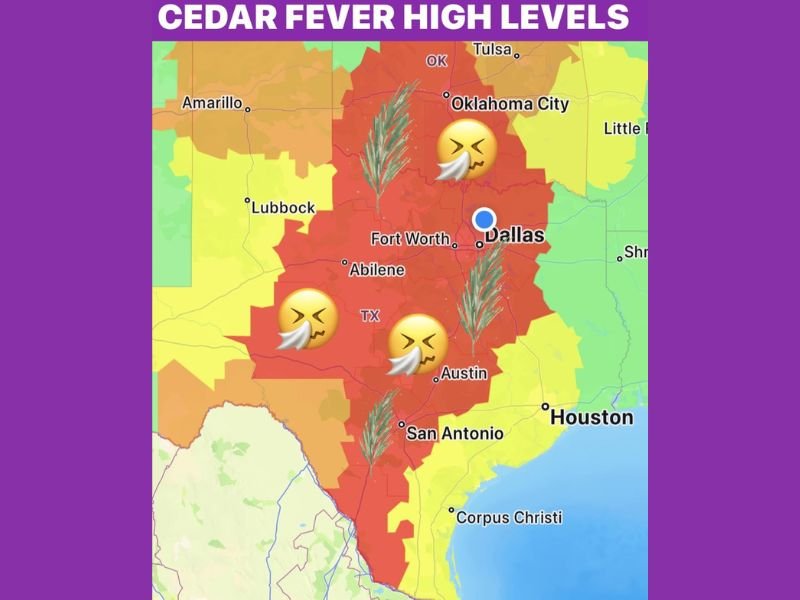
Texas and Oklahoma Cedar Fever Surge Worsens as Strong Winds Spread High Juniper Pollen From San Antonio to Oklahoma City
Texas — Allergy sufferers across Texas and southern Oklahoma are facing a prolonged stretch of severe cedar fever, as cedar juniper pollen levels remain very high from San Antonio and Austin through Dallas–Fort Worth and north into Oklahoma City. Gusty winds reaching up to 35 miles per hour are intensifying the situation, allowing fine, powdery pollen to spread across hundreds of miles and linger in the air far longer than usual.
Health experts and meteorologists say this is shaping up to be one of the worst cedar seasons in recent years, with little immediate relief in sight for millions of residents.
Why Cedar Fever Levels Are So High Right Now
Cedar fever is driven primarily by juniper trees, which release pollen during winter months. This pollen is extremely fine and lightweight, making it easy for strong winds to lift and transport it over long distances.
Recent weather patterns have created ideal conditions for pollen spread. Persistent dry air combined with repeated wind events has kept pollen airborne instead of allowing it to settle. Each new wind surge effectively recycles pollen already in the atmosphere, extending exposure even in areas far from the original source trees.
Meteorologists note that gusty north and northwest winds are playing a major role, mixing the atmosphere and spreading pollen across central Texas and into parts of Oklahoma.
Areas Experiencing the Worst Impacts
According to the latest pollen outlook, the highest cedar fever concentrations are affecting a broad corridor that includes:
- San Antonio and Austin
- Abilene and Fort Worth
- Dallas–Fort Worth Metroplex
- Central and northern Texas
- Southern Oklahoma, including Oklahoma City
Maps show a large zone of red-level pollen concentrations, indicating conditions that can trigger severe allergy symptoms even in people who are not usually sensitive.
Day-by-Day Cedar Fever Outlook
Forecasters expect little improvement through most of the upcoming week, with pollen levels remaining elevated for several consecutive days.
- Saturday: Very high levels
- Sunday: High levels
- Monday: High levels
- Tuesday: High levels
- Wednesday: High levels
- Thursday: High levels
- Friday: Medium levels possible, depending on wind trends
Experts caution that even a drop from “very high” to “high” still represents significant exposure, especially for those with asthma, sinus conditions, or chronic allergies.
Symptoms Residents Are Reporting
Cedar fever symptoms often feel more intense than typical seasonal allergies. Residents across Texas and Oklahoma are reporting:
- Severe nasal congestion
- Persistent sneezing
- Watery or burning eyes
- Sinus pressure and headaches
- Fatigue and body aches
- Worsening asthma symptoms
Doctors emphasize that cedar fever does not cause an actual fever, but the body’s immune response can create flu-like discomfort.
Why This Season Feels Worse Than Normal
Meteorologists say this season stands out because wind events have been frequent and sustained, leaving little time for pollen levels to drop. In wetter winters, rain can help wash pollen out of the air. This year, dry stretches have allowed pollen to accumulate, compounding exposure day after day.
Additionally, juniper pollen production can vary year to year, and current indicators suggest higher-than-average pollen output across parts of central Texas.
What Residents Can Do to Reduce Exposure
While avoiding pollen entirely is impossible during peak cedar season, health experts recommend several steps to limit symptoms:
- Keep windows closed, especially on windy days
- Use high-efficiency air filters indoors
- Shower and change clothes after being outdoors
- Avoid outdoor exercise during peak wind hours
- Follow allergy medication plans as directed by healthcare providers
Residents with asthma or severe reactions are urged to monitor symptoms closely and seek medical advice if breathing issues worsen.
When Relief Might Arrive
Long-term relief typically arrives when winds weaken and moisture increases, allowing pollen to settle. Some improvement may occur later in the month if a more active storm pattern develops, but until then, experts warn that cedar fever will remain a daily challenge across much of Texas and southern Oklahoma.
Why This Matters Beyond the Region
While cedar fever is concentrated in the southern Plains, large pollen plumes can sometimes reach neighboring states, and the broader pattern highlights how weather conditions directly impact public health. Understanding these trends helps communities prepare for future seasons that may become more intense as climate patterns shift.
For continued updates on weather-driven health impacts and regional environmental conditions, visit NapervilleLocal.com, where we break down complex weather stories and explain what they mean for everyday life.

I’ve lived in Naperville long enough to see how quickly our community changes — from new developments downtown to sudden shifts in our Midwest weather. Reporting on Naperville news and daily forecasts gives me the chance to keep neighbors informed about what really matters. My goal is simple: deliver clear, timely updates so you always know what’s happening in our city and what to expect from the skies above.