
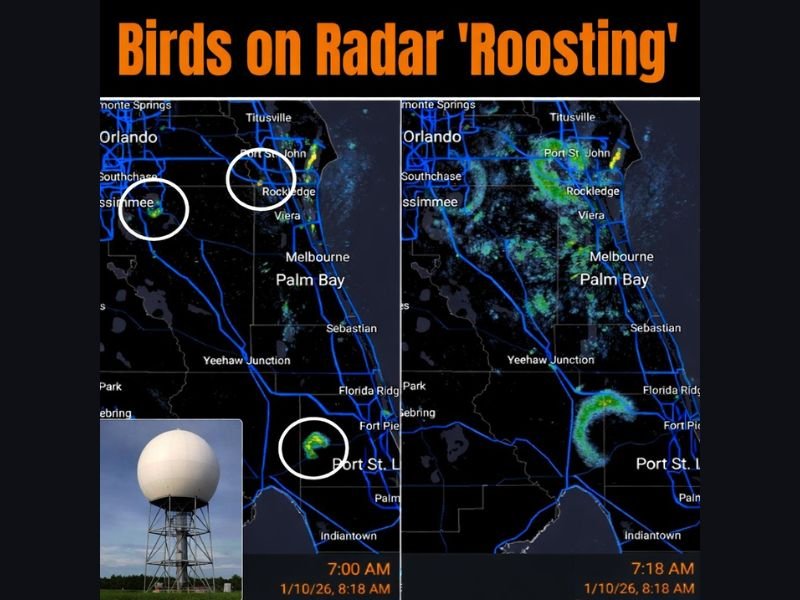
Florida Morning Radar Captures Rare “Roost Ring” Bird Activity as Thousands Take Flight at Sunrise
Florida — Early Saturday morning radar imagery across parts of central and eastern Florida captured a striking and often misunderstood phenomenon as large flocks of birds took off from communal roosting sites shortly after sunrise, producing expanding circular patterns on Doppler radar known as “roost rings.” The activity began around 7 a.m. Eastern Time and unfolded over the next 15 to 20 minutes, drawing attention from meteorologists and radar watchers alike.
The radar signatures were first visible as small, concentrated echoes in multiple locations before rapidly expanding outward into doughnut-shaped rings, a classic sign of biological activity rather than precipitation.
What Created the Unusual Radar Patterns
These radar returns were caused by thousands of birds lifting off simultaneously from overnight roosting areas to begin their morning search for food. As the birds gain altitude and spread out, Doppler radar detects them as reflectivity echoes, creating the appearance of a growing ring that gradually fades.
This phenomenon is most commonly seen around sunrise, when birds depart roosts en masse. The patterns are especially visible on radar when no rain or storms are present, allowing biological signals to stand out clearly. Meteorologists explain that these echoes are not weather-related, even though they can look similar to light rain or developing showers to the untrained eye.
Where the Roost Rings Were Observed
The radar imagery shows roost rings forming near and around:
- Orlando
- Rockledge
- Port St. Lucie
- Palm Bay
- Melbourne
- Viera
Each location displayed a similar progression, with tight radar returns expanding outward as birds dispersed across the region. Over time, the rings weakened as the birds spread farther apart or climbed above the radar’s most sensitive detection range.
Why This Happens More Often in Florida
Florida is particularly well known for roost ring activity due to its large bird populations, favorable climate, and frequent presence of species that roost communally. During parts of the year, especially migration seasons, radar can detect:
- Purple martins
- Blackbirds
- Swallows
- Mixed migratory flocks
The flat terrain and coastal environment also enhance radar visibility of biological targets.
Why Bird Activity Appears on Weather Radar
Doppler radar is designed to detect objects in the atmosphere, not just rain or snow. When conditions are dry, the radar beam can pick up:
- Birds
- Insects
- Bats
- Even large concentrations of pollen
In this case, the absence of precipitation allowed the biological echoes to stand out clearly, making the roost rings easy to identify and track.
Why These Radar Images Matter
Beyond being visually impressive, roost rings provide scientists with valuable insight into bird movement patterns, population behavior, and migration timing. Radar has become an important tool in avian research, helping track large-scale movements that are otherwise difficult to observe.
For weather forecasters, recognizing roost rings is also essential to avoid misinterpreting biological activity as developing weather, especially during quiet early morning hours.
Could This Be Seen Elsewhere
While this event was observed in Florida, roost rings can appear in many parts of the country, including the Midwest, during peak migration or summer months. Similar patterns have occasionally been detected near Chicago and northern Illinois, particularly during late spring and summer mornings when bird activity is highest.
The Bottom Line
What appeared on radar as expanding rings Saturday morning was not rain, storms, or atmospheric disturbance, but a natural and fascinating display of wildlife behavior unfolding in real time. These moments offer a reminder that weather radar also captures the rhythm of life in the atmosphere, not just storms.
For more science-based explanations of unusual radar images, weather phenomena, and natural events across the country, continue following NapervilleLocal.com, where we break down what you’re seeing and why it matters.

I’ve lived in Naperville long enough to see how quickly our community changes — from new developments downtown to sudden shifts in our Midwest weather. Reporting on Naperville news and daily forecasts gives me the chance to keep neighbors informed about what really matters. My goal is simple: deliver clear, timely updates so you always know what’s happening in our city and what to expect from the skies above.