
Nearly 900,000 Without Power as Winter Storm Triggers Widespread Blackouts Across the Southern and Eastern United States
UNITED STATES — A powerful winter storm continues to strain the nation’s power grid, leaving nearly 900,000 homes and businesses without electricity as outages spread across a broad swath of the Southern and Eastern United States, according to the latest nationwide outage estimates.
Data shows the blackout footprint now stretches well over 1,500 miles, affecting multiple regions simultaneously — a sign that utilities are dealing with layered, long-duration grid stress rather than isolated failures.
States Reporting the Highest Power Outages
The hardest-hit areas are concentrated across the South and Southeast, where ice, freezing rain, and plunging temperatures have combined to overwhelm infrastructure.
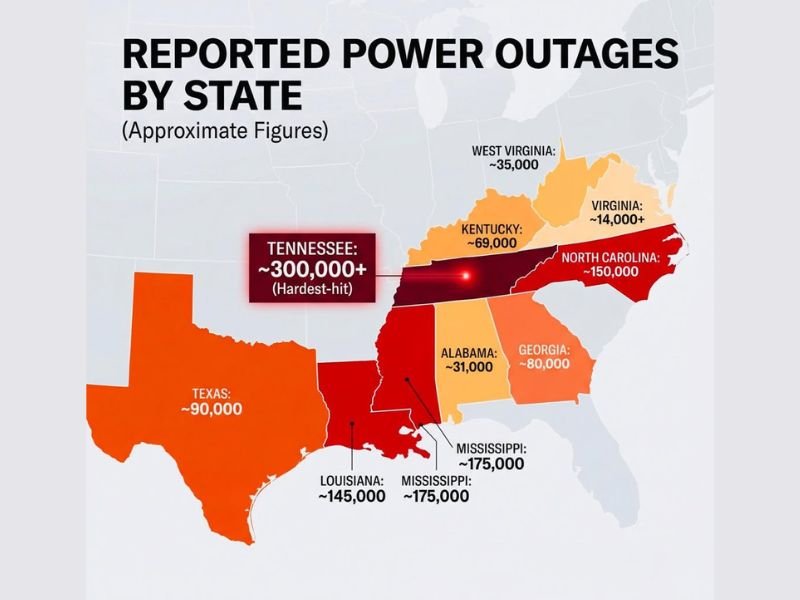
Current approximate outage totals by state include:
- Tennessee: 300,000+ customers without power, making it the hardest-hit state
- Mississippi: 175,000+ outages, with widespread service disruptions
- Louisiana: 145,000+ customers impacted
- North Carolina: 150,000+ outages, particularly in central and western areas
- Georgia: 80,000+ customers without electricity
- Texas: 90,000+ outages, mainly in northern and eastern regions
- Kentucky: 69,000+ customers affected
- West Virginia: 35,000+ outages reported
- Alabama: 31,000+ customers without power
- Virginia: 14,000+ outages
Officials caution these figures are approximate and fluctuating as crews restore power in some locations while new outages emerge elsewhere.
Why This Storm Is Overwhelming the Power Grid
Experts say the scale of these outages reflects multiple weather threats hitting at the same time.
The storm system has delivered ice loading on power lines, extreme cold, strong winds, and sustained high energy demand, creating conditions that not only cause outages but slow restoration efforts. When ice accumulates on lines and trees, even moderate winds can trigger new failures, undoing repair progress.
Additionally, prolonged cold temperatures prevent systems from stabilizing, forcing utilities to juggle emergency repairs while demand remains elevated.
Restoration Challenges and Ongoing Risks
Utility crews are working around the clock, but restoration is being complicated by dangerous working conditions, including icy roads, downed trees, and continued cold. In some regions, crews must wait for conditions to improve before accessing damaged infrastructure safely.
Even areas where power has already been restored could see additional outages, especially overnight when temperatures drop and energy use spikes again.
What Residents Should Be Prepared For
Officials urge residents in affected states to prepare for extended outages, particularly in rural or heavily iced areas. This includes conserving heat, charging devices when possible, checking on vulnerable neighbors, and using generators safely to avoid carbon monoxide exposure.
The situation also highlights broader concerns about grid resilience during large, multi-state winter storms, especially as extreme weather events become more frequent.
For continued updates on how major national weather events can impact local communities, stay connected with NapervilleLocal.com, where we track developing conditions and what they could mean closer to home.

I’ve lived in Naperville long enough to see how quickly our community changes — from new developments downtown to sudden shifts in our Midwest weather. Reporting on Naperville news and daily forecasts gives me the chance to keep neighbors informed about what really matters. My goal is simple: deliver clear, timely updates so you always know what’s happening in our city and what to expect from the skies above.