
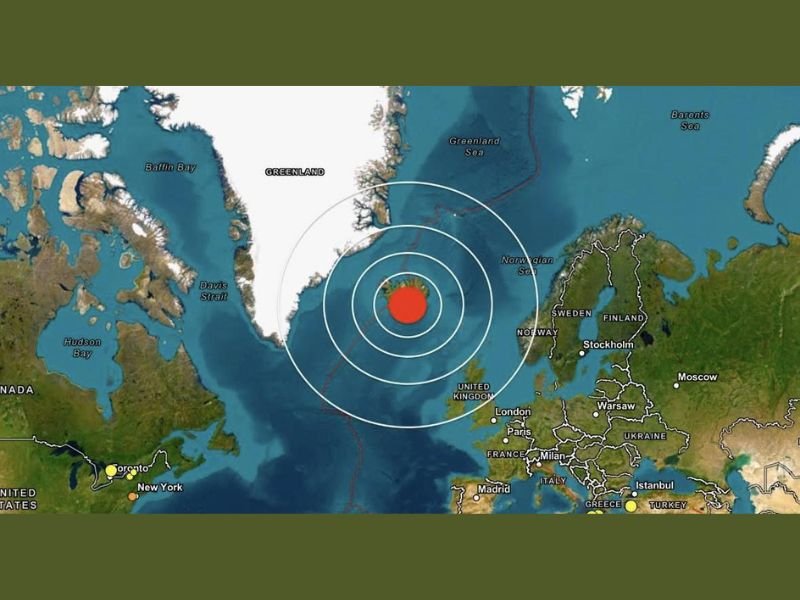
Magnitude 5.3 Shallow Earthquake Hits Central Iceland as the Mid-Atlantic Ridge Releases Built-Up Pressure
CENTRAL ICELAND — A magnitude 5.3 shallow earthquake struck central Iceland, directly along the Mid-Atlantic Ridge, the tectonic boundary where the North American and Eurasian plates are slowly pulling apart.
The quake was shallow enough to be clearly detected and is not being treated as an isolated event. Instead, it fits into a broader and ongoing pattern of tectonic stress release along the spine of the Atlantic Ocean.
Earthquake Occurred Directly on a Major Tectonic Boundary
The Mid-Atlantic Ridge runs straight through Iceland, making the island one of the few places on Earth where a major plate boundary is visible above sea level. The earthquake occurred along this rift zone, where pressure constantly builds as the plates separate — and is periodically released through earthquakes and volcanic activity.
Shallow earthquakes in this region are common indicators of active crustal movement, rather than deep subduction-related quakes seen in other parts of the world.
Why This Event Matters Beyond Iceland
This earthquake is part of the same tectonic system responsible for:
- Volcanic activity across Iceland
- Ongoing ocean-floor spreading in the North Atlantic
- Long-term seismic patterns affecting both sides of the Atlantic basin
Most movement along the Mid-Atlantic Ridge happens far beneath the ocean and out of sight. Events like this one stand out because Iceland sits directly atop the ridge, allowing seismic activity to be felt and measured more clearly.
No Tsunami Threat, But a Sign of Ongoing Activity
Because the quake was moderate in size and occurred along a spreading boundary — not a subduction zone — no tsunami threat is expected. However, scientists closely watch events like this because they can signal continued tectonic adjustments or clusters of future seismic activity in the region. Historically, similar earthquakes have occurred in sequences rather than as one-off events.
What Happens Next
At this time, there are no reports of major damage or injuries, but monitoring will continue for aftershocks or additional movement along nearby fault segments.
Iceland’s location on the Mid-Atlantic Ridge means seismic and volcanic activity are a normal part of the landscape — but every noticeable quake provides valuable insight into how pressure is shifting beneath the Atlantic.
Stay with NapervilleLocal.com for continued coverage of global seismic events, plate-boundary activity, and science-based explanations that put breaking earth movements into clear context.

I’ve lived in Naperville long enough to see how quickly our community changes — from new developments downtown to sudden shifts in our Midwest weather. Reporting on Naperville news and daily forecasts gives me the chance to keep neighbors informed about what really matters. My goal is simple: deliver clear, timely updates so you always know what’s happening in our city and what to expect from the skies above.