
Miami Drops to 35 Degrees Sunday Morning, Colder Than Kodiak Alaska as Arctic Air Surges Deep Into South Florida
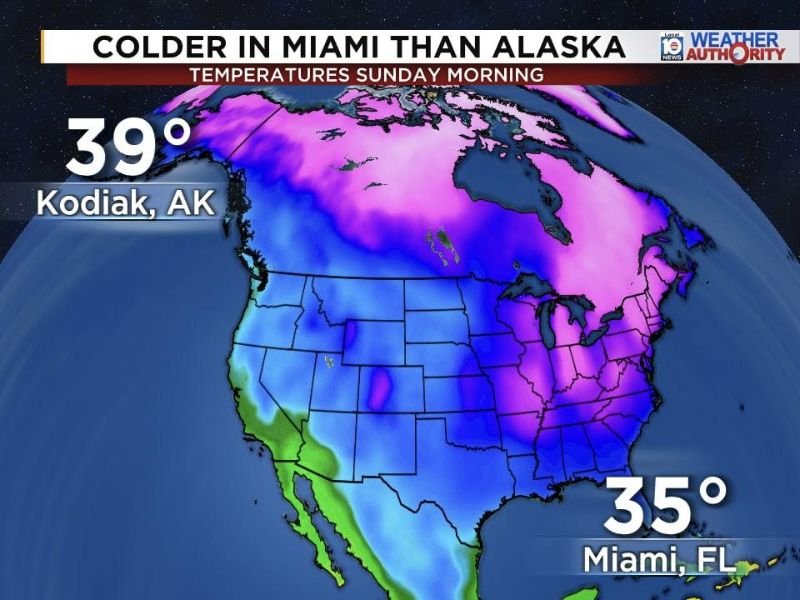
MIAMI, FLORIDA — South Florida woke up to an astonishing temperature contrast Sunday morning as Miami dropped to 35 degrees, officially becoming colder than Kodiak, Alaska, where temperatures were reported at 39 degrees at the same time.
The rare temperature reversal highlights just how far south an Arctic air mass has pushed across the United States, delivering unusually cold conditions into a region far more accustomed to tropical warmth.
Arctic Air Penetrates Deep Into the Florida Peninsula
Weather data shows the cold air plunging directly into South Florida, a highly uncommon setup that allowed overnight temperatures in Miami to fall well below seasonal norms. While northern and interior parts of the country often experience Arctic outbreaks, it is far less typical for such air masses to maintain strength all the way to the southern tip of the Florida peninsula.
The image data confirms Miami’s Sunday morning low of 35°F, a temperature more typical of late winter cold snaps in northern states rather than coastal South Florida.
Miami Colder Than Kodiak Highlights the Unusual Pattern
At the same time Miami reached 35 degrees, Kodiak, Alaska — located along the Gulf of Alaska — reported a warmer temperature of 39 degrees. This stark contrast underscores the unusual distribution of cold air across North America.
Meteorologists note that Alaska can occasionally be milder than the Lower 48 during certain patterns, but seeing Miami colder than Kodiak remains a striking example of how amplified and displaced this Arctic surge has become.
Impacts Felt Across South Florida
Such temperatures raise concerns for cold-sensitive vegetation, outdoor plumbing, and unhoused populations across South Florida. Residents unaccustomed to freezing-adjacent conditions may also face hazards from prolonged exposure, especially during early morning hours.
Although temperatures are expected to rebound later in the day, the event serves as a reminder that even South Florida is not immune to extreme winter intrusions when atmospheric conditions align.
A Rare Weather Moment for the Record Books
Cold mornings in Miami are uncommon, but dropping into the mid-30s — and doing so while Alaska remains warmer — places this event firmly in the category of meteorological oddities. It reflects the broader influence of a powerful Arctic air mass reshaping temperature patterns across the continent.
Have you experienced unusually cold conditions where you live this winter? Share your observations and continue following NapervilleLocal.com for clear, accurate coverage of rare weather events and major temperature swings across the country.

I’ve lived in Naperville long enough to see how quickly our community changes — from new developments downtown to sudden shifts in our Midwest weather. Reporting on Naperville news and daily forecasts gives me the chance to keep neighbors informed about what really matters. My goal is simple: deliver clear, timely updates so you always know what’s happening in our city and what to expect from the skies above.