
Hummingbird Sightings Surge Along Texas, Louisiana, Mississippi, Alabama, and Florida Gulf Coast as Mid-February Migration Begins
UNITED STATES — Mid-February hummingbird sightings are increasing rapidly along the Gulf Coast, stretching from South Texas through Louisiana, Mississippi, Alabama, and across Florida, signaling the early stages of spring migration.
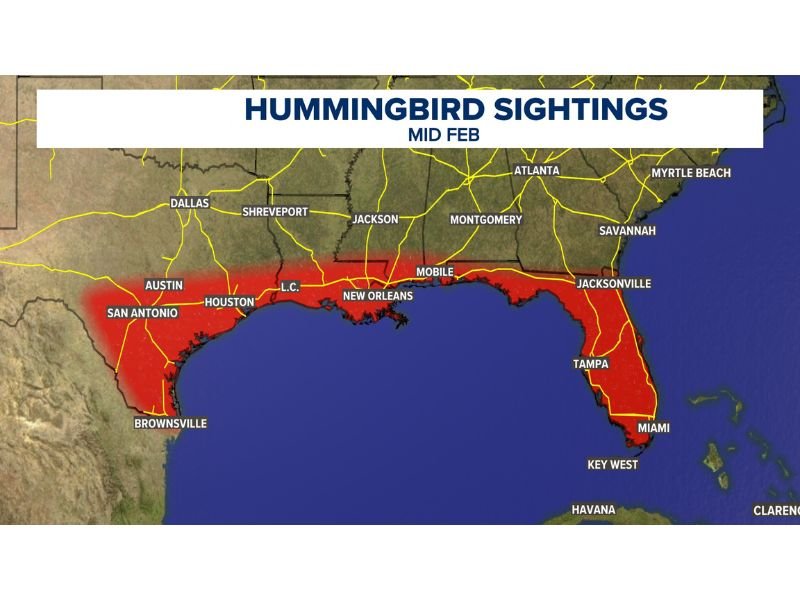
According to the latest regional map, activity is concentrated along coastal communities from Brownsville and San Antonio, Texas, eastward through Houston, New Orleans, and Mobile, then continuing across northern Florida through Jacksonville, Tampa, and Miami.
Gulf Coast Becoming a Migration Hotspot
The highlighted corridor shows a solid band of sightings hugging the Gulf shoreline. Cities currently within the most active zone include:
- Brownsville
- San Antonio
- Austin
- Houston
- New Orleans
- Mobile
- Tampa
- Jacksonville
- Miami
This pattern indicates that hummingbirds have already begun their northward push, using the Gulf Coast as a primary migration pathway.
Mid-February Timing Matches Seasonal Patterns
Mid-February is a typical early window for hummingbirds to reappear along southern coastal states. Warmer temperatures and increasing daylight hours help trigger movement northward.
Experts note that sightings will likely expand inland and northward as March approaches.
Communities farther north — including areas near Atlanta, Montgomery, Jackson, and Shreveport — may begin seeing increased activity in the coming weeks.
What This Means for Birdwatchers
With multiple sightings already confirmed along the coast, residents in Gulf states are encouraged to:
- Put hummingbird feeders back outside
- Refresh nectar regularly
- Monitor local reports for increased activity
The map suggests that migration is already well underway across the southern tier of states.
More Sightings Expected Into March
As the calendar moves closer to spring, the migration zone will gradually shift northward beyond the immediate Gulf shoreline. The current concentration from Texas through Florida marks the first wave of the seasonal return.
For continued updates on wildlife trends and seasonal changes across the United States, follow NapervilleLocal.com for the latest developments.

I’ve lived in Naperville long enough to see how quickly our community changes — from new developments downtown to sudden shifts in our Midwest weather. Reporting on Naperville news and daily forecasts gives me the chance to keep neighbors informed about what really matters. My goal is simple: deliver clear, timely updates so you always know what’s happening in our city and what to expect from the skies above.