
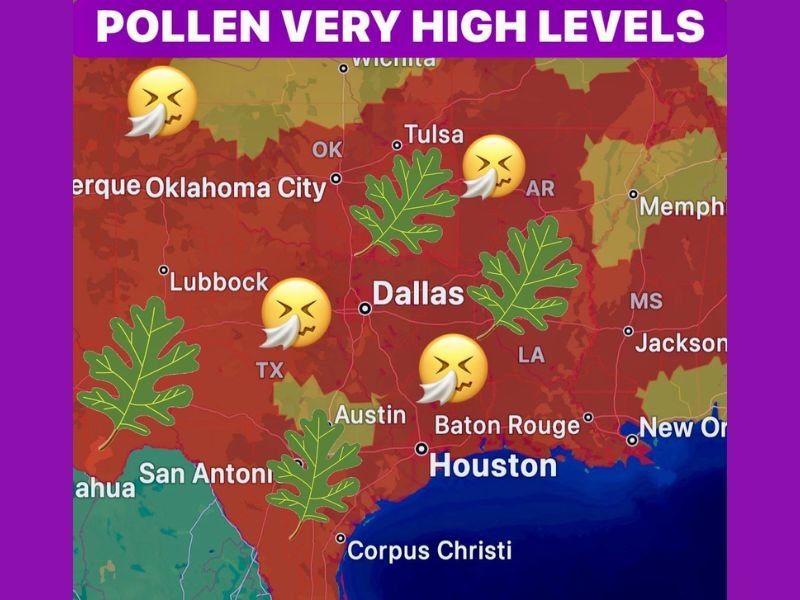
Texas, Oklahoma, Arkansas and Louisiana Hit by Extreme Pollen Surge as Dallas, Houston and San Antonio See Peak Oak and Pine Levels Triggering Allergy Misery
UNITED STATES — A major pollen surge is sweeping across the southern United States, with Texas, Oklahoma, Arkansas, and Louisiana experiencing some of the highest allergy levels of the season as oak and pine pollen peak at the same time.
Health experts warn that conditions are reaching extreme levels, especially across major Texas cities where allergy sufferers are already feeling the impact.
Texas Cities Among Hardest Hit
The most intense pollen concentrations are being reported across Texas, where multiple metro areas are seeing dangerously high counts:
- Dallas: pollen index around 11.3 (extremely high)
- San Antonio: near 10.4
- Houston: also around 10.4
These levels are considered severe and can trigger strong allergic reactions even in people who normally experience mild symptoms.
Oak and Pine Pollen Peaking Together
What makes this outbreak especially intense is the overlap of two major pollen sources:
- Oak pollen: currently dominating the air
- Pine pollen: peaking at the same time
This combination is creating the thick yellow-green dust many residents are noticing on cars, outdoor surfaces, and even in the air.
Spread Across the Southern Region
The high pollen zone extends beyond Texas into neighboring states, including:
- Oklahoma (including Oklahoma City and Tulsa)
- Arkansas
- Louisiana (including Baton Rouge)
Large portions of this region are experiencing very high to extreme pollen levels, with wind helping spread allergens across state lines.
Wind Making Conditions Worse
Weather conditions are playing a key role in worsening the situation.
- Gusty winds are actively lifting and spreading pollen
- Dry conditions allow pollen to stay airborne longer
- Warm temperatures accelerate plant release cycles
This means exposure levels remain high throughout the day, not just during morning hours.
Cedar Season Fading, But Not a Relief
There is one small shift — mountain cedar pollen is finally declining, which typically signals the end of cedar fever season. However, this is being quickly replaced by the much stronger oak and pine surge, meaning overall allergy conditions are actually worsening rather than improving.
Tips to Reduce Exposure
Experts are urging residents in affected areas to take precautions:
- Keep windows closed at home and in vehicles
- Replace or clean air filters regularly
- Shower after spending time outdoors to remove pollen
- Limit outdoor activity during peak pollen hours
These steps can help reduce symptoms during this intense period.
Final Outlook
A widespread and powerful pollen surge is impacting Texas, Oklahoma, Arkansas, and Louisiana, with cities like Dallas, Houston, and San Antonio facing some of the highest allergy levels seen this season.
With oak and pine pollen peaking together and winds spreading allergens across the region, conditions are expected to remain difficult for allergy sufferers in the coming days. Stay tuned to Naperville Local for continued updates on major weather and environmental conditions across the United States.

I’ve lived in Naperville long enough to see how quickly our community changes — from new developments downtown to sudden shifts in our Midwest weather. Reporting on Naperville news and daily forecasts gives me the chance to keep neighbors informed about what really matters. My goal is simple: deliver clear, timely updates so you always know what’s happening in our city and what to expect from the skies above.