
California Becomes Completely Drought-Free for the First Time in 25 Years After Historic Water Recovery
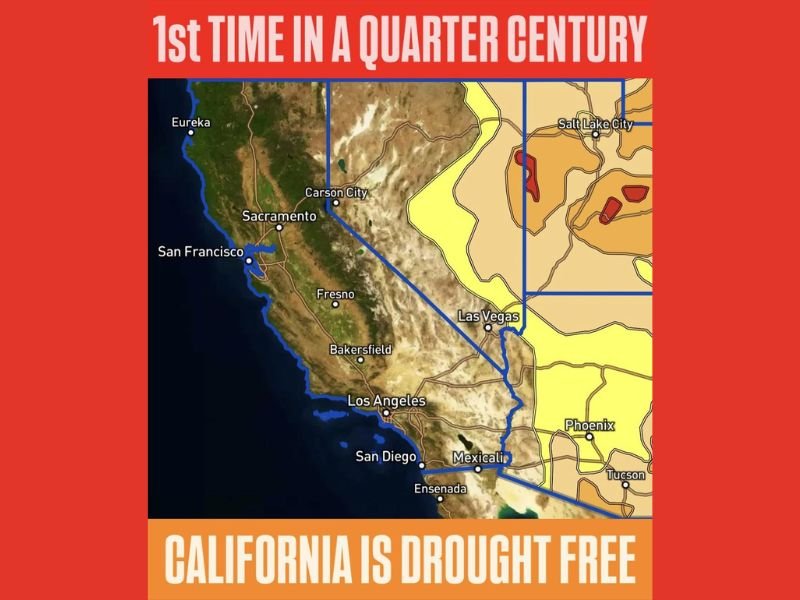
CALIFORNIA — For the first time in nearly a quarter of a century, every part of California is officially drought-free, marking a major environmental milestone after decades of recurring water shortages, extreme drought cycles, and water-use restrictions across the state.
The latest drought monitoring data shows no remaining drought categories anywhere within California’s borders, a rare achievement driven by sustained periods of above-average precipitation, improved snowpack levels, and repeated storm systems over recent seasons.
A Historic Shift After Decades of Drought Conditions
California has spent much of the past 25 years under some level of drought, ranging from moderate dryness to extreme and exceptional drought. These conditions severely impacted agriculture, groundwater reserves, reservoirs, and urban water supplies, often forcing mandatory conservation measures across major cities and farming regions.
The current drought-free status represents a complete reversal from those long-standing patterns. From coastal cities like San Francisco and Los Angeles to inland agricultural hubs such as Fresno and Bakersfield, the entire state now shows normal moisture levels.
What Changed: Rainfall, Snowpack, and Storm Patterns
The turnaround was largely fueled by multiple wet seasons, including strong winter storms that replenished reservoirs and built a deep snowpack in the Sierra Nevada. Snowmelt from higher elevations played a critical role in refilling rivers and groundwater systems, especially in Central Valley watersheds.
Unlike short-lived rain events, these storms delivered consistent, widespread moisture, allowing soil conditions and long-term water storage to recover rather than evaporate quickly or run off without benefit.
How This Impacts Water Supplies and Agriculture
Being drought-free does not mean California’s water challenges are permanently solved, but it does provide temporary relief across several sectors.
- Reservoir levels are healthier than they have been in years
- Agricultural irrigation demands are easier to meet
- Groundwater recharge has improved in key farming regions
- Wildfire risk is reduced in some areas due to improved vegetation moisture
Farmers who endured crop losses and groundwater pumping restrictions during previous droughts now have greater flexibility, though many remain cautious due to California’s highly variable climate.
Why Experts Warn This May Not Last
Despite the positive milestone, climate experts caution that California’s drought-free status is not guaranteed to persist. The state’s climate is increasingly shaped by extreme swings — from intense drought to heavy precipitation — rather than steady, predictable patterns.
A return to dry conditions could happen quickly if future seasons fail to deliver adequate rainfall. Long-term water planning, conservation, and infrastructure improvements remain essential to managing future drought cycles.
What Residents Should Keep in Mind Moving Forward
While restrictions may ease in some areas, officials continue to encourage responsible water use, emphasizing that drought recovery can reverse rapidly. California’s water history shows that wet years are often followed by prolonged dry stretches. This moment is best viewed as a critical recovery phase, not a permanent solution.
Stay connected with NapervilleLocal.com for continued coverage of major environmental and climate developments across the United States. Share this update with anyone tracking California’s water situation, and check back for future reporting on how long this drought-free period lasts and what comes next.
I’ve lived in Naperville long enough to see how quickly our community changes — from new developments downtown to sudden shifts in our Midwest weather. Reporting on Naperville news and daily forecasts gives me the chance to keep neighbors informed about what really matters. My goal is simple: deliver clear, timely updates so you always know what’s happening in our city and what to expect from the skies above.