
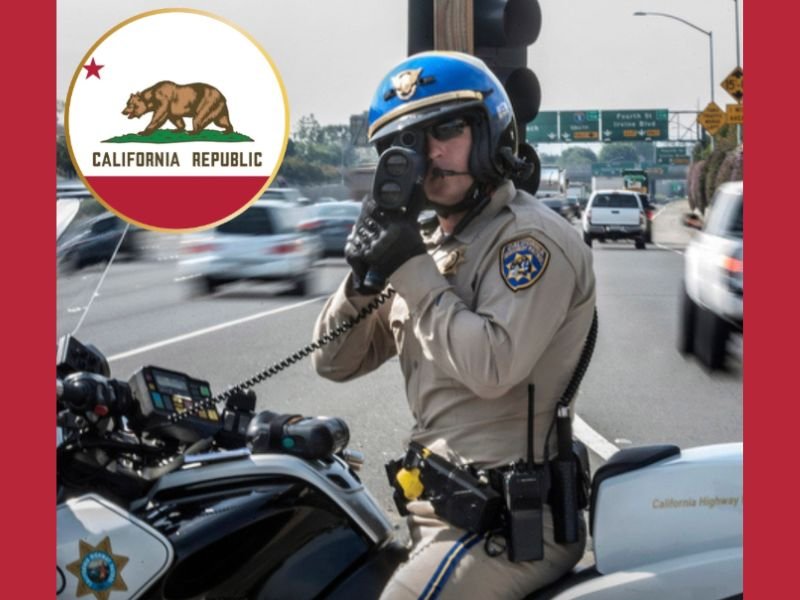
California Launches FAST Program Allowing DMV to Suspend Licenses Immediately for Extreme Speeding Violations
CALIFORNIA — State officials have launched a new pilot program allowing the DMV to take quicker action against drivers caught traveling at extreme speeds, marking one of the most aggressive policy shifts in California’s traffic enforcement in years. The initiative, called Forwarded Actions for Speeding Tickets (FAST), is designed to intervene before a dangerous driver causes a serious crash.
New FAST Program Sends Extreme Speeding Citations Directly to DMV for Review
Under the FAST program, certain speeding citations—particularly those involving extreme speeds—will automatically be forwarded to the DMV Driver Safety Branch. This can happen even if the driver has no negligent operator points on their record.
The DMV may then decide whether immediate action is warranted, including:
- Suspending a driver’s license
- Revoking a license entirely
- Ordering mandatory driver safety evaluations
According to the California Highway Patrol (CHP), officers issue roughly 1,600 citations every month for motorists caught driving 100 mph or faster. These are the kinds of cases FAST aims to address immediately, rather than waiting for a pattern of violations or a collision.
Program officials say this shift reflects growing concerns about the rising severity of crashes on California’s freeways and the frequency of drivers treating major highways like racetracks.
Goal: Act Before a Crash Happens, Not After
Transportation advocates say FAST represents a major shift in California’s approach to public safety. Instead of waiting for a crash or additional violations, FAST allows authorities to intervene after the very first extreme speeding offense.
Policy analysts noted that many fatal freeway crashes in recent years have involved vehicles traveling above 100 mph. FAST attempts to close the gap between the moment a dangerous driver is identified and the state’s ability to remove that threat from the road. CHP leaders emphasized that extreme speeding is one of the strongest predictors of serious or fatal collisions, particularly on Southern California freeways.
Public Reaction: Support From Safety Advocates, Questions From Commuters
Early reactions to FAST have been mixed but engaged.
Many residents—especially families who commute on congested freeways—support the effort, citing repeated near-misses with drivers weaving or speeding above 90 mph. Others, particularly long-distance commuters and professional drivers, say the program could have significant consequences for people who rely heavily on their license for work.
Minh Nguyen, a Southern California commentator, described FAST as California’s way of saying, “We are done waiting for the crash first.” His remarks highlight growing frustration with high-speed freeway driving throughout the region. Some residents have also questioned whether FAST should expand beyond speeding to include reckless lane weaving, tailgating, and other aggressive maneuvers frequently observed on I-5, I-405, and the 91 Freeway.
What Comes Next for California Drivers
As a pilot program, FAST will undergo evaluation over the next year to determine:
- Whether crash rates decrease
- How often the DMV issues suspensions or revocations
- How fairly the program is enforced across regions
- Whether the process creates unintended consequences for working drivers
State officials say the goal is not to punish drivers unnecessarily, but to prevent catastrophic crashes linked to high speeds.
Drivers are urged to be aware of the new rules, especially those who travel long distances for work or have teen drivers at home. For ongoing updates on California policy changes and transportation safety initiatives, follow NapervilleLocal.com for continuing coverage.

Naperville is a community with stories that deserve to be told — both the serious ones about safety and justice, and the lighter ones that capture our culture and daily life. I focus on covering crime reports and court updates while also highlighting the traditions, events, and social trends that shape who we are. Through my reporting, I want to give readers a fuller picture of Naperville — the challenges we face and the character that keeps our city strong.