
Daylight Increase Begins Nationwide on December 22nd as Winter Solstice Marks the Year’s Shortest Day
UNITED STATES — Americans across every state will begin gaining daylight starting December 22, marking the end of the year’s shortest day and the beginning of a gradual return to longer afternoons and extended evening light.
Winter Solstice Signals Turning Point Toward Longer Days
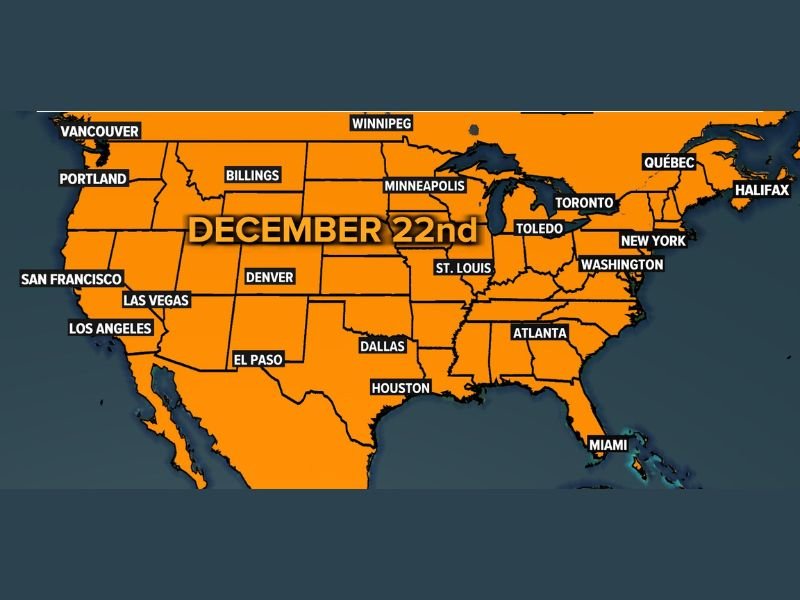
According to the graphic data, daylight increase begins everywhere in the U.S. on December 22, the date of the winter solstice. This is when the Northern Hemisphere reaches its most tilted position away from the sun, resulting in the least amount of daylight of the entire year.
Once the solstice passes, the Earth’s tilt slowly begins shifting back toward the sun, allowing daylight to increase a little more each day.
All Major U.S. Cities See Daylight Return at the Same Time
Based on the map provided, cities including New York, Atlanta, Dallas, Denver, Minneapolis, Portland, San Francisco, Miami, Houston, St. Louis, Las Vegas, and Toledo all begin seeing measurable daylight gains starting December 22nd. Northern locations, such as areas near Canada, tend to experience the most noticeable improvements first due to their steeper winter daylight decline.
While the early daylight changes are small—often just seconds per day—the cumulative effect becomes more noticeable heading into January.
Why Daylight Increases After December 22nd
The increase in daylight occurs because:
- The Earth reaches its farthest axial tilt away from the sun on December 21–22.
- After this point, the Northern Hemisphere begins slowly tilting back toward the sun.
- This shift increases the period between sunrise and sunset.
Even though temperatures remain cold in most regions following the solstice, the psychological boost of “more daylight ahead” is commonly welcomed.
Residents Anticipate Brighter Evenings
Many across the country look forward to this turning point each year, especially in states where winter sunsets occur extremely early. Longer daylight often boosts mood, energy levels, and outdoor activity, even while winter conditions persist.
NapervilleLocal.com will continue following national seasonal developments and weather-related updates.

I’ve lived in Naperville long enough to see how quickly our community changes — from new developments downtown to sudden shifts in our Midwest weather. Reporting on Naperville news and daily forecasts gives me the chance to keep neighbors informed about what really matters. My goal is simple: deliver clear, timely updates so you always know what’s happening in our city and what to expect from the skies above.