
Daylight Rapidly Increases Across North Carolina as Sunsets Stretch Past 7 PM Within the Next Six Weeks
NORTH CAROLINA — New daylight data shows that daylight hours are increasing steadily across the state, with residents gaining nearly an hour and a half of additional daylight over the next six weeks. The shift is already becoming noticeable, as sunsets move later starting this week, particularly across western parts of the state.
The data also confirms that sunrises are getting earlier, reinforcing a clear seasonal transition as winter slowly gives way to spring.
How Sunset Times Are Changing Over the Next Six Weeks
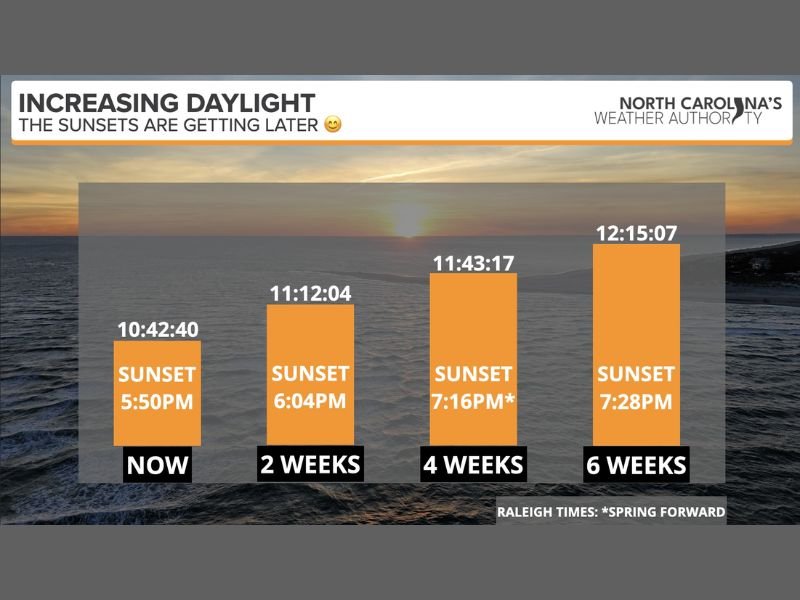
The chart outlines a clear week-by-week progression using Raleigh-based timing, which reflects the broader statewide trend:
- Now: Sunset at 5:50 PM, with 10 hours and 42 minutes of daylight
- In 2 Weeks: Sunset moves to 6:04 PM, daylight increases to 11 hours and 12 minutes
- In 4 Weeks: Sunset jumps to 7:16 PM, influenced by spring forward, with 11 hours and 43 minutes of daylight
- In 6 Weeks: Sunset reaches 7:28 PM, bringing total daylight to 12 hours and 15 minutes
This steady progression shows how quickly daylight increases as late winter progresses.
Why Daylight Gains Accelerate This Time of Year
After the winter solstice, daylight slowly begins increasing, but the pace accelerates in late winter and early spring. During this period, the length of each day increases by several minutes, becoming more noticeable week to week.
The data also reflects the effect of Daylight Saving Time, which temporarily shifts more daylight into the evening hours, creating the sharp jump seen in the four-week timeframe.
Regional Differences Across the State
While the times shown are based on Raleigh, the overall daylight trend applies statewide. The data notes that western areas of North Carolina will see 6 PM sunsets or later sooner than eastern regions due to longitude differences.
Although exact sunset times vary slightly by location, the pattern of longer evenings remains consistent across the state.
What Longer Evenings Mean for Residents
As daylight increases, residents can expect:
- More usable daylight after work and school
- Improved visibility during evening travel
- A noticeable boost in mood as days feel longer and brighter
The combination of earlier sunrises and later sunsets is often viewed as one of the first clear signs that spring is approaching, even if cooler weather lingers.
Looking Ahead Toward Spring
Over the next six weeks, North Carolina will move closer to near-equal day and night, a seasonal milestone that typically occurs in March. The data confirms that the state is entering a period of rapid daylight growth, with longer evenings becoming the new normal.
For continued data-driven updates on seasonal changes and weather trends, follow coverage on NapervilleLocal.com, where patterns are reported clearly and responsibly.

I’ve lived in Naperville long enough to see how quickly our community changes — from new developments downtown to sudden shifts in our Midwest weather. Reporting on Naperville news and daily forecasts gives me the chance to keep neighbors informed about what really matters. My goal is simple: deliver clear, timely updates so you always know what’s happening in our city and what to expect from the skies above.