
Eastern Bluebirds Begin Their Spring Push North: Indiana Sees Early March Arrivals While Northern Areas Wait Until Late March
UNITED STATES — One of the most reliable signs that winter is loosening its grip across the Midwest isn’t found on a thermometer — it’s perched on a fence post. Eastern Bluebirds are beginning their seasonal migration north, and parts of Indiana will start seeing noticeable returns in late February and early March.
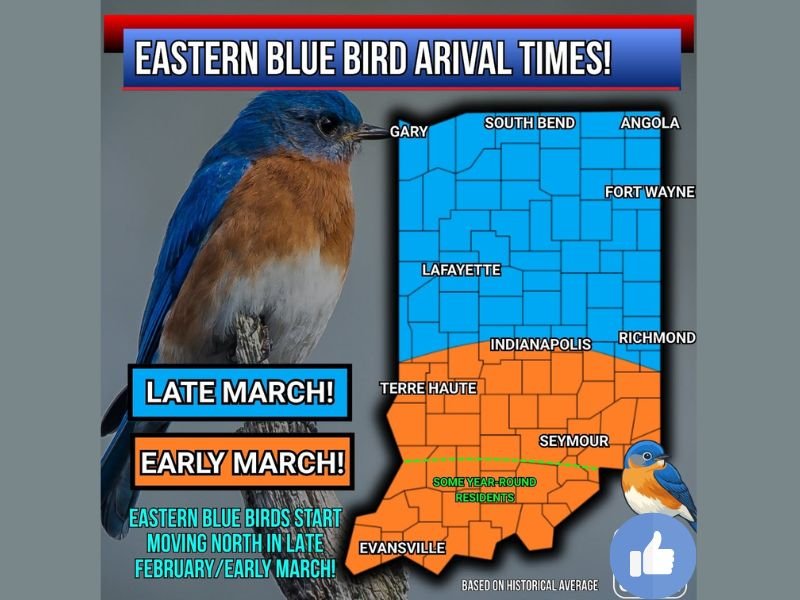
According to historical averages highlighted in the latest arrival outlook, the timing of bluebird movement varies across Indiana — with southern communities seeing them first and northern counties waiting a few weeks longer.
Southern Indiana Sees the First Wave in Early March
The map shows much of southern and central Indiana shaded for early March arrivals, including communities such as:
- Evansville
- Terre Haute
- Seymour
- Indianapolis
- Richmond
These areas typically begin seeing migrating Eastern Bluebirds moving back north from their wintering grounds in late February into early March.
In fact, some portions of southern Indiana host a small number of year-round bluebird residents, meaning sightings can occur even before the main migration begins. For many backyard bird watchers, the first bluebird at the feeder is a psychological turning point — a quiet reminder that spring isn’t far behind.
Northern Indiana Waits Until Late March
Farther north, the timeline shifts noticeably.
Cities including:
- Gary
- South Bend
- Lafayette
- Fort Wayne
- Angola
are typically in the late March arrival window, based on historical migration patterns.
Colder ground temperatures and lingering winter conditions across northern Indiana often delay the northward push by several weeks compared to southern counties.
Why Bluebirds Move When They Do
Eastern Bluebirds begin migrating north when:
- Daylight hours increase
- Insect populations slowly rebound
- Temperatures moderate enough to support feeding
Because bluebirds rely heavily on insects during warmer months, they tend to follow improving weather patterns northward. This staggered arrival pattern across Indiana reflects how spring gradually unfolds from south to north each year.
What This Means for Illinois and the Naperville Area
While this outlook focuses on Indiana, migration timing is similar across neighboring Midwest states. Northern Illinois — including the Naperville region — often sees bluebird returns in mid-to-late March, depending on seasonal temperatures.
Residents who maintain bird feeders or nesting boxes may want to:
- Clean out existing nesting boxes
- Ensure feeders are stocked with appropriate food
- Watch for early scouting pairs
Bluebirds are known to investigate nesting sites shortly after arriving.
A Subtle but Reliable Sign of Spring
Unlike dramatic weather swings, the return of Eastern Bluebirds is a quieter signal — but one deeply rooted in seasonal rhythm.
As southern Indiana begins welcoming early March arrivals and northern areas prepare for late March returns, the migration is another reminder that winter’s grip across the Midwest is slowly easing. For continued Midwest seasonal updates and nature trends that matter locally, stay connected with NapervilleLocal.com.

I’ve lived in Naperville long enough to see how quickly our community changes — from new developments downtown to sudden shifts in our Midwest weather. Reporting on Naperville news and daily forecasts gives me the chance to keep neighbors informed about what really matters. My goal is simple: deliver clear, timely updates so you always know what’s happening in our city and what to expect from the skies above.