
Florida Braces for New Year’s Eve Arctic Blast With Overnight Lows in the 20s–40s and Risk of “Falling Iguanas,” Forecasters Warn
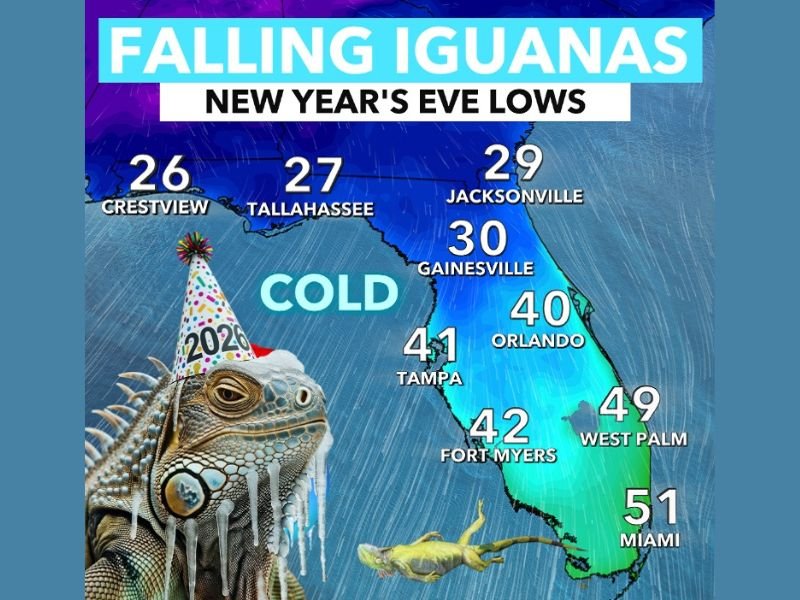
Florida — An Arctic blast moving into Florida on New Year’s Eve is expected to send temperatures plunging across the state, prompting meteorologists to warn residents about an unusual cold-weather hazard: “falling iguanas.” The dramatic overnight drop, with lows forecast in the 20s, 30s, and low 40s, will temporarily immobilize the reptiles, causing them to lose their grip on trees and fall to the ground.
Arctic Surge to Bring Widespread Freezing and Near-Freezing Temperatures
According to the temperature outlook, northern Florida will feel the coldest impacts of the incoming Arctic air mass. Forecast lows include:
- Crestview: 26°F
- Tallahassee: 27°F
- Jacksonville: 29°F
- Gainesville: 30°F
Central Florida will also experience a sharp chill, with:
- Orlando: 40°F
- Tampa: 41°F
- Fort Myers: 42°F
Even South Florida—known for its typically warm holiday season—will see temperatures far below average:
- West Palm Beach: 49°F
- Miami: 51°F
Forecasters say the cold air will arrive just in time for New Year’s Eve celebrations, making it one of the coldest year-end nights in recent memory for many parts of the state.
Why “Falling Iguanas” Happen During Florida Cold Snaps
Iguanas, which have become a common sight throughout Florida’s warmer climate zones, are cold-blooded reptiles that struggle to function when temperatures plunge into the 40s or lower. When exposed to cold air for several hours, their bodies enter a stunned, immobilized state.
This does not mean the iguanas are dead. Instead, the drop in body temperature causes them to lose muscle control, making it difficult to cling to branches or move. As a result, they may fall from trees, surprising residents who aren’t familiar with the phenomenon. The reptiles typically recover on their own once temperatures rise again.
Safety Tips for Residents During Florida’s Cold Blast
Officials urge residents to take precautions during the cold snap, both for personal safety and for wildlife:
- Wear warm layers for outdoor New Year’s Eve events
- Protect pipes, pets, and sensitive plants in colder parts of the state
- Avoid handling stunned iguanas, as they may awaken suddenly and react defensively
- Check on vulnerable neighbors who may struggle in unusual cold
Authorities emphasize that while the falling iguanas can be startling, the animals generally survive once daytime temperatures return to normal.
Cold Start to 2026 Expected Across the State
Meteorologists are advising Floridians to prepare for a cold start to 2026, as the Arctic air mass may linger into early New Year’s Day before moderating later in the week. Residents planning outdoor celebrations or early-morning travel should anticipate brisk conditions and dress accordingly.
The unique combination of freezing temperatures and stunned reptiles has once again drawn national attention, highlighting Florida’s distinctive wildlife challenges during winter cold fronts. For more weather updates, local climate alerts, and winter forecasts, stay connected with NapervilleLocal.com.

I’ve lived in Naperville long enough to see how quickly our community changes — from new developments downtown to sudden shifts in our Midwest weather. Reporting on Naperville news and daily forecasts gives me the chance to keep neighbors informed about what really matters. My goal is simple: deliver clear, timely updates so you always know what’s happening in our city and what to expect from the skies above.