
Florida Freeze Watch Issued for Tampa Bay and Central Florida as Temperatures Could Drop to 24 Degrees Late Week
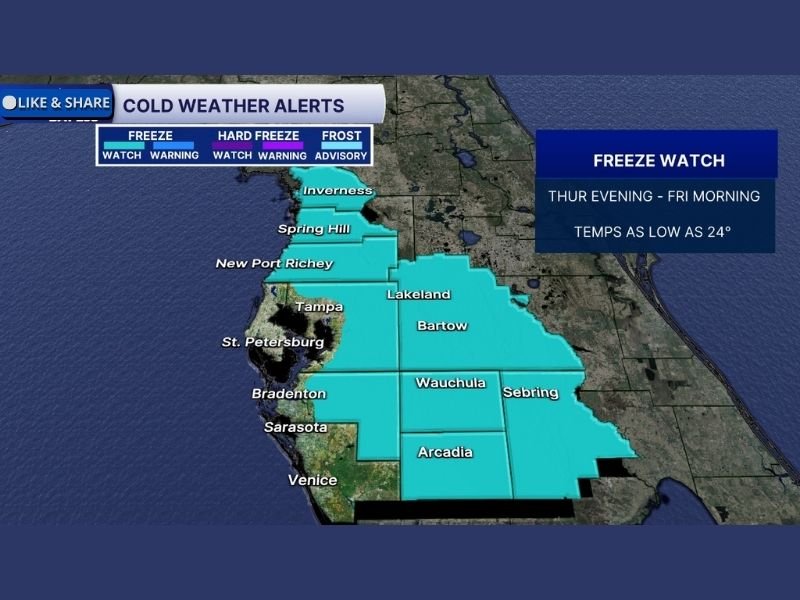
Florida — An unusual Freeze Watch has been issued for large portions of west and central Florida, including the Tampa Bay region and inland communities, as a surge of cold air is expected to arrive Thursday evening and persist into Friday morning. Forecast data shows that overnight temperatures could fall as low as 24 degrees in some locations, raising concerns for residents, pets, plants, and infrastructure in a region unaccustomed to freezing conditions.
The alert underscores the strength of this cold outbreak, which is expected to push temperatures well below seasonal norms across multiple Florida counties.
Areas Included in the Florida Freeze Watch
According to the alert map, the Freeze Watch covers a broad stretch of west and central Florida, extending from the Nature Coast and Tampa Bay area eastward and southward into interior sections of the state.
Cities and communities within the watch area include Inverness, Spring Hill, New Port Richey, Tampa, St. Petersburg, Bradenton, Lakeland, Bartow, Wauchula, Sebring, and Arcadia. Inland locations are expected to face the coldest temperatures, while coastal areas may see slightly less severe lows but still near-freezing conditions.
Timing and Temperature Expectations
The Freeze Watch is scheduled to begin Thursday evening and continue through Friday morning, when the coldest temperatures are expected to occur just before sunrise. Forecast guidance indicates overnight lows could dip into the mid-20s in colder inland spots, with many other areas falling near or below the freezing mark.
Daytime temperatures leading into the event will offer limited warming, allowing cold air to settle in more efficiently overnight. Clear skies and light winds in some areas could further enhance cooling, increasing the risk of frost and freeze damage.
Why This Cold Is a Serious Concern for Florida
Freezing temperatures are relatively rare in much of central Florida, making this event particularly impactful. Vegetation, crops, exposed plumbing, and outdoor animals are especially vulnerable when temperatures drop below freezing for several hours.
Residents may also face vehicle issues, frozen pipes, and heating challenges, particularly in homes not designed for prolonged cold. Agricultural interests often experience the greatest impacts during freeze events, especially when temperatures fall into the mid-20s.
How Residents Can Prepare
Officials urge residents within the Freeze Watch area to take protective measures ahead of Thursday night. This includes covering or bringing in sensitive plants, ensuring pets have warm shelter, checking outdoor plumbing, and preparing heating systems.
Those living in rural or inland areas should be especially cautious, as temperatures there often fall lower than in urban or coastal zones. Checking on elderly neighbors and individuals without reliable heating is also recommended during cold weather alerts.
What Happens Next
A Freeze Watch means conditions are favorable for freezing temperatures but are not yet guaranteed. As the event draws closer, the watch could be upgraded to a Freeze Warning or Hard Freeze Warning if confidence increases.
Residents across west and central Florida should closely monitor updated forecasts and official advisories over the next 24 to 48 hours as details become clearer. For continued coverage of significant weather developments across the country and how broader winter patterns connect back to the Midwest, stay informed with NapervilleLocal.com.
I’ve lived in Naperville long enough to see how quickly our community changes — from new developments downtown to sudden shifts in our Midwest weather. Reporting on Naperville news and daily forecasts gives me the chance to keep neighbors informed about what really matters. My goal is simple: deliver clear, timely updates so you always know what’s happening in our city and what to expect from the skies above.