
Florida High-Pressure Dome Near 1029 mb Keeps Skies Clear and Temps Cooler Across the Southeast, With Residents Noticing Dry Air and Sinus Irritation
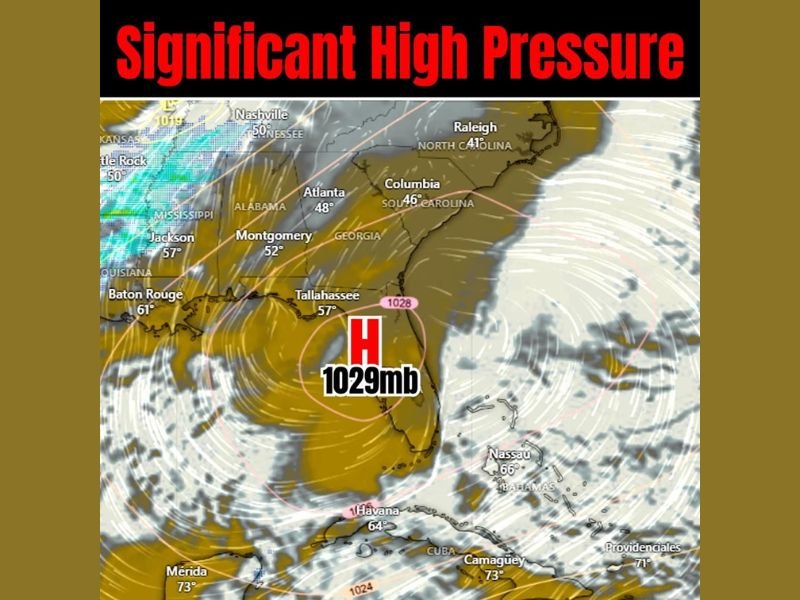
UNITED STATES — A large, significant high-pressure system centered over Florida is shaping the weather across much of the Southeast, locking in clear skies, lower humidity, and cooler-than-expected temperatures for early February. The provided map shows a strong high marked around 1029 millibars (mb) sitting over the Florida Peninsula, a setup that typically promotes sinking air, fewer clouds, and a crisp, dry feel.
Along with the brighter weather, the text shared with the graphic notes that some people across the Southeast have been reporting increased sinus irritation, a dry or “crusty” nose, joint pain, and arthritis flare-ups, and wonders whether the persistent high pressure could be playing a role.
What the map shows across the Southeast
The weather graphic highlights the high-pressure center over Florida, with nearby cities showing cooler readings for the region—such as Atlanta around 48°F, Columbia around 46°F, Raleigh around 41°F, and Tallahassee around 57°F. Farther west, the map also shows warmer Gulf Coast values like Baton Rouge around 61°F and Jackson around 57°F, suggesting the cool, stable air is most noticeable across parts of the interior Southeast and up through the Carolinas.
With a high this strong, winds often become lighter and the pattern can stay in place longer than people expect—especially when there’s not an immediate storm system strong enough to shove it out.
Why high pressure can make the air feel so dry
A high-pressure dome pushes air downward, and sinking air tends to warm and dry as it compresses—helping to reduce cloud cover and limit rain chances. That’s why the text emphasizes “keeping these skies blue” while also connecting the pattern to dry air complaints.
Dry air can also become more noticeable indoors, especially when heating systems run—leading to dry nasal passages, scratchy throats, and a general “winter dryness” feeling even in places that usually have higher humidity.
Can high pressure affect joints and sinuses?
People often report feeling changes in their bodies when weather patterns shift—particularly with sinus pressure or joint stiffness. The text included with the image specifically mentions arthritis, joint pain, and sinus issues, suggesting some residents are experiencing symptoms during this stable stretch.
It’s important to note that symptoms can vary widely from person to person, but the timing described in the provided data shows why people are making the connection: a strong, persistent high paired with dry, cooler weather.
What to expect while this pattern holds
As long as the high remains dominant, the Southeast can expect more of the same: cool mornings, bright afternoons, and limited rainfall, with the dry feel lingering. If the high shifts east or weakens, humidity and cloud cover can increase quickly—often changing how the air feels even before temperatures jump.
Have you noticed the dry-air effects or extra joint stiffness during this stretch of clear, cool weather? Share what you’re experiencing and keep following NapervilleLocal.com for fast, easy-to-follow weather pattern updates across the region.

I’ve lived in Naperville long enough to see how quickly our community changes — from new developments downtown to sudden shifts in our Midwest weather. Reporting on Naperville news and daily forecasts gives me the chance to keep neighbors informed about what really matters. My goal is simple: deliver clear, timely updates so you always know what’s happening in our city and what to expect from the skies above.