
Florida Man Freed After 26 Years in Prison for Wrongful Conviction Following Victim’s Admission of Mistaken Identity
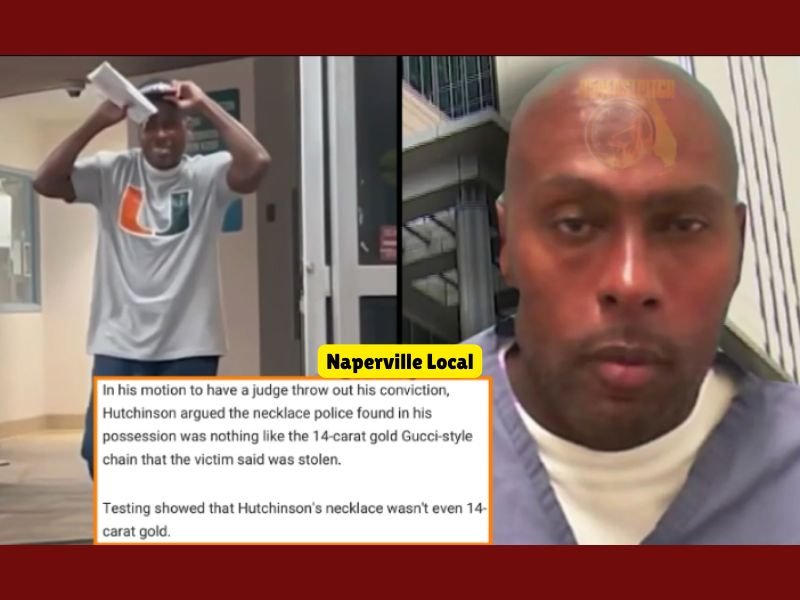
FORT LAUDERDALE, Fla. — After spending 26 years behind bars for a crime he always said he didn’t commit, Tavares Hutchinson walked out of Broward County Jail this week as a free man — the result of new evidence and a victim’s admission of mistaken identity that overturned a conviction dating back to 1999.
The 49-year-old South Florida man had been serving a sentence for armed robbery, accused of stealing a wedding ring and gold necklace more than two decades ago. But after years of fighting his case and partnering with the Innocence Project of Florida, Hutchinson finally saw the justice system recognize what he’d been saying since day one — that he was innocent.
“All I wanted was to step outside and breathe fresh air,” Hutchinson told NBC6 after his release. “It’s a relief that my innocence has finally been recognized, and I’m free. I was on edge until the moment I walked out of that jail.”
Decades of Imprisonment for a Crime He Didn’t Commit
Hutchinson was convicted in 1999 of an armed robbery involving a stolen gold necklace and ring, charges he vehemently denied from the start. According to court documents, prosecutors at the time built their case largely on eyewitness testimony from the victim, who later admitted to having misidentified him as the attacker.
For more than two decades, Hutchinson filed appeals, all of which were denied — until he teamed up with the Innocence Project of Florida in 2024. The organization helps wrongfully convicted inmates secure freedom through new evidence, DNA testing, and legal advocacy.
Key Evidence That Changed Everything
In his motion to overturn the conviction, Hutchinson’s attorney presented several critical points:
- The necklace found on Hutchinson at the time of his arrest did not match the description of the stolen jewelry.
- Lab tests later confirmed that his necklace wasn’t even 14-karat gold, unlike the victim’s stolen Gucci-style gold chain.
- Witness statements indicated that Hutchinson didn’t resemble the original suspect’s description provided by the victim in 1999.
Earlier this year, the victim came forward, recanting his testimony and admitting that he had identified the wrong man.
“Every day was a battle, an internal battle,” Hutchinson said. “I had to get up and fight. But I never stopped believing this day would come.”
The Long Road to Freedom
For Hutchinson, the past 26 years were marked by resilience, faith, and an unwavering belief that the truth would surface.
“I used to sit on my bunk and picture myself walking out of that jail,” he recalled. “That vision kept me alive.”
After reviewing the new evidence and the victim’s statement, Broward County prosecutors agreed it was in the interest of justice to modify Hutchinson’s sentence, allowing for his release.
However, the State Attorney’s Office clarified that Hutchinson’s case was not labeled as a full exoneration, citing procedural limitations.
“This was not an exoneration,” the office stated. “After reviewing the case, prosecutors determined it was in the interests of justice to modify Mr. Hutchinson’s sentence.”
Even so, legal advocates say the decision is a clear acknowledgment that a serious mistake was made decades ago — one that cost Hutchinson more than half his life.
A Second Chance at Life
Upon his release, Hutchinson was met by supporters and members of the Innocence Project who had worked on his case. Smiling and raising his hands toward the sky, he said he felt “the weight of the world” finally lift off his shoulders.
He now plans to advocate for others who claim to have been wrongfully convicted, hoping to use his experience to inspire reform.
“I don’t want anyone else to go through what I went through,” he said. “There are still people in there who are innocent. I’m going to fight for them, the same way people fought for me.”
Hutchinson also shared that his first plan after release was simple — to reunite with family and breathe free air for the first time in over two decades.
A System Under Scrutiny
Hutchinson’s case highlights ongoing concerns about misidentification in criminal trials, one of the leading causes of wrongful convictions in the United States. According to the Innocence Project, eyewitness misidentification has played a role in over 60% of DNA exonerations nationwide.
Legal experts say his story underscores the need for continued reform, including better evidence standards, access to post-conviction review, and improved eyewitness procedures.
Looking Forward
While Hutchinson’s release was long overdue, his story has already inspired calls for change across Florida’s justice system.
He says he’s not angry — just grateful.
“I’m free now,” Hutchinson said. “That’s all that matters. I can finally start living again.”
Have thoughts on this story or experiences with wrongful convictions? Share your perspective and join the discussion at NapervilleLocal.com.
I’ve lived in Naperville long enough to see how quickly our community changes — from new developments downtown to sudden shifts in our Midwest weather. Reporting on Naperville news and daily forecasts gives me the chance to keep neighbors informed about what really matters. My goal is simple: deliver clear, timely updates so you always know what’s happening in our city and what to expect from the skies above.