
High Cedar Pollen Levels Trigger Cedar Fever Warning Across Texas and Oklahoma as Warm Weather Persists
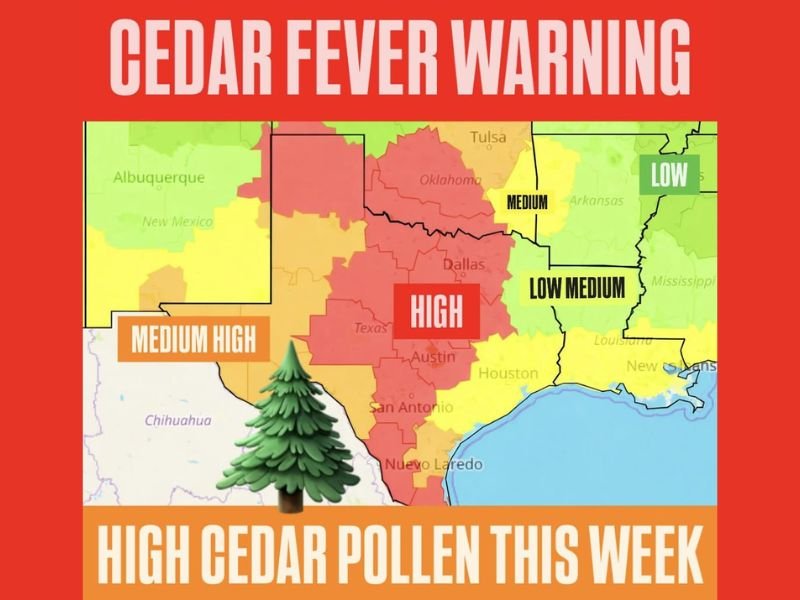
UNITED STATES – A Cedar Fever Warning is in effect this week across much of Texas and Oklahoma, as high cedar pollen levels spread through the region, according to the data shown in the latest pollen outlook map. The warning comes as mild to warm weather conditions continue, creating an environment that allows cedar pollen to remain elevated across wide areas.
The map indicates that central and southern Texas are experiencing high cedar pollen levels, highlighted in red, including areas around Austin, San Antonio, and surrounding regions. Portions of north and central Texas also fall within the high-risk zone, while western Texas and parts of New Mexico are shown in medium to medium-high categories, suggesting elevated but slightly lower concentrations.
Oklahoma Also Impacted by Elevated Cedar Pollen
In Oklahoma, pollen levels range from medium to high, particularly across central sections of the state. Areas closer to the Texas border appear to be more affected, while eastern Oklahoma shows lower to medium levels as the pollen concentration gradually decreases moving eastward.
The image also shows lower pollen levels farther east into Arkansas, Louisiana, and Mississippi, where conditions are marked as low to low-medium. This contrast highlights how cedar pollen remains concentrated primarily across Texas and Oklahoma, with the highest exposure risks centered over Texas.
Warm Conditions Contributing to Cedar Fever Risk
The warning notes that mild to warm weather comes with a price, as warmer temperatures help cedar trees release pollen more efficiently. Without significant cold fronts or heavy rainfall to suppress pollen levels, cedar fever conditions can linger for several days, increasing discomfort for allergy sufferers.
Cedar fever is commonly associated with symptoms such as nasal congestion, itchy or watery eyes, sneezing, sinus pressure, and fatigue, though the image itself focuses on pollen concentration rather than medical guidance.
What Residents Should Expect This Week
Based on the map, high cedar pollen levels are expected to persist through the week, especially across Texas. Oklahoma residents may also notice increased allergy symptoms, particularly in areas marked as medium or higher.
Those living or traveling through high-risk zones should be aware that outdoor exposure may increase allergy irritation, especially during dry, breezy periods when pollen can spread more easily. NapervilleLocal.com will continue to monitor regional weather and environmental updates and share relevant information as conditions evolve.

I’ve lived in Naperville long enough to see how quickly our community changes — from new developments downtown to sudden shifts in our Midwest weather. Reporting on Naperville news and daily forecasts gives me the chance to keep neighbors informed about what really matters. My goal is simple: deliver clear, timely updates so you always know what’s happening in our city and what to expect from the skies above.