
Houston Woman’s Viral Video Shows How Working From Home Changed Her Dog’s Behavior
HOUSTON, TEXAS — A heartwarming and slightly heartbreaking TikTok video from a Houston woman has gone viral after revealing how working from home has unintentionally affected her dog’s emotional routine.
The creator, Megan (@megan.kemper), shared that her dog Milo has developed a new habit — one that perfectly captures how pets have adapted to their owners’ pandemic-era work patterns.
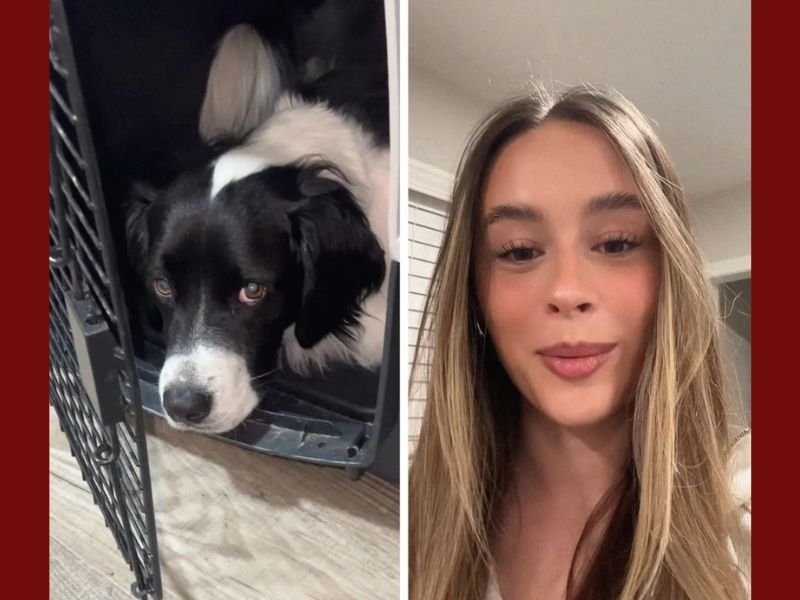
In the now-viral clip, Megan can be seen getting ready for the day while her dog quietly hides in his crate, sensing she might be leaving the house.
Dog’s Emotional Reaction Goes Viral
Megan explains in the video that she rarely does her hair or makeup anymore since working remotely. “And when I do, my dog knows that I’m going somewhere, and it’s the saddest thing ever,” she says.
When she pans the camera toward Milo, the small dog sits still inside his crate, eyes wide, watching her closely. Megan softly reassures him, saying, “I’m not going anywhere, Milo. You can come out.”
That single moment — her gentle tone and the dog’s hesitant reaction — struck an emotional chord with viewers, who flooded the comments with empathy.
“You better have stayed home,” one user joked.
Another wrote, “Better be going to get pup cups and toys.”
“He’s not mad, just disappointed,” a third added, capturing what many viewers felt after watching the clip.
Why Pets Struggle With Work-From-Home Routines
Since 2020, remote work has dramatically changed how Americans live — and how pets experience daily life. In 2025, nearly 32.6 million people (about 22% of the U.S. workforce) still work remotely, according to industry data.
Animal behavior experts say that for many pets, having their owners home most of the day creates a strong attachment — but it also makes brief absences more emotionally difficult.
Studies have found that as many as eight in ten dogs experience stress or anxiety when left alone, though symptoms vary. Some bark or howl, while others tremble, refuse food, or hide.
@yvette420
Veterinary behaviorists recommend that owners occasionally record their pets when leaving home, even for short periods. Subtle behaviors like pacing, excessive yawning, or quiet whining can signal hidden distress.
“It’s not that pets can’t be alone — it’s that they’ve gotten used to constant presence,” explains one animal behavior specialist. “Gradual desensitization helps rebuild independence.”
A Reminder of Unseen Impacts of Remote Life
Megan’s video serves as a small but touching example of how remote work affects not only humans but their animal companions. What started as a funny and relatable moment has become part of a larger conversation about pet well-being and emotional health.
As one viewer commented:
“We always talk about work-life balance for people. But what about our pets’ balance too?”
For more lifestyle and viral trend stories like this, visit NapervilleLocal.com.

I’ve lived in Naperville long enough to see how quickly our community changes — from new developments downtown to sudden shifts in our Midwest weather. Reporting on Naperville news and daily forecasts gives me the chance to keep neighbors informed about what really matters. My goal is simple: deliver clear, timely updates so you always know what’s happening in our city and what to expect from the skies above.