
Illinois Snow Squall Warning Issued South of Chicago as Sudden Whiteout Conditions Threaten I-80 Corridor
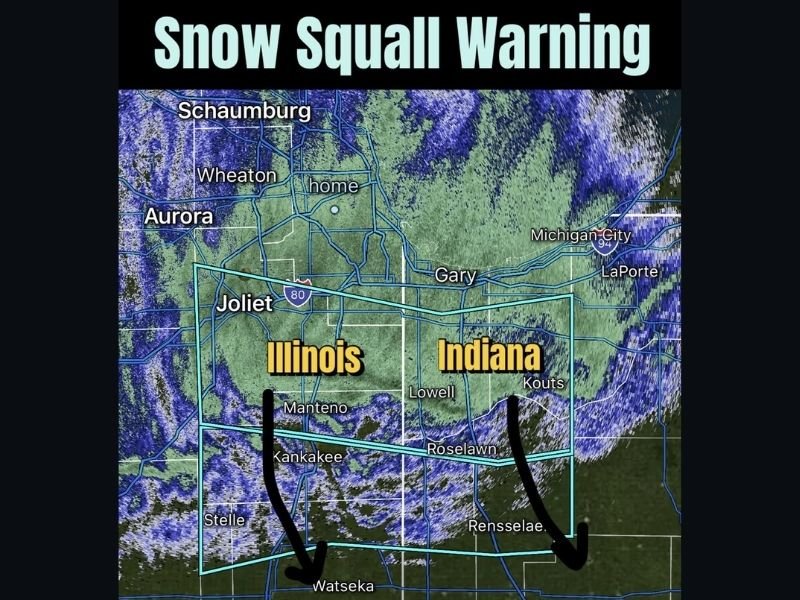
ILLINOIS — A Snow Squall Warning has been issued for parts of northern Illinois and northwest Indiana, focused south of the Chicago metro area, where a fast-moving but intense burst of snow is expected to create rapidly changing and dangerous travel conditions.
Radar imagery shows a compact, aggressive snow squall racing southward, capable of producing near-zero visibility and a quick inch of snow in a very short period of time.
What a Snow Squall Means for Drivers
Snow squalls are particularly dangerous because they strike with little warning. Conditions can deteriorate from clear roads to whiteout conditions in minutes.
Key hazards with this event include:
- Visibility dropping to near zero
- Sudden snow-covered roads
- Rapid slick spots and black ice
- High risk of multi-vehicle accidents
Unlike long-duration snowstorms, snow squalls are brief but intense — and often catch drivers off guard.
Areas Most at Risk in Illinois and Indiana
Based on radar placement and warning boundaries, the most affected areas include:
- Southern Chicago suburbs
- Joliet and areas along Interstate 80
- Kankakee County
- Northern Indiana communities near Lowell, Roselawn, and Rensselaer
The squall is moving quickly south, meaning impacts in any one location may last 15 to 30 minutes, but conditions during that window can be extremely hazardous.
Why This Matters for the Naperville Area
While Naperville itself may be near the northern edge of the warning, residents traveling south or east, especially toward I-80 or northwest Indiana, could encounter dangerous driving conditions with little notice. Drivers heading out during the evening or overnight hours should be prepared to slow down immediately if visibility suddenly drops.
Safety Guidance During a Snow Squall
Weather officials strongly recommend the following if you encounter a snow squall:
- Slow down immediately
- Turn on headlights
- Avoid sudden braking
- Increase following distance
- If visibility drops to zero, pull off the road safely if possible
Snow squalls often cause the most severe winter crashes because of their sudden nature. This is not a widespread snowstorm, but it is a high-impact travel hazard. Even a small amount of snow falling rapidly can create life-threatening driving conditions.
NapervilleLocal.com will continue monitoring the situation and provide updates if the warning expands northward or additional squalls develop. Stay alert, slow down, and avoid unnecessary travel through warned areas.

I’ve lived in Naperville long enough to see how quickly our community changes — from new developments downtown to sudden shifts in our Midwest weather. Reporting on Naperville news and daily forecasts gives me the chance to keep neighbors informed about what really matters. My goal is simple: deliver clear, timely updates so you always know what’s happening in our city and what to expect from the skies above.