
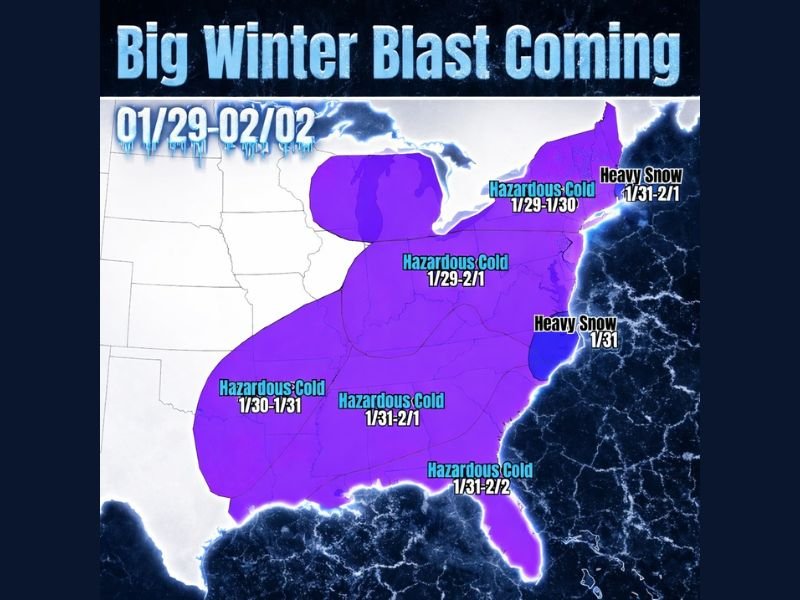
Indiana, Ohio, Pennsylvania, New York, Georgia and Florida Braced for Coldest Arctic Blast of the Year With Hazardous Cold and Heavy Snow
UNITED STATES — A powerful Arctic cold front, being described by forecasters as the coldest cold outbreak of the year, is set to surge across large portions of the eastern United States, impacting states from the Midwest and Great Lakes to the Southeast and East Coast, with dangerous cold temperatures, life-threatening wind chills, and potential heavy snow expected through early February.
Meteorologists warn there will be little to no escape east of the Mississippi River, as the cold air mass spreads aggressively south and east, reaching even Florida.
Hazardous Cold to Grip Multiple States Simultaneously
Forecast data shows widespread hazardous cold conditions developing between January 29 and February 2, affecting several major regions at once.
States and regions highlighted in the forecast include:
- Indiana, Ohio, and the Midwest — Hazardous cold beginning January 29–30
- Pennsylvania and the Central Appalachians — Prolonged dangerous cold through February 1
- Georgia and the Southeast — Hazardous cold expanding January 30–31
- Florida — Rare late-January cold lasting into February 2
- New York and the Northeast — Cold combined with snow risk late in the week
Temperatures are expected to plunge well below seasonal averages, increasing the risk of frostbite, hypothermia, and infrastructure strain.
East Coast Storm Could Bring Heavy Snow
In addition to the Arctic air, low pressure tracking along the East Coast could produce significant snowfall, particularly in the Mid-Atlantic and Northeast.
Forecast indicators point to:
- Heavy snow potential on January 31
- Additional snowfall possible into February 1
- Travel disruptions due to snow-covered roads and reduced visibility
This combination of cold air locked in place and coastal storm development raises the risk for prolonged winter impacts rather than a brief cold snap.
Florida Included in Rare Winter Cold Event
Unlike many winter systems, this Arctic outbreak extends deep into Florida, where hazardous cold is forecast from January 31 through February 2.
Forecasters emphasize that this level of cold reaching Florida is uncommon, especially this late in January, posing risks to agriculture, exposed plumbing, pets, and people without adequate heating.
Why Meteorologists Are Sounding the Alarm
This system is being closely watched due to the overlap of multiple winter hazards, including:
- Arctic air intrusion
- Persistent cold locked behind the front
- Coastal low pressure enhancing snow potential
Terms such as polar vortex, Arctic invasion, and bomb-like cyclogenesis are being discussed because of the strength and duration of the event.
What Residents Should Prepare For
With dangerous conditions lasting several days, residents across affected states should prepare for:
- Rapid frostbite on exposed skin
- Frozen pipes and utility disruptions
- Dangerous travel conditions
- Increased strain on heating systems
Officials advise monitoring local forecasts closely and limiting outdoor exposure during the coldest periods. How is your state preparing for this Arctic blast? Share your experience and stay updated with continuing weather coverage at NapervilleLocal.com.

I’ve lived in Naperville long enough to see how quickly our community changes — from new developments downtown to sudden shifts in our Midwest weather. Reporting on Naperville news and daily forecasts gives me the chance to keep neighbors informed about what really matters. My goal is simple: deliver clear, timely updates so you always know what’s happening in our city and what to expect from the skies above.