
La Niña Rapidly Fading, Neutral ENSO Expected by April With El Niño Likely by Summer — What the Shift Could Mean for U.S. Severe Weather and Hurricane Season
UNITED STATES — A newly released ENSO outlook shows the current La Niña pattern weakening quickly, with forecasters signaling a transition to neutral conditions by spring and a possible shift into El Niño by summer or early fall.
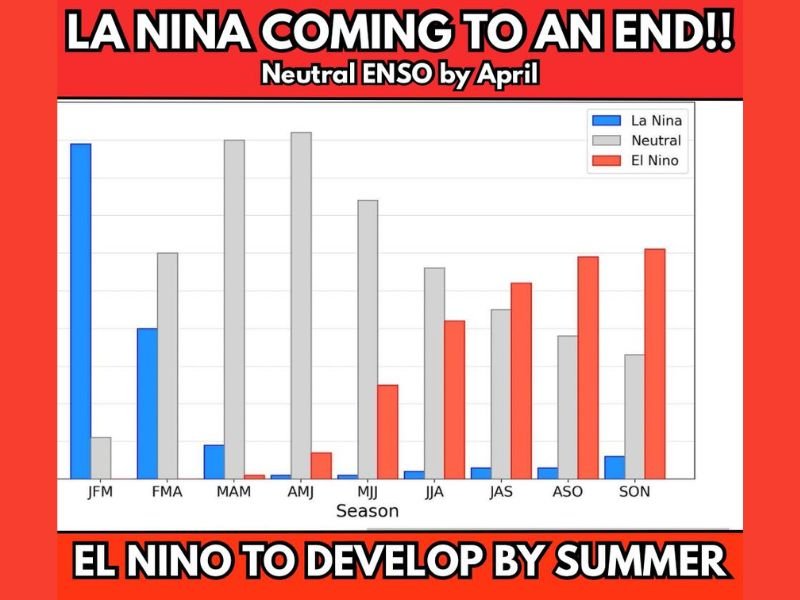
The latest projections indicate that La Niña’s influence — which has shaped weather patterns through much of winter — is rapidly diminishing. Climate models now strongly favor neutral ENSO conditions by April, followed by increasing odds that El Niño could develop as the year progresses.
La Niña Phase Losing Strength Quickly
Seasonal probability trends show La Niña dominating the early winter period, particularly during January–February–March. However, those odds decline sharply through late winter and early spring.
By the March–April–May timeframe, neutral conditions become the most likely scenario. From late spring into early summer, probabilities increasingly shift toward El Niño development, with the strongest signals appearing by mid-to-late summer and early fall. This represents a significant turnaround in Pacific Ocean temperature patterns in a relatively short time span.
What Neutral Conditions Mean for Spring
The expected transition to neutral ENSO by April comes just as severe weather season begins to ramp up across the United States — particularly across the Southern Plains and parts of the South.
Historically, ENSO transition periods — especially shifts from La Niña toward El Niño — can favor active severe weather setups in the spring. While no single climate signal guarantees outbreaks, these transitional phases can support:
- Increased storm track variability
- Stronger jet stream dynamics
- Enhanced instability across portions of the Southern Plains
Meteorologists caution that severe weather risk depends on many factors beyond ENSO alone, but the transition period often coincides with heightened storm activity.
El Niño by Summer: Hurricane Season Implications
If El Niño does develop by summer or early fall, it could influence the Atlantic hurricane season.
El Niño years are typically associated with:
- Stronger upper-level wind shear across the Atlantic
- Reduced tropical cyclone formation compared to La Niña years
- A tendency toward average to below-average hurricane activity
While this does not eliminate hurricane risk, it can suppress overall storm numbers when the pattern is fully established.
A Rapid Climate Pattern Shift
The speed of this projected transition stands out. Instead of lingering in La Niña through much of the year, models now show a rapid weakening and reversal.
The progression appears to unfold in three stages:
- Late Winter: La Niña weakens significantly
- Spring: Neutral ENSO dominates
- Summer into Fall: Increasing likelihood of El Niño development
Such a quick shift can lead to changing seasonal expectations, particularly for temperature and precipitation trends across the United States.
What Comes Next
Climate outlooks will continue to refine the timing and strength of the transition in the coming weeks. While spring severe weather season is influenced by many atmospheric ingredients, forecasters will closely monitor how the weakening La Niña interacts with evolving jet stream patterns.
By early summer, confidence in whether El Niño fully develops should increase, offering clearer signals for late-summer and fall impacts — including hurricane season projections.
NapervilleLocal.com will continue tracking updated ENSO outlooks and how they may shape spring severe weather and the upcoming hurricane season across the United States.

I’ve lived in Naperville long enough to see how quickly our community changes — from new developments downtown to sudden shifts in our Midwest weather. Reporting on Naperville news and daily forecasts gives me the chance to keep neighbors informed about what really matters. My goal is simple: deliver clear, timely updates so you always know what’s happening in our city and what to expect from the skies above.