
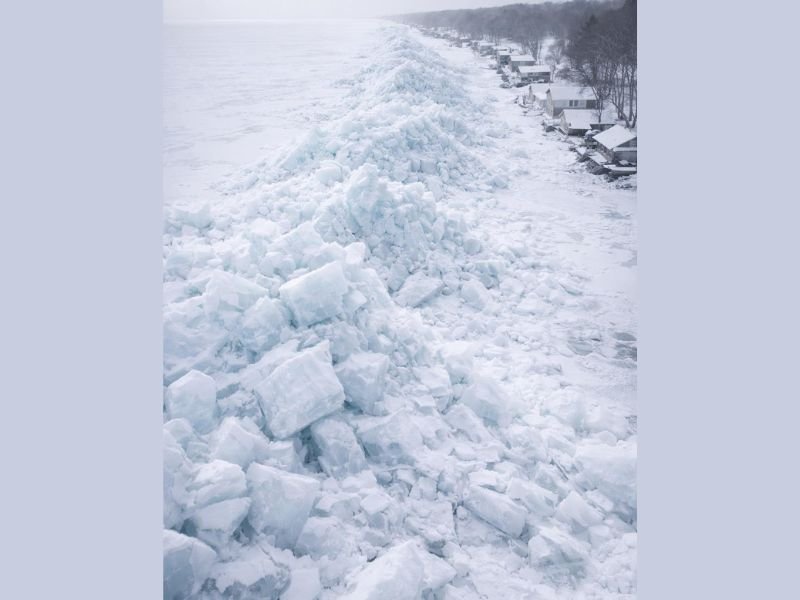
Lake Erie Ice Mountains Build Up Along Ohio, Pennsylvania, New York and Michigan Shores After Powerful Wind-Driven Ice Shove
UNITED STATES — Towering “ice mountains” have reportedly formed along the Lake Erie shoreline after powerful winds pushed large sheets of frozen lake ice onto land overnight, stacking the ice into ridges that a local report described as reaching up to 25 feet high.
The dramatic scene, shared in a post describing the buildup along Lake Erie, shows a long, jagged wall of broken ice piled high near lakeside homes—an eye-catching sight that officials and Great Lakes safety experts often warn can also be extremely dangerous, because these ice ridges can shift, crack, or collapse without warning.
What the report says happened along Lake Erie
The post describes an overnight event where strong winds effectively acted like a bulldozer, driving a wide field of lake ice toward shore. When that moving ice meets the coastline, it can pile up fast—pressing, snapping, and stacking into thick ridges that look like frozen dunes or small mountain ranges.
In the image, the ice ridge stretches far down the shoreline, with large ice blocks piled in layers—some pieces appearing several feet wide—showing how forceful the push likely was.
Why this “ice shove” can turn dangerous quickly
While the ice formations can look solid, the key risk is that the ridge is often unstable. Moving ice can continue to press from behind, meaning the pile can suddenly:
- Shift forward or sideways
- Break open and create gaps
- Collapse sections of the ridge
- Push additional ice onto land in bursts
That’s why the post warns the formation is “incredible to see” but “extremely dangerous,” noting the ice can move without warning.
What people should do if they see ice ridges like this
If you’re near Lake Erie—or any Great Lakes shoreline during deep winter—these basic precautions can prevent tragedy:
- Do not climb the ice ridge (it can collapse like loose rock)
- Stay back from the edge where ice meets open water or slush
- Keep kids and pets well away from piled ice and cracks
- Avoid walking on shoreline ice after wind events, even if it looks thick
Even inland residents in Illinois can run into this hazard while traveling—especially during winter trips to Great Lakes beaches, marinas, and waterfront neighborhoods.
Could something similar happen closer to Illinois?
Naperville itself isn’t on the shoreline, but wind-driven ice movement is a known cold-season risk across the Great Lakes region. When strong winds and temperature swings combine, shoreline ice can change quickly—turning a calm-looking lake edge into a hazardous zone in a short time.
For anyone visiting lakefront areas during winter, the safest move is to treat piled ice like a moving, unstable structure—not a place to explore. What do you think—have you ever seen ice pile up like this on a lakefront? Share your thoughts and winter photos with us at NapervilleLocal.com.

I’ve lived in Naperville long enough to see how quickly our community changes — from new developments downtown to sudden shifts in our Midwest weather. Reporting on Naperville news and daily forecasts gives me the chance to keep neighbors informed about what really matters. My goal is simple: deliver clear, timely updates so you always know what’s happening in our city and what to expect from the skies above.