
Massachusetts, Connecticut, and Rhode Island Snow Totals Surprise Forecasters as Another New England System Targets Tuesday–Wednesday
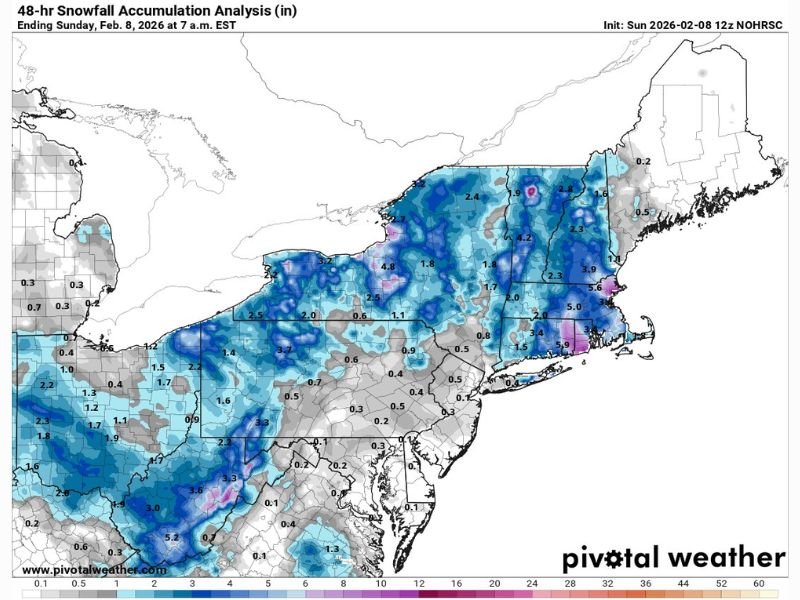
MASSACHUSETTS — A weekend snow event across parts of New England largely unfolded as expected, but a narrow, hard-to-pin-down snow trough set up farther west than anticipated, leading to localized overperforming snowfall totals—including reports of over a foot in parts of Massachusetts’ North Shore and 10+ inches in pockets from northern Connecticut through Rhode Island, based on the forecast discussion and accumulation analysis shown.
Why This Storm “Overperformed” in a Few Places
The biggest challenge in this setup was not whether New England would see snow, but where the heaviest bands would park. In the commentary shown, the forecaster notes they had a general idea of where the trough might form, but it ultimately ended up about 30 miles farther west.
That small shift matters a lot in winter weather, because when a trough locks in, it can repeatedly funnel moisture into the same corridor. The result is a sharp contrast where some towns see steady heavier snow while nearby areas only get lighter snow—or even very little at all.
Where the Highest Totals Were Reported
The update highlights a few standout areas that wound up on the higher end:
- Massachusetts North Shore: Some locations reportedly saw over a foot of snow.
- Northern Connecticut into Rhode Island: Some areas reportedly saw more than 10 inches.
The snowfall accumulation analysis displayed in the image also shows a wide region across southern New England with varying totals, reinforcing how uneven this event was from town to town.
What the Snow Maps Suggest About the Storm’s Footprint
The accumulation graphic shows much of the heavier snowfall concentrated in a banded pattern rather than spread evenly across the region. That matches the description that the darker, heavier bands were the main story, with lighter snow or minimal totals outside the core.
This is also why some residents may have felt the forecast “missed” even if the broader call was close—because a band shifting 20–30 miles can mean the difference between a normal snowfall and a major localized hit.
Another System Could Arrive Tuesday Afternoon Into Wednesday
Even as crews and communities finish digging out, the same update indicates forecasters are already watching another system expected Tuesday afternoon into Wednesday.
No specific totals are provided in the image for the next round, but the timeline suggests a new window for potential travel impacts midweek—especially if the next system again features banding or a narrow axis of heavier precipitation.
What to Watch For Next
Ahead of the Tuesday–Wednesday timeframe, the most important things to monitor are:
The track of the low and where the next snow band sets up. This is usually the difference between a manageable event and a localized high-impact one.
The timing of the steadiest precipitation. Tuesday afternoon into overnight Wednesday can increase commuting and road-treatment challenges. Whether temperatures support all snow versus a mix closer to the coast. Even small temperature changes can alter accumulation quickly.
Why This Matters for Readers Outside New England
NapervilleLocal.com tracks major weather patterns nationally because systems like this highlight how quickly winter forecasts can change when banding is involved. Even when regional totals look “fine,” local impacts can still be intense—especially for travel corridors, power restoration logistics, and school operations.
If you’re in Massachusetts, Connecticut, Rhode Island, or nearby states, did your town match the forecast—or did you get hit harder than expected? Share what you saw on the ground in the comments on NapervilleLocal.com.

I’ve lived in Naperville long enough to see how quickly our community changes — from new developments downtown to sudden shifts in our Midwest weather. Reporting on Naperville news and daily forecasts gives me the chance to keep neighbors informed about what really matters. My goal is simple: deliver clear, timely updates so you always know what’s happening in our city and what to expect from the skies above.