
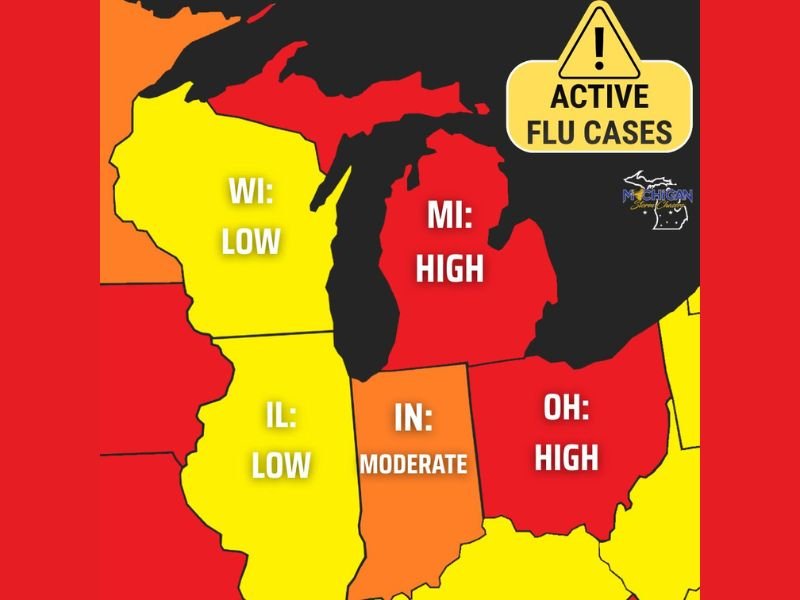
Michigan and Ohio Continue Reporting High Flu Activity While Illinois and Wisconsin Drop to Low as Spring Temperatures Begin to Rise
MIDWEST — As temperatures begin climbing with spring right around the corner, flu activity is starting to ease in parts of the region — but Michigan and Ohio remain in the “high” category for active flu cases.
A regional overview shows a sharp contrast across neighboring states. Michigan (MI) and Ohio (OH) are currently reporting high levels of flu activity, while Illinois (IL) and Wisconsin (WI) are categorized as low. Indiana (IN) sits in the moderate range.
Michigan and Ohio Still Seeing High Activity
Michigan continues to experience elevated flu transmission, keeping it in the high category despite seasonal trends pointing toward gradual improvement. Ohio mirrors that pattern, also remaining in the high tier.
Public health experts note that colder temperatures and increased indoor gatherings during winter often fuel peak flu season. While warmer air is expected to help reduce spread in the coming weeks, current data shows that transmission remains significant in both states.
Illinois and Wisconsin Show Improvement
In contrast, Illinois and Wisconsin have dropped into the low activity category. This suggests that flu spread in those states has slowed considerably compared to peak winter levels.
For Illinois residents, this is encouraging news heading into spring. Reduced case levels mean fewer hospital visits, less strain on healthcare systems, and potentially fewer school or workplace absences.
Indiana in the Middle
Indiana currently falls into the moderate category, indicating steady but not extreme flu activity. Moderate classification typically signals continued community transmission but at lower intensity than high-alert areas. The state’s status places it between Illinois’ lower rates and the more active outbreaks reported in Michigan and Ohio.
Warmer Weather May Help
Health officials often observe a natural decline in flu cases as temperatures rise. Increased outdoor activity, better ventilation, and reduced time spent in enclosed spaces contribute to slowing transmission.
With spring temperatures increasing across the Midwest, experts expect flu activity to continue trending downward. However, states currently in the high category may take longer to see significant improvement.
Continued Precautions Encouraged
Even as case numbers begin to fall in some areas, public health recommendations remain consistent:
- Wash hands frequently
- Stay home when experiencing flu symptoms
- Cover coughs and sneezes
- Consider vaccination if recommended
While Illinois residents are seeing improvement, those with travel plans to Michigan or Ohio should remain aware of higher activity levels in those states.
Flu season may be winding down, but it hasn’t ended just yet. For continued regional health updates and Midwest coverage, stay connected with NapervilleLocal.com.

I’ve lived in Naperville long enough to see how quickly our community changes — from new developments downtown to sudden shifts in our Midwest weather. Reporting on Naperville news and daily forecasts gives me the chance to keep neighbors informed about what really matters. My goal is simple: deliver clear, timely updates so you always know what’s happening in our city and what to expect from the skies above.