
New York, Massachusetts, Montana, North Dakota, South Dakota, Minnesota Face Travel Concerns as Trucker Weather Outlook Flags Poor to Hazardous Conditions Across Northern U.S.
UNITED STATES — A newly released trucker-focused weather outlook is highlighting potential travel concerns across a large portion of the northern United States, with hazard zones stretching from the Northern Plains into the Northeast as conditions shift later this week.
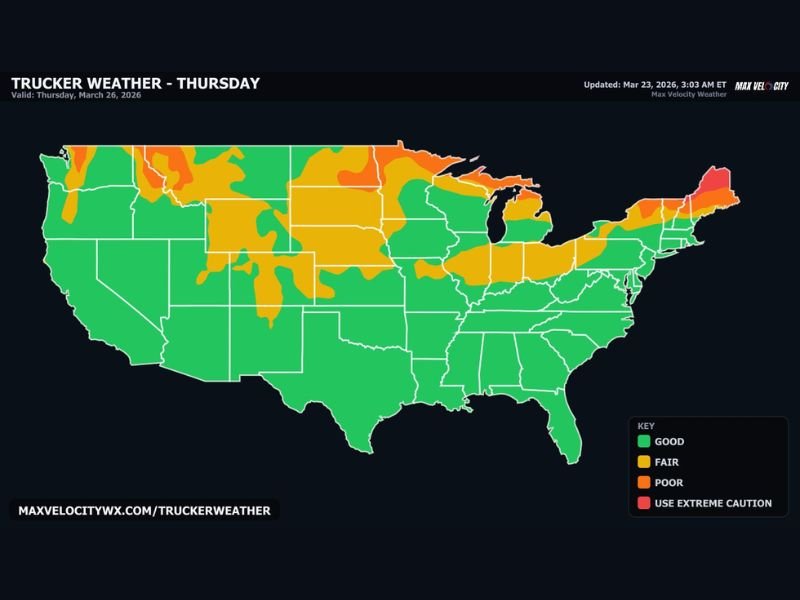
The experimental outlook, designed specifically for truck drivers and oversized vehicles, categorizes travel conditions into four levels: Good, Fair, Poor, and Use Extreme Caution—offering a simplified way to identify where road risks may increase.
Northern Tier Shows Widespread Travel Concerns
According to the outlook valid for Thursday, March 26, the most notable travel concerns are concentrated across the northern tier of the country.
States seeing impacts include:
- Montana, North Dakota, South Dakota – mixed “fair” to “poor” conditions
- Minnesota and Wisconsin – expanding zones of reduced travel quality
- Michigan and northern Ohio Valley – pockets of “fair” conditions
- New York and Massachusetts – areas flagged for “poor” to “extreme caution”
These regions are likely dealing with active weather patterns, including precipitation, wind, or reduced visibility, all of which can significantly affect long-haul travel.
Northeast Sees Highest Risk Pockets
The most concerning conditions appear in parts of the Northeast, particularly:
- Upstate New York
- Northern New England, including Massachusetts and nearby states
These areas are marked under “use extreme caution”, suggesting potentially hazardous driving conditions, especially for high-profile vehicles like semi-trucks.
This could be tied to strong winds, lingering precipitation, or rapidly changing weather, which are common risks in transitional spring patterns.
Central and Southern U.S. Remain Favorable
In contrast, much of the central and southern United States is expected to see generally good travel conditions.
This includes:
- Texas, Oklahoma, and much of the Southeast
- Lower Mississippi Valley and Gulf Coast
- Large parts of the Southwest
These areas remain largely in the “good” category, indicating minimal weather-related disruptions for drivers.
Why This Outlook Matters for Drivers
This type of forecast is especially useful because it focuses on real-world travel impacts rather than just weather conditions.
For truckers, even moderate weather can become dangerous due to:
- High wind sensitivity for trailers
- Reduced braking efficiency in wet or icy conditions
- Visibility challenges during precipitation events
By simplifying the forecast into risk categories, drivers can quickly plan safer routes and adjust schedules accordingly.
Still Experimental, But Promising
Developers note that this trucker weather outlook is still in its experimental phase and not yet fully integrated into live systems. However, early maps show strong potential as a practical tool for logistics and transportation planning, especially during active weather periods.
What Happens Next
As weather systems continue to move across the northern U.S., conditions may shift quickly, particularly in areas already flagged for concern.
Drivers traveling across the Plains, Great Lakes, and Northeast should:
- Monitor updated forecasts
- Prepare for changing road conditions
- Allow extra travel time where needed
This new outlook highlights a growing focus on impact-based forecasting, and if refined further, it could become a key tool for keeping America’s highways safer. Stay with NapervilleLocal.com for continued updates on travel conditions and weather impacts nationwide.

I’ve lived in Naperville long enough to see how quickly our community changes — from new developments downtown to sudden shifts in our Midwest weather. Reporting on Naperville news and daily forecasts gives me the chance to keep neighbors informed about what really matters. My goal is simple: deliver clear, timely updates so you always know what’s happening in our city and what to expect from the skies above.