
Oregon Communities Overwhelmed as Catastrophic Flooding Submerges Neighborhoods Under Nearly 90 Feet of Fast-Moving Water
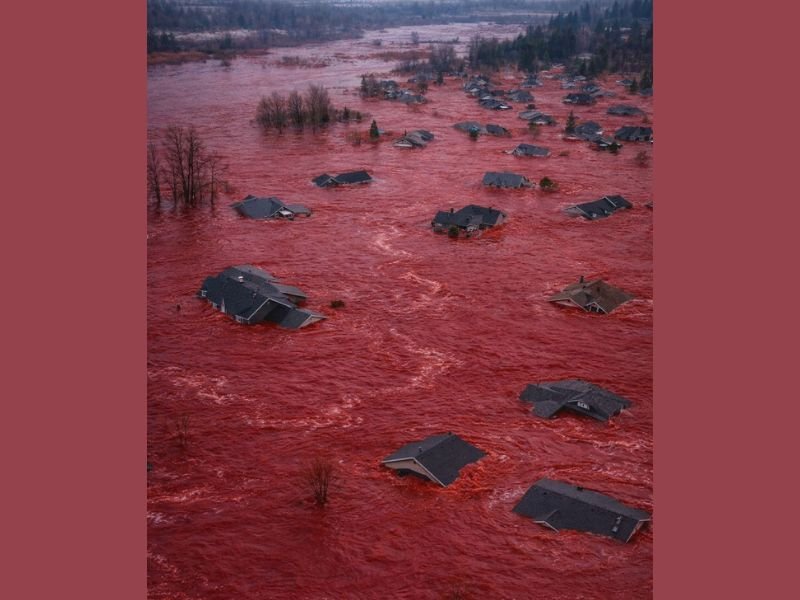
Oregon — Severe flooding has engulfed multiple communities across Oregon, with water levels reportedly rising to nearly 90 feet, submerging residential neighborhoods and leaving only rooftops visible in some of the hardest-hit areas. The widespread inundation has forced emergency evacuations, triggered ongoing rescue operations, and left authorities urging residents to avoid affected regions as conditions continue to deteriorate.
Aerial Images Reveal Widespread Devastation
Aerial visuals from the region show fast-moving, debris-filled floodwaters sweeping through neighborhoods and destroying structures in their path. Homes appear almost entirely underwater, highlighting the extraordinary scale of destruction. In several communities, the flooding is so severe that entire blocks are submerged, with familiar streets and landmarks completely overtaken by water.
Officials report that the strength of the currents and the presence of hazardous floating debris are complicating rescue missions. Emergency crews remain deployed across the region, working to reach stranded families and transport residents to safer locations.
Evacuations and Emergency Response Efforts Intensify
Authorities have issued urgent evacuation orders across multiple neighborhoods as water levels continue to rise. Many roads have become impassable or completely washed out, requiring rescue teams to rely on specialized equipment, boats, and aerial support. Temporary shelters have been set up to accommodate the large number of displaced residents, while emergency management teams assess structural damage and monitor ongoing risks.
Residents who remain in vulnerable areas are being strongly encouraged to evacuate immediately. Officials warn that unstable debris, contaminated water, and rapidly changing currents pose serious dangers even after the initial flooding peak.
Communities Brace for Ongoing Impact
Early assessments indicate significant damage to homes, businesses, and public infrastructure, with long-term recovery expected to take weeks or months. Meteorologists caution that saturated soil and continued runoff may prolong flood threats in certain areas. Environmental specialists will also be evaluating the distinct red coloration seen in the floodwater, believed to be linked to heavy sediment disturbance and soil erosion carried downstream.
With rescue operations still underway, authorities stress that recovery will be a long and difficult process for affected communities. Many families who evacuated may not be able to return home until floodwaters fully recede and structural evaluations are completed. Residents can follow updated reports, emergency information, and regional weather alerts at NapervilleLocal.com for ongoing coverage.

I’ve lived in Naperville long enough to see how quickly our community changes — from new developments downtown to sudden shifts in our Midwest weather. Reporting on Naperville news and daily forecasts gives me the chance to keep neighbors informed about what really matters. My goal is simple: deliver clear, timely updates so you always know what’s happening in our city and what to expect from the skies above.