
Texas Cedar Fever Reaches Extreme Levels as Juniper Pollen Surges Across San Antonio, Austin, Dallas, and Deep South Texas
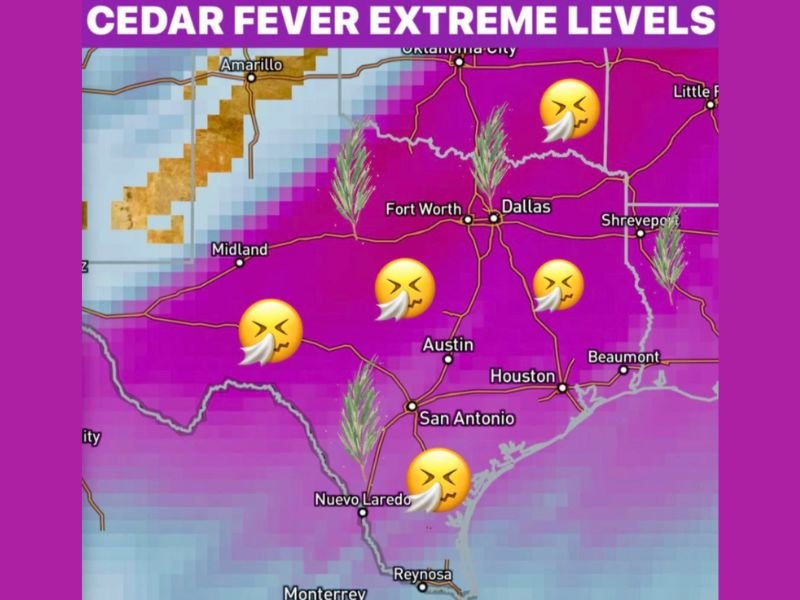
TEXAS — Cedar fever has surged to extreme levels across South and Central Texas, with mountain cedar (ashe juniper) pollen concentrations reaching some of the highest levels ever observed in parts of the state. Conditions are especially severe in San Antonio, Austin, Dallas, and areas stretching into Deep South Texas, as persistent southwest winds continue to transport pollen over long distances.
Health impacts are being felt statewide as the cedar pollen season enters full-throttle mode, affecting millions of residents.
Why Cedar Fever Is So Severe Right Now
The Texas Hill Country, located west and southwest of Austin and San Antonio, contains one of the highest densities of ashe juniper trees in the world. These trees release billions of microscopic pollen grains during the winter months.
Strong southwest wind patterns are acting as a direct transport corridor, allowing pollen to:
- Travel hundreds of miles
- Spread rapidly into North Texas, including Dallas–Fort Worth
- Reach Deep South Texas, worsening conditions well beyond the source region
This setup is often referred to as a “pollen highway,” where atmospheric flow efficiently distributes allergens across the state.
Cities Experiencing the Worst Conditions
Based on the data shown:
- San Antonio and Austin are experiencing off-the-charts cedar pollen levels
- Dallas–Fort Worth is reporting very high concentrations
- South Texas, including areas near the Rio Grande, is also being impacted
These levels are consistent with severe cedar fever outbreaks, even for residents who do not normally suffer from seasonal allergies.
Health Impacts Residents Are Reporting
Extreme cedar pollen exposure is commonly associated with:
- Severe nasal congestion
- Persistent coughing and sneezing
- Watery or burning eyes
- Sinus pressure and headaches
- Fatigue and sleep disruption
Medical professionals often note that cedar fever symptoms can mimic flu-like illness, though fever itself is not caused by the pollen.
When Relief May Arrive
Cedar pollen levels typically decline only after:
- Sustained rainfall, which helps remove pollen from the air
- A shift in wind direction
- Or the natural end of the juniper pollination cycle
Until then, continued high levels are expected whenever dry conditions and southwest winds persist.
Residents across Texas are being advised to limit outdoor exposure during peak pollen periods and take appropriate allergy precautions. For ongoing coverage of major weather-driven health impacts across the U.S., follow NapervilleLocal.com.

I’ve lived in Naperville long enough to see how quickly our community changes — from new developments downtown to sudden shifts in our Midwest weather. Reporting on Naperville news and daily forecasts gives me the chance to keep neighbors informed about what really matters. My goal is simple: deliver clear, timely updates so you always know what’s happening in our city and what to expect from the skies above.