
Texas Cedar Fever Surge Hits Dallas, Fort Worth, Austin and San Antonio as Allergy Index Spikes to Extreme Levels Across North Texas
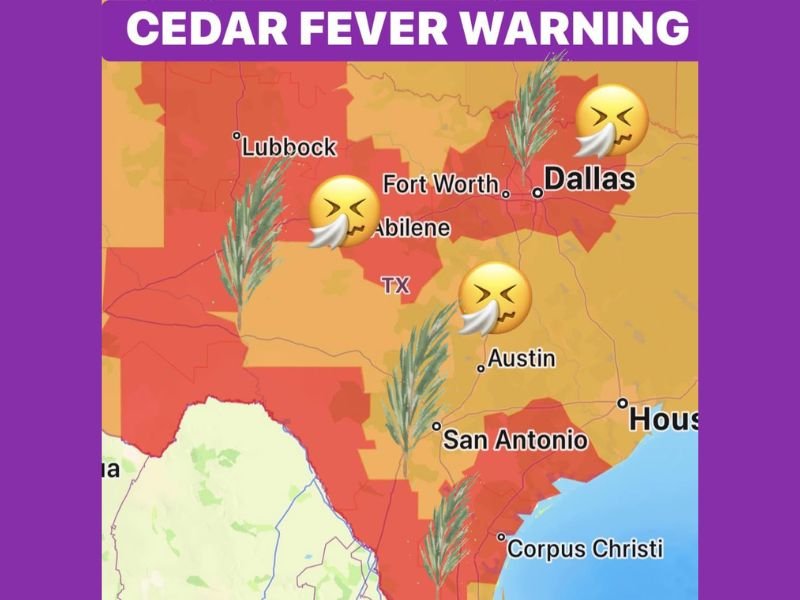
TEXAS — A powerful surge in cedar pollen is triggering widespread allergy misery across Texas, with major cities like Dallas, Fort Worth, Austin, and San Antonio experiencing extremely high pollen levels that experts say could linger for days.
Forecasters warn that cedar pollen counts are remaining very high across North Texas through at least Saturday, creating one of the worst allergy stretches of the season.
Dallas Allergy Index Reaches Extreme Levels
The hardest-hit area appears to be Dallas and surrounding North Texas communities, where the allergy index has climbed into the 11+ range — considered the highest and most severe category.
Cities including:
- Dallas
- Fort Worth
- Abilene
are all experiencing intense pollen concentrations, with conditions described as “about as bad as it gets” during cedar season.
Central and South Texas Also Impacted
The cedar pollen surge is not limited to North Texas.
High levels are also spreading across:
- Austin
- San Antonio
- Parts of South Texas
While some areas may see slightly lower concentrations than Dallas, conditions remain elevated enough to trigger symptoms for a wide portion of the population.
Why Cedar Pollen Is So Intense Right Now
Meteorologists point to a combination of dry conditions and persistent wind as the main drivers behind the ongoing pollen surge.
These conditions allow pollen to:
- Travel farther distances
- Stay suspended in the air longer
- Continuously circulate instead of settling
As a result, relief is limited even in areas that might typically see improvement.
Common Symptoms Affecting Residents
Health experts say many Texans are already feeling the effects, with symptoms including:
- Sneezing and runny nose
- Itchy or watery eyes
- Nasal congestion
- Scratchy throat
- Fatigue
For some individuals, symptoms may be severe enough to impact daily activities.
Little Relief Expected in the Coming Days
Forecast trends suggest that cedar pollen levels will remain high for several days, with no immediate change in weather patterns to clear the air.
The ongoing dry and breezy setup means pollen will continue to circulate across much of the state.
How to Protect Yourself
Residents dealing with allergies are advised to take precautions, including:
- Limiting time outdoors, especially during peak pollen hours
- Keeping windows closed to prevent pollen from entering homes
- Using allergy medications as needed
- Showering after spending time outside
A Seasonal Challenge Across Texas
Cedar fever is a well-known seasonal issue in Texas, but this current spike is particularly intense due to persistent weather conditions.
With major population centers affected simultaneously, millions are dealing with the impacts at once.
As the pollen surge continues, residents are encouraged to stay prepared and monitor local updates. Stay with NapervilleLocal.com for continued coverage of weather-driven impacts across the United States.

I’ve lived in Naperville long enough to see how quickly our community changes — from new developments downtown to sudden shifts in our Midwest weather. Reporting on Naperville news and daily forecasts gives me the chance to keep neighbors informed about what really matters. My goal is simple: deliver clear, timely updates so you always know what’s happening in our city and what to expect from the skies above.