
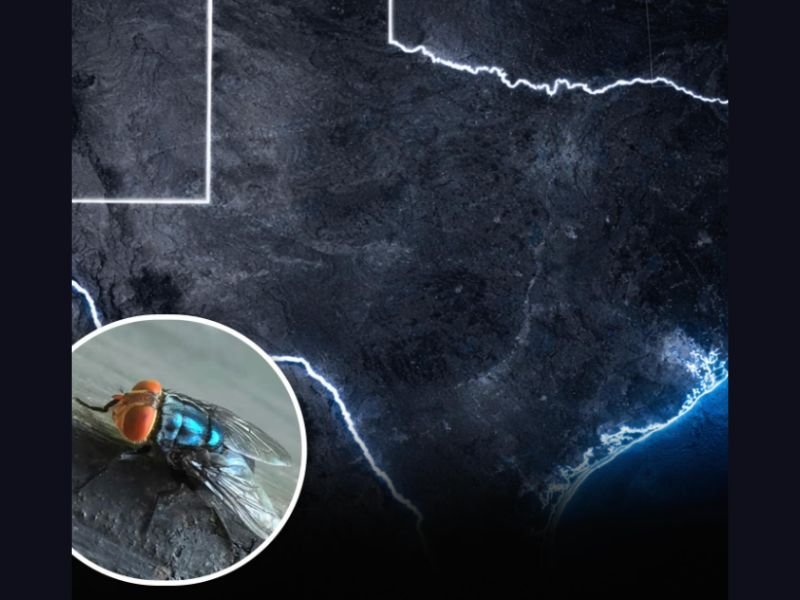
Texas Declares Disaster Emergency as “Flesh-Eating” New World Screwworm Fly Threat Moves North From Mexico
TEXAS — Texas has issued a statewide disaster declaration over the New World screwworm fly, a so-called “flesh-eating” insect officials say is spreading north from Mexico and getting closer every day. State officials say the declaration is meant to ensure funding, personnel, and response resources are ready to act immediately if the fly reaches Texas.
The concern centers on the insect’s larvae, which feed on living tissue, creating painful, fast-worsening wounds in livestock, wildlife, and pets. In rare cases, humans can also be affected. Officials warn that untreated infestations can result in severe tissue damage or even death, making early detection and prevention critical.
What Texas is declaring an emergency over
The emergency declaration focuses on the New World screwworm fly, an insect that officials say has been spreading northward from Mexico. While the fly has not yet been detected in Texas, authorities say it is close enough to justify preemptive action—particularly given the state’s large livestock industry and extensive rural areas.
By issuing the declaration now, Texas officials say they can mobilize resources faster, coordinate across agencies, and avoid delays that could worsen the impact if cases emerge.
Why the threat is considered unusually severe
Unlike many insects that feed on decaying material, screwworm larvae burrow into open wounds and consume healthy, living tissue. What may begin as a minor cut can rapidly turn into a medical emergency if larvae are not detected and removed.
Officials say the threat extends beyond agriculture. Pets and wildlife are also vulnerable, and while human cases are rare, they can occur, particularly in untreated or unnoticed wounds. This combination of animal health, public safety, and economic risk is why the situation is being treated as a disaster-level concern.
What officials say the state is doing now
State officials say the declaration ensures funding and response teams are immediately available if the fly crosses into Texas. While specific operational steps were not detailed in the provided information, the goal is readiness—allowing agencies to act quickly rather than react after damage has already occurred.
Officials emphasized that the fly is not currently in Texas, but described it as “inching closer every day,” reinforcing the urgency behind the decision.
Why this matters beyond Texas
While the declaration applies to Texas, insect threats like this can have regional consequences, particularly when they affect livestock, pets, and wildlife. For communities outside the state, the situation highlights how animal health threats can quickly evolve into broader safety and economic concerns.
As officials monitor the situation, early awareness and rapid response remain the primary focus.
What do you think — is Texas taking the right step by acting early, or is the response premature? Share your thoughts and follow ongoing public safety updates at NapervilleLocal.com.

Naperville is a community with stories that deserve to be told — both the serious ones about safety and justice, and the lighter ones that capture our culture and daily life. I focus on covering crime reports and court updates while also highlighting the traditions, events, and social trends that shape who we are. Through my reporting, I want to give readers a fuller picture of Naperville — the challenges we face and the character that keeps our city strong.