
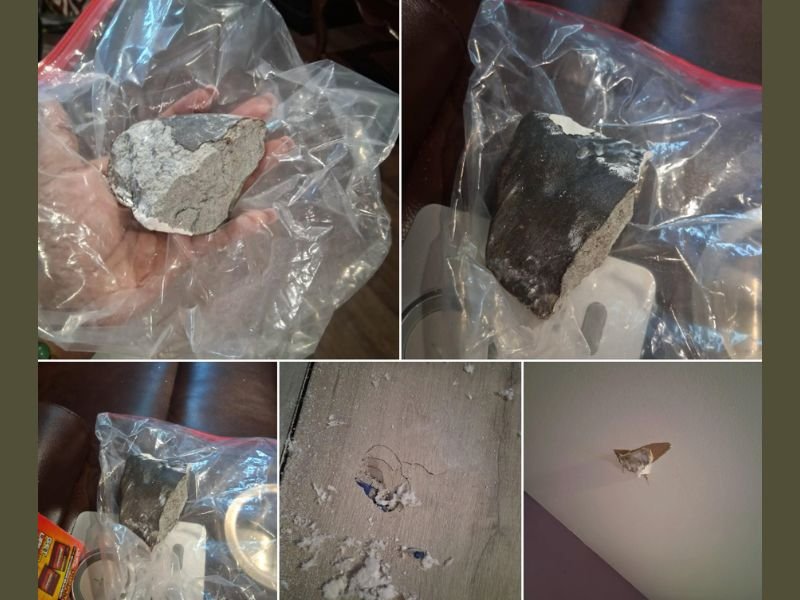
Texas Houston Cypress Stagecoach Meteor Explosion Sends Sonic Booms Across Southeast Texas With Debris Falling Near Willowbrook and Northgate Crossing
HOUSTON, TEXAS — A confirmed meteor explosion lit up the skies over southeast Texas Friday afternoon, sending shockwaves across the Houston area and leaving behind debris that may have reached residential neighborhoods.
The event, now officially confirmed as an airburst by the American Meteor Society, occurred around 4:40 PM CDT, when a bright fireball streaked across the sky before breaking apart and producing loud sonic booms.
Fireball Seen Across Southeast Texas Before Explosion
Eyewitnesses across southeast Texas reported seeing a bright meteor blazing across the sky, followed moments later by powerful booms that rattled homes in and around Houston.
The meteor first became visible approximately 49 miles above Stagecoach, Texas, located northwest of Houston, before rapidly traveling southeast at an estimated 35,000 mph.
Meteor Broke Apart Near Cypress Creating Shockwave
As the meteor descended, it began to break apart around 29 miles above the Bammel area near Cypress, triggering a pressure wave (airburst) that produced the loud explosion sounds heard across the region.
This breakup event is what caused the widespread reports of shaking homes and booming noises throughout the Houston metro area.
Debris Detected Between Willowbrook and Northgate Crossing
Radar data has confirmed that falling debris was detected between Willowbrook and Northgate Crossing, Texas, indicating that fragments from the meteor may have reached the ground. One Houston homeowner reported that a rock crashed through her roof, landing inside the home—though officials are still investigating whether that specific piece is directly linked to the meteor event.
Meteor Estimated at Three Feet Wide and One Ton
Preliminary estimates suggest the meteor was roughly three feet wide and weighed close to one ton before entering Earth’s atmosphere. As it traveled at extreme speed, friction and atmospheric pressure caused it to fragment, leading to the explosive airburst and scattered debris field.
Rare but Scientifically Significant Event
Meteor airbursts are relatively rare events, especially ones that produce audible shockwaves and potential ground impacts.
Events like this provide valuable data for scientists studying near-Earth objects and atmospheric entry behavior. While most meteors burn up completely before reaching the ground, larger fragments can survive and land as meteorites.
What Residents Should Know
Residents across Houston and surrounding communities can expect continued investigation into the event, particularly regarding any recovered debris. Officials may analyze fragments to confirm their origin and composition, which could provide further insight into the meteor’s path and breakup.
While dramatic, events like this are not considered a widespread safety threat, and most meteor activity remains harmless. Authorities and scientists will continue to monitor and study this rare event as more information becomes available.

I’ve lived in Naperville long enough to see how quickly our community changes — from new developments downtown to sudden shifts in our Midwest weather. Reporting on Naperville news and daily forecasts gives me the chance to keep neighbors informed about what really matters. My goal is simple: deliver clear, timely updates so you always know what’s happening in our city and what to expect from the skies above.