
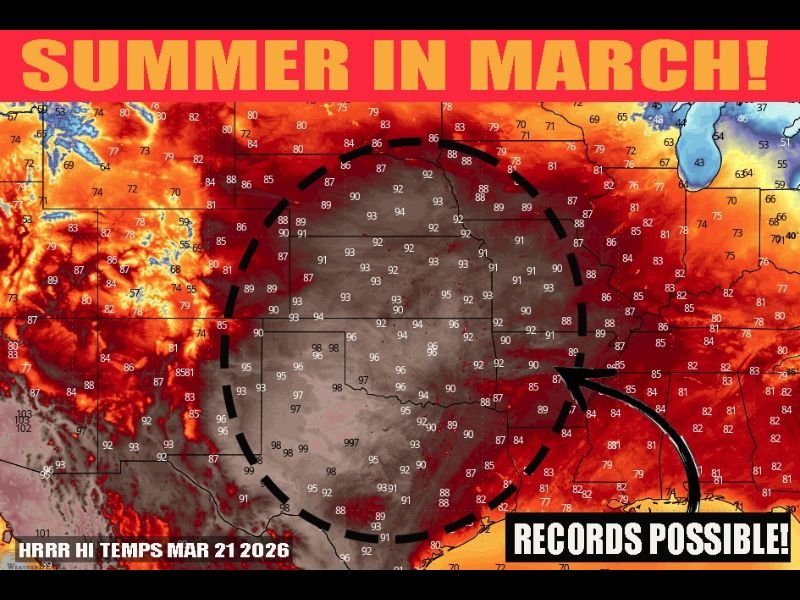
Texas Oklahoma Kansas Nebraska Heatwave Brings Widespread 90s and Record Breaking March Temperatures Across Central Plains and Midwest
CENTRAL UNITED STATES — An unusually intense early-season heatwave is sweeping across the central United States, bringing summer-like temperatures in the 90s from Texas through Nebraska and raising the potential for widespread record-breaking highs.
The pattern, highly unusual for mid-March, is creating conditions more typical of late June or July across large parts of the Plains and Midwest.
Extreme Heat Expands From Texas Into Nebraska
The core of the heat is centered across Texas, Oklahoma, Kansas, and Nebraska, where temperatures are climbing into the 90s across a broad region.
Some locations are even pushing toward the upper 90s, especially across parts of Texas and Oklahoma, where the hottest air is firmly established.
Further north into Nebraska, readings are also surging well above seasonal averages, with widespread 80s and low 90s dominating the region.
Record High Temperatures Likely Across Multiple States
Forecasters indicate that many daily temperature records could be challenged or broken, particularly across the Plains.
This level of heat in March is highly unusual and is being driven by a strong ridge of high pressure dominating the central U.S., allowing warm air to build and persist.
Cities across multiple states—including Dallas, Oklahoma City, Wichita, and Omaha—are all within the zone where record highs are possible.
Dry Conditions Add to the Intensity of the Heat
In addition to the extreme temperatures, the heatwave is being accompanied by very dry conditions, with little to no rainfall expected across much of the affected region.
This combination of heat and dryness can increase concerns related to:
- Elevated fire danger
- Rapid drying of soils
- Stress on early-season vegetation
The lack of cloud cover is also allowing temperatures to climb more efficiently during the day.
Midwest Also Feeling the Warm Surge
The warmth is not limited to the Plains. Parts of the Midwest are also experiencing above-normal temperatures, with widespread 70s and 80s extending eastward.
While not as extreme as the core heat zone, this still represents a significant departure from typical March conditions.
Why This Heatwave Is So Unusual
March typically marks a transition period between winter and spring, but this event is pushing conditions far beyond seasonal norms.
The intensity and geographic reach of the heat—combined with the potential for record highs—make this one of the more notable early-season warm events in recent years.
Meteorologists emphasize that such extremes, while not unheard of, are rare this early in the year.
What Comes Next
The current pattern is expected to hold in the short term, keeping temperatures elevated across much of the central U.S.
However, changes in the weather pattern later in March and into early April could bring a more active setup, potentially introducing cooler temperatures and much-needed precipitation.
What Residents Should Expect
Residents across Texas, Oklahoma, Kansas, Nebraska, and surrounding states should prepare for unseasonably hot and dry conditions, more typical of summer than early spring.
Staying hydrated, limiting outdoor exposure during peak heat, and monitoring fire safety conditions will be important as the heatwave continues. Forecasters continue to monitor this unusual pattern as it evolves, with updates expected if records begin to fall across the region.

I’ve lived in Naperville long enough to see how quickly our community changes — from new developments downtown to sudden shifts in our Midwest weather. Reporting on Naperville news and daily forecasts gives me the chance to keep neighbors informed about what really matters. My goal is simple: deliver clear, timely updates so you always know what’s happening in our city and what to expect from the skies above.