
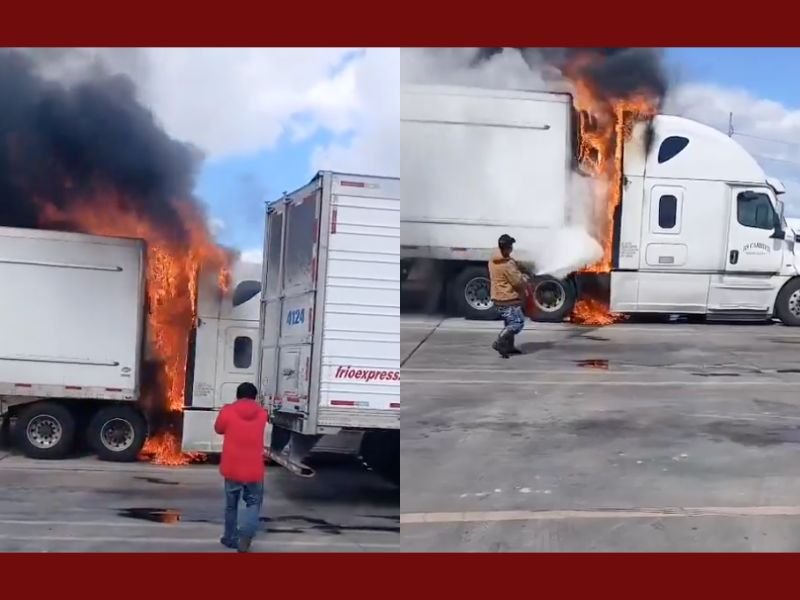
Truck Fire in Pharr, Texas Sparks Debate After Bystanders Struggle to Explain Emergency to 911 Dispatchers
PHARR, Texas — A truck fire in Pharr, Texas has ignited a heated discussion far beyond the flames after witnesses on the scene reportedly struggled to communicate with 911 dispatchers, unable to explain the emergency in English or identify what “911” even was.
The incident, which was captured on video and circulated widely online, shows a semi-truck engulfed in flames while several bystanders — believed to be local truck yard workers — debate what number to call for help. Despite visible panic, no one appears to make immediate contact with emergency services.
Bystanders Confused as Truck Erupts in Flames
According to witnesses, the fire broke out suddenly in a semi-truck parked near a loading dock. Thick black smoke filled the sky as nearby workers ran toward the vehicle, some shouting instructions in Spanish. However, when one onlooker suggested calling 911, confusion followed.
In the viral video, several people can be heard discussing what “911” means, unsure whether it’s the number to reach police, firefighters, or medical responders.
“They’re standing there asking each other what 911 is while the truck burns,” one viewer wrote online. “It’s unbelievable — seconds matter in moments like that.”
The fire department eventually arrived on scene and extinguished the blaze before it could spread to neighboring trucks, but the footage has since raised serious concerns about language barriers in emergency situations — especially in workplaces where employees may not speak fluent English.
Language Barriers Delay Emergency Response
Officials have not reported any injuries, but community leaders and safety advocates say the situation underscores a growing communication challenge in Texas, where rapid population and workforce changes have created linguistic divides in critical jobs.
According to data from the Texas Demographic Center, about 1 in 4 working-age adults in the state speak English less than “very well.” Immigrants now make up 23% of the state’s workforce, including a large share of truck drivers, warehouse workers, and logistics employees — industries where quick response and clear communication can mean the difference between life and death.
“This isn’t about accents or perfection,” one safety official said. “It’s about having enough language skills to call for help when seconds count. People need to be able to describe what’s happening — especially in jobs with high physical risk.”
Trucking Industry’s Growing Safety Challenge
Texas leads the nation in commercial trucking employment, with more than 200,000 active truck drivers operating across the state. Many are immigrants or non-native English speakers recruited from abroad or from neighboring Latin American countries.
While trucking companies are required to provide basic safety training, there is no statewide requirement ensuring that drivers or logistics workers possess a minimum English proficiency level beyond federal commercial license testing.
Truck burns in Pharr, TX and more than one person on scene didn’t even know what “911” was. Nobody could explain the emergency in English. They’re discussing what 911 is in the video.
In Texas, about 1 in 4 working-age adults speaks English less than “very well.” Immigrants are… pic.twitter.com/O3N6X8O6JX— Rob Carpenter (@Thewhitesmoke) November 15, 2025
This loophole, experts warn, can create dangerous gaps during emergencies like crashes, fires, or hazmat spills — incidents that demand immediate, clear communication with first responders.
“A fire spreads in seconds,” said a retired paramedic from Hidalgo County. “If the first person who sees it can’t tell dispatchers what’s burning, where they are, or whether someone’s trapped, those seconds are lost forever.”
Public Reaction: Safety or Discrimination Debate?
The video has stirred divided reactions online. Some viewers argue that the event highlights a public safety concern requiring stronger workplace communication standards, while others caution against turning it into a cultural or political issue.
“This isn’t about blaming anyone — it’s about making sure everyone knows how to call for help,” one commenter wrote.
Another user disagreed, calling the conversation “tone-deaf” and pointing out that language barriers are often tied to labor shortages, poor training, and companies relying on low-cost workers.
In communities like Pharr, where over 90% of residents identify as Hispanic or Latino, bilingual communication is already common. Still, advocates say basic emergency vocabulary and awareness training should be required for all employees in high-risk roles.
Officials Urge Employers to Act
While no law currently mandates multilingual emergency preparedness in Texas workplaces, local safety organizations are urging logistics companies, truck yards, and construction firms to step up voluntary training.
Experts recommend that all employees — regardless of language background — be trained to:
- Recognize life-threatening emergencies
- Know how to describe location and situation to 911 dispatchers
- Understand key phrases like “fire,” “injured,” or “help” in English
- Use translation apps or visual guides if language barriers arise
“You don’t have to speak perfect English,” said a Hidalgo County fire chief. “You just need to know how to say, ‘fire at this location, send help.’ That alone can save lives.”
Community Calls for Broader Awareness
Pharr city officials have not issued a formal statement about the fire, but residents are calling for bilingual emergency awareness campaigns, especially in industries that rely heavily on immigrant labor.
Bilingual outreach efforts, they say, could help prevent similar confusion during future crises — not only for workplace incidents but also for natural disasters, vehicle collisions, and medical emergencies.
“If people don’t know what 911 is, that’s a failure of communication, not intelligence,” said a community volunteer. “We need outreach that bridges that gap.”
The burned truck has since been removed from the lot, and the incident remains under review.
What do you think — should Texas require basic English or bilingual emergency training in high-risk workplaces? Share your thoughts and join the discussion at NapervilleLocal.com.

I’ve lived in Naperville long enough to see how quickly our community changes — from new developments downtown to sudden shifts in our Midwest weather. Reporting on Naperville news and daily forecasts gives me the chance to keep neighbors informed about what really matters. My goal is simple: deliver clear, timely updates so you always know what’s happening in our city and what to expect from the skies above.