
Super El Nino Evolving With Broad Warm Pacific Signature Now Obvious Bringing Suppressed Temperatures, Convective Rainfall, and Reduced Hurricane Season
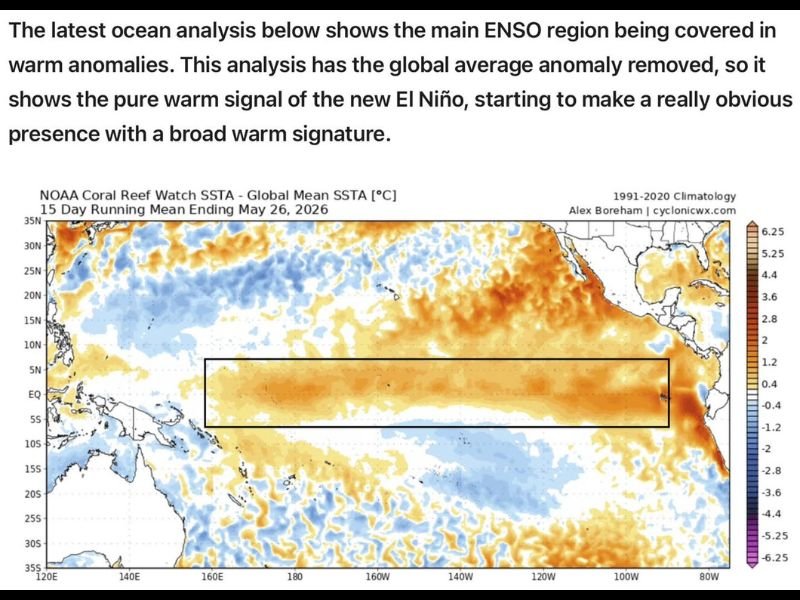
SOUTHEASTERN UNITED STATES — A Super El Niño is actively evolving and already producing global weather impacts including a massive European heat wave, flooding rains across the Southeast, and dry and hot conditions in the West. The NOAA Coral Reef Watch sea surface temperature anomaly analysis ending May 26, 2026, shows a broad and obvious warm signature blanketing the equatorial Pacific ENSO region, confirming the developing Super El Niño signal is making a strong and clear presence heading into the summer months.
Three Key Summer Impacts for North Georgia and the Southeast Under Super El Nino
Historical trends from past very strong El Niño events show three distinct summer impact categories for north Georgia and the broader Southeast. Temperatures tend to run slightly cooler than normal due to enhanced cloud cover and frequent convective activity driven by sub-tropical jet stream shifts, meaning fewer prolonged record-breaking heat waves are expected this summer compared to neutral or La Niña years.
Rainfall will be highly variable and convective in nature rather than organized frontal systems, with pop-up afternoon thunderstorms creating a feast or famine pattern where one county sees localized flash flooding while the neighboring county receives nothing. This localized and unpredictable rainfall distribution will be a recurring challenge through the summer months.
Atlantic Hurricane Season Expected Below Average but the It Only Takes One Caveat Applies
One of the most reliable Super El Niño summer impacts is significantly suppressed Atlantic hurricane activity, with enhanced westerly wind shear tearing apart developing tropical disturbances before they can organize. Statistically, strong El Niño summers produce roughly two-thirds the named storms and half the hurricanes of a typical 30-year average.
However, the critical caveat is that major hurricanes like Michael and Idalia have proven that even heavily suppressed seasons can produce rapidly intensifying storms that find pockets of low shear and warm sea surface temperatures. Coastal residents should never drop their hurricane preparedness regardless of the El Niño suppression signal.
Reduced Severe Weather Threat Expected Across the Southeast Through the Summer Months
Summer severe weather setups tend to be less frequent and less volatile during El Niño phases compared to La Niña or neutral summers, offering some additional reassurance for residents across the Southeast heading into the peak warm season months. Stay with NapervilleLocal.com for the latest weather updates and local forecast coverage.

I’ve lived in Naperville long enough to see how quickly our community changes — from new developments downtown to sudden shifts in our Midwest weather. Reporting on Naperville news and daily forecasts gives me the chance to keep neighbors informed about what really matters. My goal is simple: deliver clear, timely updates so you always know what’s happening in our city and what to expect from the skies above.