
Severe Drought Worsens Across North Carolina and South Carolina With 87% of NC and 67% of SC Now in Severe Conditions, Worst Spread Since 2008
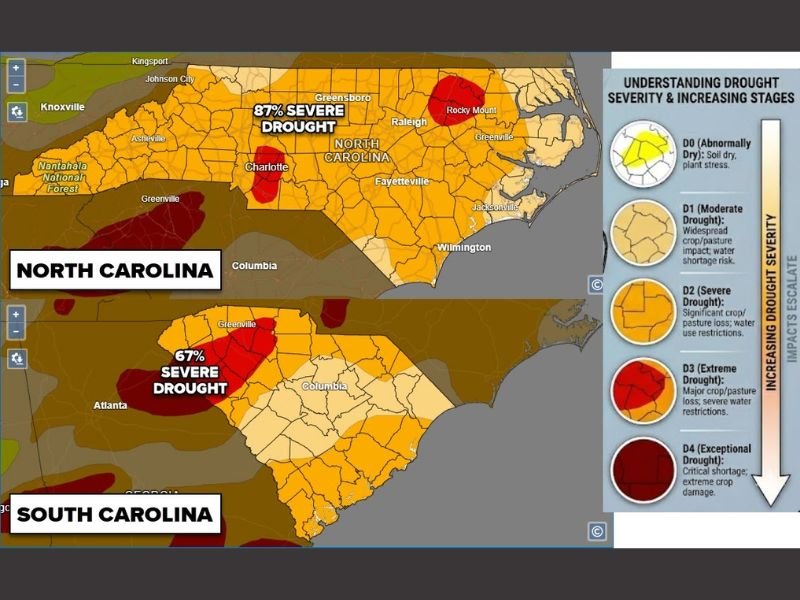
NORTH CAROLINA & SOUTH CAROLINA — Drought conditions across the Carolinas have intensified this week, with 87% of North Carolina now classified under Severe Drought (D2) and 67% of South Carolina experiencing Severe Drought, according to the latest drought monitoring data.
This marks the most widespread severe drought in North Carolina since 2008 and in South Carolina since 2012, signaling a significant and concerning expansion of dry conditions across both states.
Severe Drought Dominates North Carolina
The majority of North Carolina is now shaded in Severe Drought classification, including major population centers such as Charlotte, Greensboro, Raleigh, Fayetteville, and Rocky Mount.
Under the D2 category, impacts include:
- Significant crop and pasture losses
- Increasing water-use concerns
- Growing stress on soil moisture levels
While some rain has fallen recently, officials note that the rainfall has not been consistent enough to reverse the broader moisture deficit that has developed over recent months.
South Carolina Also Facing Widespread Severe Drought
In South Carolina, 67% of the state is currently under Severe Drought classification, with particularly concerning conditions near Greenville and surrounding Upstate areas.
The drought intensity scale indicates escalating impacts from moderate dryness to extreme and exceptional drought. Although not all areas have reached the highest categories, the growing coverage of D2 conditions signals mounting agricultural and water supply concerns.
Communities near Columbia and coastal South Carolina are also experiencing notable dryness, though some regions remain under moderate drought classifications rather than severe.
Why This Matters Heading Into Growing Season
The timing of worsening drought conditions is especially troubling as the spring growing season begins. Farmers and agricultural operations rely on steady rainfall during this period to support planting and early crop development.
Even with occasional rain events, meteorologists emphasize that what the Carolinas need most is consistent, soaking rainfall over an extended period, not just isolated systems.
Without meaningful and sustained precipitation, soil moisture recovery will remain limited, increasing the risk of deeper agricultural and hydrological impacts.
Historical Context Raises Concern
The scale of severe drought now affecting North Carolina is the most widespread seen in nearly two decades. In South Carolina, similar coverage has not been observed in over a decade.
This comparison highlights the seriousness of the current pattern and underscores the importance of upcoming rainfall opportunities.
For now, residents and agricultural stakeholders across the Carolinas will be closely watching forecast trends in hopes of a wetter and more sustained pattern emerging.
For continued regional weather coverage and drought updates, stay with NapervilleLocal.com.

I’ve lived in Naperville long enough to see how quickly our community changes — from new developments downtown to sudden shifts in our Midwest weather. Reporting on Naperville news and daily forecasts gives me the chance to keep neighbors informed about what really matters. My goal is simple: deliver clear, timely updates so you always know what’s happening in our city and what to expect from the skies above.