
Northeast and Mid-Atlantic Set to Gain Up to 105 Minutes of Daylight in March as Spring Equinox and Daylight Saving Time Accelerate Seasonal Shift
NORTHEAST AND MID-ATLANTIC — March is bringing a rapid increase in daylight across the region as communities move closer to the Spring Equinox on March 20. Forecasters indicate that the length of daylight will expand significantly throughout the month, with the largest gains occurring in the northernmost states.
The shift becomes especially noticeable week to week, as sunsets push later and afternoons feel brighter. In addition, the region will “spring forward” on March 8, losing one hour of sleep but gaining valuable evening daylight.
Northern States See the Largest Daylight Gains
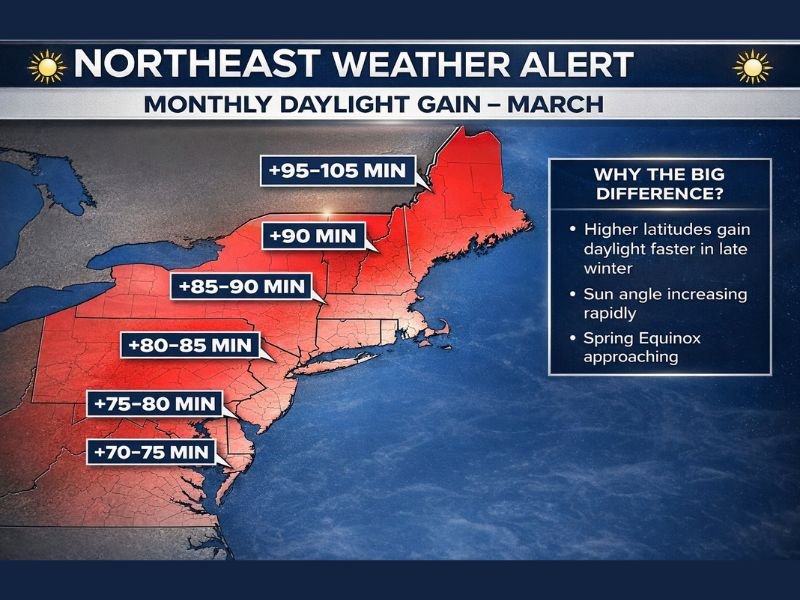
According to regional projections, northern New England will experience the most dramatic increase. Parts of Maine are expected to gain approximately 95 to 105 additional minutes of daylight during March alone.
Moving slightly south, areas across northern New York, Vermont, New Hampshire, and upstate portions of the Northeast are projected to gain around 90 minutes. Central areas including portions of Massachusetts and upstate New York may see gains in the 85 to 90 minute range.
Further south into the Mid-Atlantic, the increase remains substantial but slightly smaller. Regions across Pennsylvania and southern New England are forecast to gain roughly 80 to 85 minutes, while portions of New Jersey and Delaware may see gains around 75 to 80 minutes.
Coastal areas farther south, including parts of Maryland and northern Virginia, are projected to gain approximately 70 to 75 minutes of daylight during March.
Why the Difference in Daylight Gains?
The variation in daylight increase is largely due to latitude differences. Higher latitudes gain daylight more rapidly in late winter as the Earth tilts back toward the sun. As March progresses, the sun’s angle rises more quickly in northern areas, leading to longer days at a faster pace compared to southern regions.
The approaching Spring Equinox further accelerates this trend. Around the equinox, daylight increases occur more rapidly because of the Earth’s orbital position relative to the sun. This creates a noticeable shift in the daily sunrise and sunset times across the Northeast and Mid-Atlantic.
Daylight Saving Time beginning March 8 will amplify the effect during evening hours. While mornings will briefly appear darker, the added evening light reinforces the seasonal transition.
A Clear Signal of Seasonal Change
The upward trend in daylight is a reliable marker that winter is loosening its grip. Even though exact gains vary by location, the overall pattern shows a steady and accelerating increase across the entire region.
Longer afternoons, a higher sun angle, and brighter evenings all contribute to the gradual move toward spring conditions. By the end of March, residents across the Northeast and Mid-Atlantic will experience noticeably longer days compared to early February.
For continued coverage of regional weather trends and seasonal outlooks, visit NapervilleLocal.com for the latest updates and in-depth reporting.

I’ve lived in Naperville long enough to see how quickly our community changes — from new developments downtown to sudden shifts in our Midwest weather. Reporting on Naperville news and daily forecasts gives me the chance to keep neighbors informed about what really matters. My goal is simple: deliver clear, timely updates so you always know what’s happening in our city and what to expect from the skies above.