
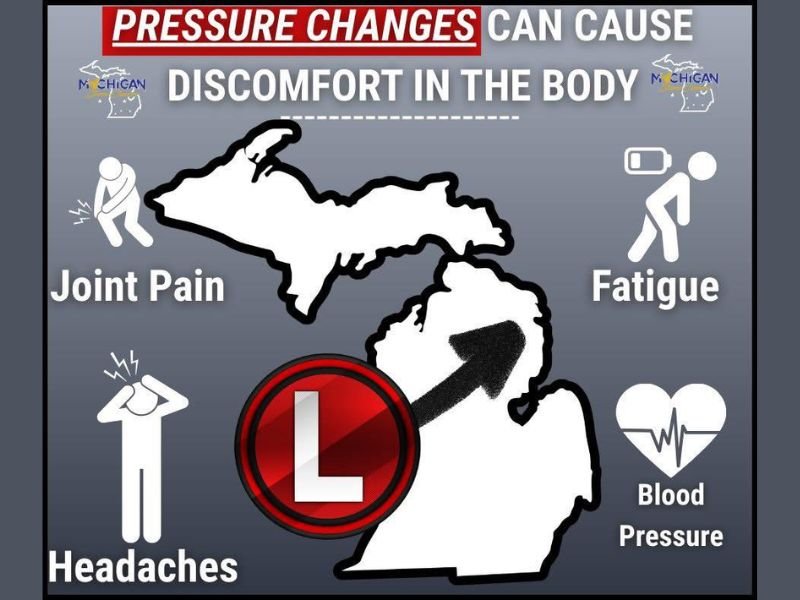
Michigan Low Pressure System Brings Strong Pressure Swings Causing Headaches, Fatigue and Joint Pain Across the State
MICHIGAN — A powerful low-pressure system that recently tracked directly across the state is not only bringing changing weather conditions but also noticeable physical discomfort for many residents.
From northern Michigan down through central and southern parts of the state, people are reporting symptoms often linked to rapid atmospheric pressure changes, including headaches, fatigue, and joint pain.
Strong Low Pressure System Moves Directly Over Michigan
According to recent observations, the system was fairly strong and passed directly overhead, creating a significant drop and fluctuation in atmospheric pressure.
When systems like this move across a region:
- Air pressure falls quickly
- The body struggles to adjust to rapid changes
- Sensitive individuals feel physical symptoms
This type of setup is especially common during active weather patterns in the Great Lakes region.
Why Pressure Changes Affect the Human Body
Meteorologists and health experts note that sudden pressure drops can impact the body in several ways:
- Headaches: Changes in sinus pressure can trigger pain or migraines
- Joint Pain: Expanding tissues and pressure shifts can aggravate joints
- Fatigue: The body uses more energy trying to adapt
- Blood Pressure Fluctuations: Some individuals may feel lightheaded or uneasy
These symptoms can vary from mild discomfort to more noticeable effects, depending on individual sensitivity.
Most Common Symptoms Being Reported
Residents across Michigan are experiencing a range of symptoms, including:
- Persistent or sudden headaches
- Increased joint stiffness or pain
- Unusual tiredness or fatigue
- Slight dizziness or pressure-related discomfort
While not everyone is affected, those with pre-existing conditions or sensitivity to weather changes tend to feel it more strongly.
A Common Great Lakes Weather Effect
This phenomenon is not unusual for Michigan. The Great Lakes region frequently sees:
- Strong low-pressure systems
- Rapid weather swings
- Noticeable atmospheric changes
Because of this, pressure-related symptoms tend to spike during storm systems moving through the area.
What Residents Can Do to Manage Symptoms
Experts suggest a few simple steps to help reduce discomfort:
- Stay hydrated
- Get adequate rest
- Monitor indoor air pressure and humidity if possible
- Use over-the-counter remedies for headaches if needed
Those with chronic conditions should be especially mindful during strong weather systems.
Temporary Effects as System Moves Away
The good news is that these symptoms are typically temporary. As the low-pressure system moves out and atmospheric pressure stabilizes:
- Symptoms usually ease
- Energy levels return to normal
- Headaches and joint pain subside
A Reminder of Weather’s Hidden Impact
While storms often bring visible impacts like rain or wind, this event highlights a lesser-known effect — how weather can directly influence how people feel physically.
For now, Michigan residents may continue to notice these symptoms until conditions fully stabilize. Stay with NapervilleLocal.com for more updates on major weather systems and their impacts across the United States.

I’ve lived in Naperville long enough to see how quickly our community changes — from new developments downtown to sudden shifts in our Midwest weather. Reporting on Naperville news and daily forecasts gives me the chance to keep neighbors informed about what really matters. My goal is simple: deliver clear, timely updates so you always know what’s happening in our city and what to expect from the skies above.