
Florida, Georgia, Alabama, Mississippi and Louisiana Face Wild Temperature Swings as Gulf Coast Warm Waters Clash With Chilly Inland Air Creating “Two Seasons in One Day”
UNITED STATES — A dramatic weather contrast is unfolding across the Southeast and Gulf Coast, where residents are experiencing what feels like two completely different seasons in a single day.
From Florida to Georgia, Alabama, Mississippi, and Louisiana, early morning cold is quickly giving way to warmer, more humid conditions by afternoon — all driven by a sharp divide between chilly inland air and unusually warm Gulf waters.
Cold Start Across Inland Southeast
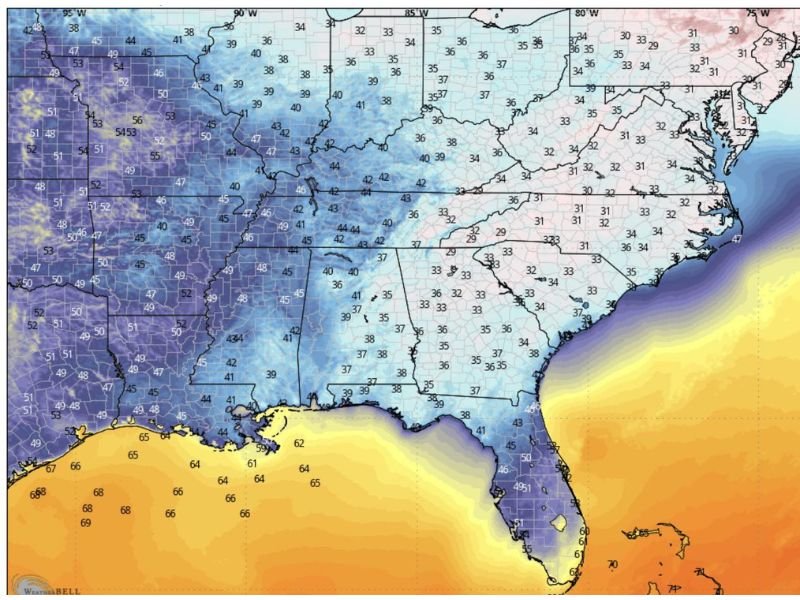
Thursday morning began with a winter-like chill across much of the inland Southeast. Temperatures dropped into the low to mid-30s across Georgia, Alabama, Mississippi, and parts of northern Florida, with even colder pockets further inland. Residents waking up early were met with conditions more typical of January than late March.
Cities away from the coast experienced the sharpest chill, with widespread readings in the 30s and even upper 20s in isolated areas.
Gulf Waters Fuel Sudden Warm-Up
Just offshore, however, a completely different story is playing out. The Gulf of Mexico is running significantly warmer, with water temperatures in the mid-60s to near 70 degrees, creating a stark contrast with the cold air inland.
As the sun rises and winds shift, this warm marine air begins pushing inland, triggering a rapid temperature rebound. By afternoon, many areas are expected to climb into the 50s and even low 60s, with some southern locations warming even further.
“Two Seasons in One Day” Setup Explained
Meteorologists describe this setup as a classic Gulf Coast transition pattern:
- Cold, dry air dominates overnight and early morning
- Warm, moist air from the Gulf surges inland during the day
- The result is a fast, noticeable shift in comfort levels within hours
This creates the unusual experience where residents may start the day bundled in winter clothing, only to feel overdressed by midday.
Coastal vs Inland Divide Becomes Clear
The contrast is especially noticeable when comparing coastal and inland regions:
- Coastal Florida and Gulf shoreline: Milder mornings and quicker warm-up
- Inland Georgia, Alabama, Mississippi: Colder starts with slower warming
- Louisiana and coastal Mississippi: Influenced heavily by warm Gulf air
This sharp gradient is clearly visible on regional temperature maps, showing colder blues inland and warmer tones near the Gulf.
Why This Pattern Feels So Unpredictable
This type of weather can feel chaotic because it changes quickly and doesn’t follow a steady pattern. Meteorologists warn that this is not a stable or consistent setup, meaning temperatures can fluctuate significantly from day to day — and even hour to hour. It’s part of a broader seasonal transition as winter gives way to spring across the Southeast.
What Residents Should Expect Next
The warming trend is expected to continue into the coming days, but variability will remain.
Residents across Florida, Georgia, Alabama, Mississippi, and Louisiana should be prepared for:
- Cool mornings and warmer afternoons
- Rapid temperature swings
- Increasing humidity near the coast
Layered clothing will remain essential as conditions shift throughout the day.
Final Outlook
The Southeast is currently caught between two competing air masses — lingering winter chill inland and warm Gulf air pushing north. This clash is creating one of the most noticeable “weather whiplash” setups of the season, where mornings feel like winter and afternoons hint strongly at summer.
As this pattern continues, residents should stay prepared for sudden changes — because along the Gulf Coast right now, the weather is anything but predictable.

I’ve lived in Naperville long enough to see how quickly our community changes — from new developments downtown to sudden shifts in our Midwest weather. Reporting on Naperville news and daily forecasts gives me the chance to keep neighbors informed about what really matters. My goal is simple: deliver clear, timely updates so you always know what’s happening in our city and what to expect from the skies above.