
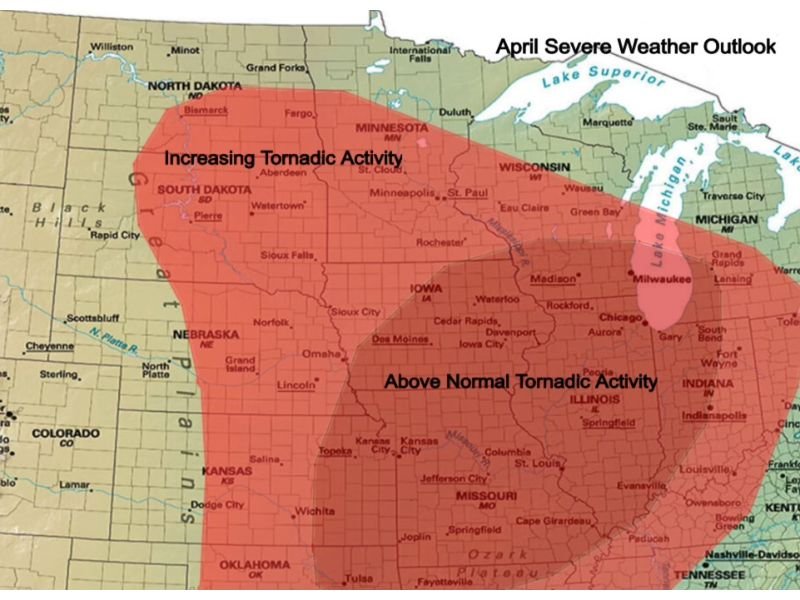
Illinois, Iowa, Wisconsin, Minnesota, Missouri, Nebraska, Kansas, Oklahoma and South Dakota Face Elevated April Tornado Risk as Forecasters Warn of Above-Normal Severe Weather Pattern
UNITED STATES — A potentially dangerous shift in weather patterns is expected as the calendar turns to April, with forecasters warning of above-normal tornado activity across a large portion of the Midwest and central United States.
States including Illinois, Iowa, Wisconsin, Minnesota, Missouri, Nebraska, Kansas, Oklahoma, and South Dakota are all highlighted in a growing risk zone where severe storms — including tornadoes — could become more frequent.
Widespread Region Marked for Increased Tornado Activity
According to early outlooks, a broad swath of the country stretching from the central Plains into the Upper Midwest and Great Lakes is expected to see heightened severe weather potential.
The risk zone includes major population centers such as:
- Chicago, Illinois
- Des Moines, Iowa
- Minneapolis and St. Paul, Minnesota
- Milwaukee, Wisconsin
- Kansas City, Missouri
- Omaha, Nebraska
- Oklahoma City, Oklahoma
This expansive area is being flagged for both “increasing tornadic activity” and “above-normal tornado potential” as atmospheric conditions become more favorable for storm development.
Why April Could Turn Active Quickly
Meteorologists point to a developing upper-air pattern that is expected to support severe weather outbreaks.
Key factors include:
- Strengthening jet stream dynamics
- Increasing moisture return from the Gulf of Mexico
- Clashing air masses between warm southern air and lingering northern chill
These ingredients often combine to create ideal conditions for strong thunderstorms and tornado formation, especially during early spring.
Northern Shift in Severe Weather Risk
One of the more notable aspects of this outlook is the potential northward expansion of tornado threats.
While the southern Plains are typically the early-season hotspot, forecasters say storm tracks could extend further north into states like Minnesota, Wisconsin, and even parts of the Great Lakes region. This means areas not always associated with frequent tornado activity could see elevated risks during this period.
Uncertainty Remains on Storm Strength and Frequency
Despite the concerning outlook, experts emphasize that it is still too early to determine:
- How many tornadoes will occur
- How strong individual storms may become
- Exactly which cities will be hardest hit
However, the signal for increased activity is strong enough that residents across the highlighted states are being urged to stay alert as April begins.
Peak Tornado Season Begins
April marks the start of peak tornado season across much of the central United States, making this outlook especially important. Historically, this time of year sees a rapid increase in severe weather events as atmospheric conditions become more volatile.
What This Means for Illinois and Naperville Area
For residents in Illinois, including the Naperville region, this outlook is a reminder to begin preparing early. While not every system will produce severe weather, the overall pattern favors more frequent storm opportunities, some of which could turn dangerous.
Residents are encouraged to:
- Review emergency plans
- Stay updated with weather alerts
- Ensure access to reliable warning systems
Final Outlook
A large portion of the central and northern United States is heading into April with a heightened risk of severe storms and tornadoes, spanning from the Plains through the Midwest and into the Great Lakes.
While uncertainty remains, the overall message is clear — this could be a more active-than-normal start to tornado season, and preparation now could make a critical difference in the weeks ahead. Stay tuned to Naperville Local for continuing updates as this developing severe weather pattern unfolds across the region.
I’ve lived in Naperville long enough to see how quickly our community changes — from new developments downtown to sudden shifts in our Midwest weather. Reporting on Naperville news and daily forecasts gives me the chance to keep neighbors informed about what really matters. My goal is simple: deliver clear, timely updates so you always know what’s happening in our city and what to expect from the skies above.