
NEXRAD Radar Captures 169 Million Birds Surging North Overnight Across the Eastern United States — Nearly 10 Million in New York Alone in a Record Early-Season Migration Surge
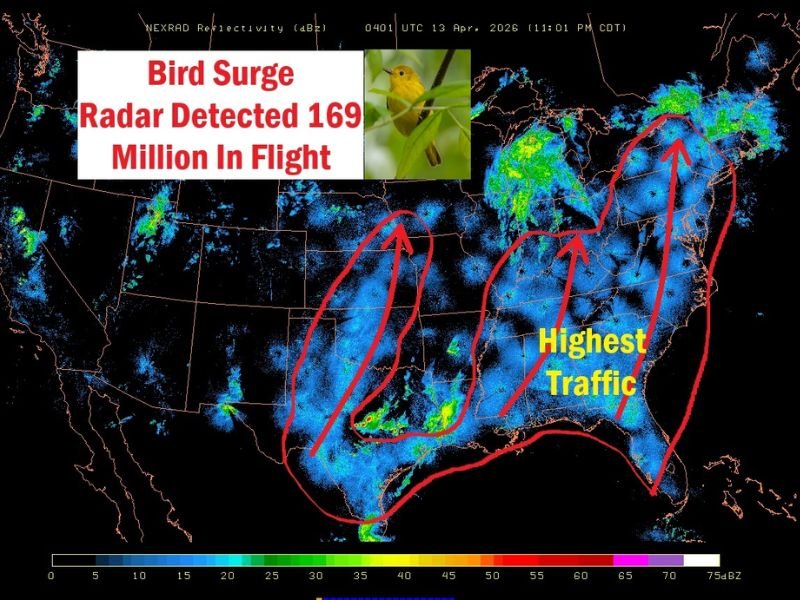
EASTERN UNITED STATES — The skies over the eastern half of the United States turned into one of the most extraordinary natural spectacles of the year last night, and most people slept right through it. The NEXRAD radar network — the same system used to track storms — detected more than 169 million birds in flight overnight on April 13, 2026, with nearly 10 million of those birds passing through New York state alone.
Forecasters are calling it a remarkably high number for this early in the season, driven by a May-like weather pattern that has delivered perfect migration conditions across the eastern corridor.
169 Million Birds Detected in a Single Night
The sheer scale of last night’s migration event is difficult to wrap your mind around. At 11:01 PM CDT, the NEXRAD reflectivity radar was lighting up across a massive swath of the eastern United States — not from rain or storms, but from the biological signatures of hundreds of millions of birds moving northward simultaneously under the cover of darkness.
The highest traffic corridors on the radar map were concentrated across the southeastern United States and up through the mid-Atlantic and northeastern states, with thick biological returns visible from the Gulf Coast all the way through New England. New York state alone hosted nearly 10 million individual birds in flight — a staggering single-state total that underscores just how intense and concentrated the migration push was overnight.
May-Like Weather Pattern Creating Perfect Tailwinds
The reason for such an exceptional migration night comes down to weather. A May-like pattern locked into place this week has generated winds at 1,500 to 2,000 feet above the ground racing northward to northeastward at 40 to 50 mph on average — nearly ideal tailwind conditions for migrating birds covering enormous distances in a single overnight flight.
Birds are remarkably attuned to atmospheric conditions and instinctively capitalize on favorable tailwinds to maximize their migration efficiency. The radar trends from last night match up almost perfectly with those favorable winds aloft, confirming that the birds took full advantage of the extraordinary atmospheric setup — even though we are only in the middle of April rather than the peak migration month of May.
How You Can Help the Birds Tonight and This Week
With the favorable weather pattern expected to persist through the week, more massive migration nights are likely ahead. Residents across the eastern United States can take one simple but meaningful action to help — turn off outdoor lights at night.
Light pollution is a documented and serious hazard for migrating birds. Artificial lights at night confuse and disorient birds mid-flight, causing them to circle illuminated structures, collide with buildings, and exhaust themselves dangerously.
Turning off porch lights, decorative lighting, and any unnecessary outdoor illumination during the overnight hours this week could make a genuine difference for millions of birds passing through your community. Stay with NapervilleLocal.com for the latest weather updates and local forecast coverage.

I’ve lived in Naperville long enough to see how quickly our community changes — from new developments downtown to sudden shifts in our Midwest weather. Reporting on Naperville news and daily forecasts gives me the chance to keep neighbors informed about what really matters. My goal is simple: deliver clear, timely updates so you always know what’s happening in our city and what to expect from the skies above.