
Extreme Drought Expanding Across North Carolina Including Asheville, Charlotte, and Raleigh as Worst Drought in 15 Years Worsens With 9-15 Inches of Rain Needed to Recover
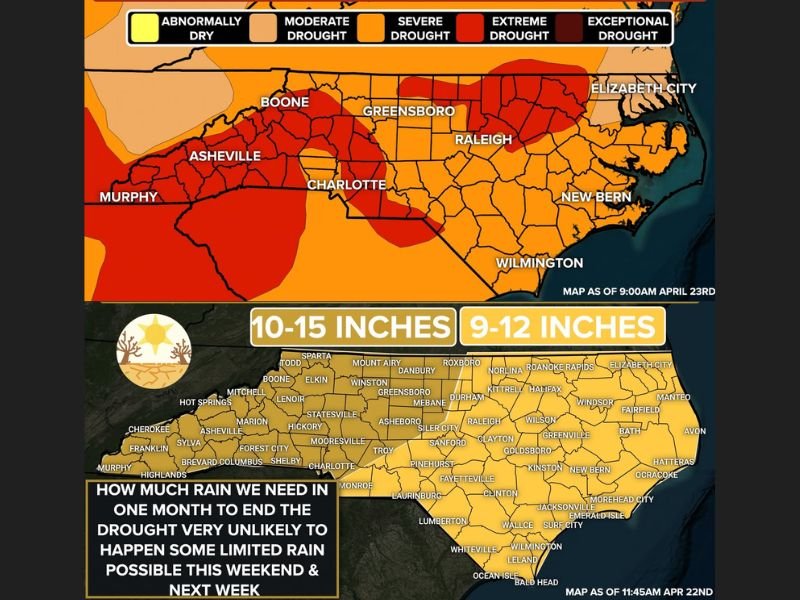
NORTH CAROLINA — The drought across North Carolina is continuing to worsen according to the latest Drought Monitor update, with Extreme Drought now expanded across most of the mountains, foothills, and north and central parts of the state including from Raleigh northward.
This is the worst drought in over 15 years for most areas, with water restrictions already in place across many communities, several wildfires occurring statewide, and streams, creeks, and even small lakes and ponds beginning to dry up. Central and Eastern NC would need 9 to 12 inches of rain in one month to recover, while the Foothills and Mountains need an even more daunting 10 to 15 inches.
Extreme Drought Now Covers Most of the State
The Drought Monitor map for North Carolina shows Extreme Drought blanketing a massive portion of the state. The darkest red Extreme Drought designation covers the western mountains including Asheville, Murphy, and Boone, extends through the Piedmont corridor including Charlotte and Greensboro, and pushes eastward from Raleigh northward through much of the northern tier of the state.
Severe Drought covers additional areas surrounding the Extreme zone, while only the far eastern coastal communities near New Bern and Wilmington remain in lower drought categories. The statewide picture represents a dramatic and continuing deterioration of drought conditions across virtually every region of North Carolina.
Mountains and Foothills Need 10-15 Inches of Rain in One Month
The rainfall deficit needed to end the drought across North Carolina is staggering. The Foothills and Mountain communities including Asheville, Boone, and surrounding areas would need 10 to 15 inches of rain falling within a single month to return to normal moisture levels, a virtually impossible scenario under any realistic forecast.
Central and Eastern North Carolina communities including Charlotte, Raleigh, Greensboro, and surrounding areas face a slightly lower but still enormous deficit of 9 to 12 inches needed in one month. Forecasters acknowledge this level of rainfall recovery is very unlikely, meaning drought conditions are expected to persist and potentially continue worsening across the state for the foreseeable future.
Water Restrictions, Wildfires, and Drying Water Bodies Signal Crisis
The real-world impacts of North Carolina’s historic drought are already being felt broadly across the state. Water restrictions have been put in place for many areas over the past week as municipalities work to manage rapidly declining reservoir and groundwater levels. Several wildfires have broken out across the state as critically dry vegetation creates ideal conditions for fire spread under gusty winds.
Stream and creek flows continue to decrease across the state, with some smaller water bodies beginning to dry up entirely. The combination of these impacts represents a genuine and worsening water crisis across North Carolina that will not be quickly resolved even with the return of more active rainfall patterns.
Limited Rain Possible This Weekend but Not Nearly Enough
Some limited rainfall is possible this weekend across North Carolina, with scattered showers or an isolated storm providing at least some moisture to the parched landscape. While any rain is welcome given current conditions, forecasters are clear that weekend totals will fall far short of what is needed to make a meaningful dent in the historic drought deficit across the state.
There are some signs of a pattern change that could bring more frequent rain opportunities in the coming weeks, which would at least help reduce the elevated wildfire danger even if full drought recovery remains a distant prospect. Stay with NapervilleLocal.com for the latest weather updates and local forecast coverage.

I’ve lived in Naperville long enough to see how quickly our community changes — from new developments downtown to sudden shifts in our Midwest weather. Reporting on Naperville news and daily forecasts gives me the chance to keep neighbors informed about what really matters. My goal is simple: deliver clear, timely updates so you always know what’s happening in our city and what to expect from the skies above.