
Extreme Drought Worsening Across North Carolina Including Raleigh Durham Winston-Salem and Charlotte With 7 to 12 Inches of Rain Needed to End Crisis
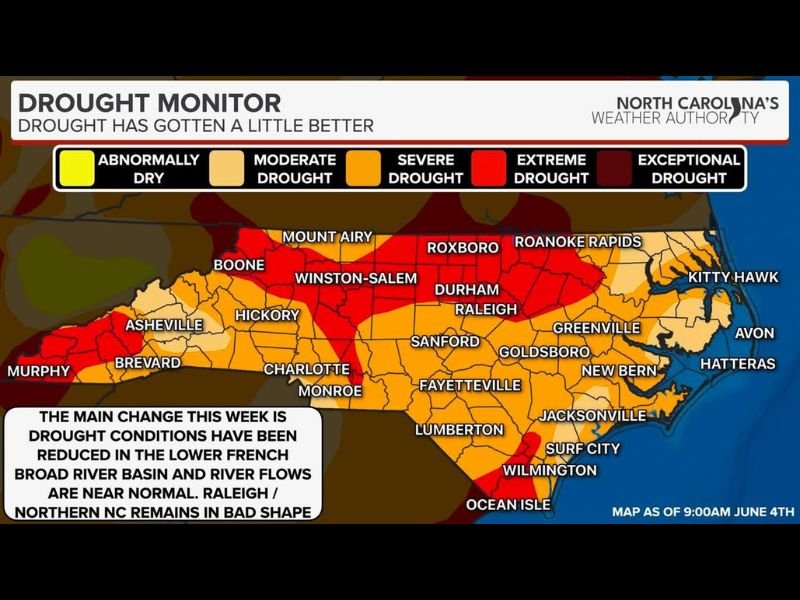
NORTH CAROLINA — Extreme drought conditions are persisting and expected to worsen across North Carolina over the next seven days, with over 31 percent of the state locked in Extreme Drought designation and little to no meaningful rain in the forecast. North and central North Carolina communities including Raleigh, Durham, Roxboro, Winston-Salem, and Roanoke Rapids are being hit the hardest, with Raleigh sitting 50 percent below normal rainfall totals.
Falls Lake, Raleigh’s primary drinking water source, continues to decline as the dry pattern shows no signs of breaking in the near term.
Extreme Drought Covers More Than 31 Percent of the State With No Relief Ahead
The drought monitor map shows deep red Extreme Drought coverage blanketing a wide swath of central and north-central North Carolina, stretching from the Boone and Asheville area eastward through Winston-Salem, Durham, Raleigh, Roxboro, and Roanoke Rapids. While some modest improvement has been noted in the French Broad River basin near Asheville where stream flows have returned closer to normal, the rest of the state is not seeing similar progress.
Hot and dry conditions are expected to dominate the forecast for the foreseeable future, making any significant drought recovery unlikely in the coming week.
7 to 12 Inches of Rain Needed Within One Month to End the Drought
The North Carolina Weather Authority rainfall deficit maps show that most areas across the state would need between 7 and 10 inches of rain within one month to fully eliminate drought conditions, while the hardest-hit eastern and central counties need 9 to 12 inches to recover completely. These are extraordinary rainfall totals that would cause serious flooding if they arrived all at once rather than spread over multiple rainfall events.
The realistic outlook for achieving those totals within the next 30 days is very low given current pattern forecasts.
Falls Lake Declining as Hot and Dry Pattern Expected to Continue
The ongoing decline of Falls Lake is a direct consequence of the rainfall deficit gripping central North Carolina, and water resource managers are closely monitoring levels as the dry stretch extends further. Residents across drought-affected communities are encouraged to conserve water and follow any local restrictions already in place. Rain chances will be monitored daily for any signs of pattern change. Stay with NapervilleLocal.com for the latest weather updates and local forecast coverage.

I’ve lived in Naperville long enough to see how quickly our community changes — from new developments downtown to sudden shifts in our Midwest weather. Reporting on Naperville news and daily forecasts gives me the chance to keep neighbors informed about what really matters. My goal is simple: deliver clear, timely updates so you always know what’s happening in our city and what to expect from the skies above.