
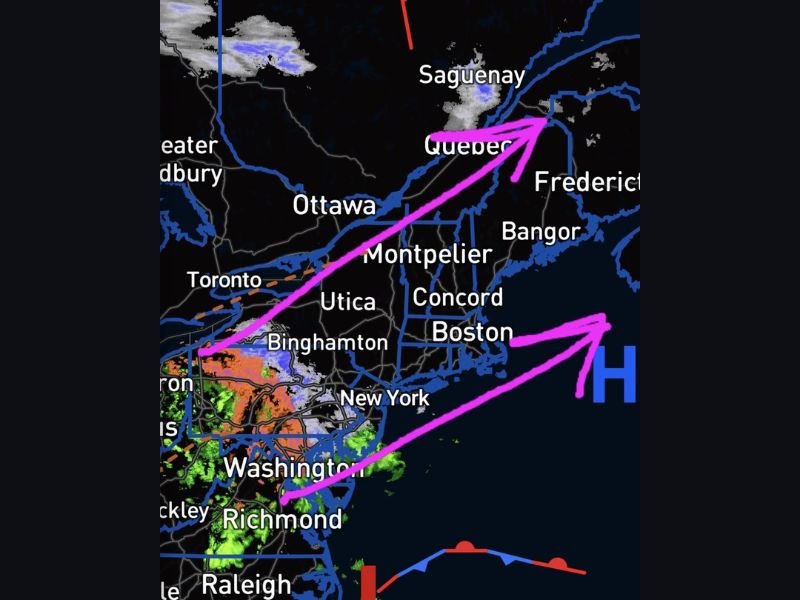
Icing Threat Builds From New York to Boston as Southwest System Pushes Toward Quebec, Making for a Messy Southern New England Commute
NEW ENGLAND — A developing weather system moving out of the southwest is set to spread precipitation into the Northeast later this morning and early afternoon, potentially creating slick travel conditions from New York City to Boston before pushing north toward Montpelier, Ottawa and Quebec.
Early-day chills are giving way to increasing cloud cover as moisture lifts northeast from the Mid-Atlantic. Radar imagery shows widespread precipitation extending from Washington, D.C., and Richmond northward through Binghamton and Utica, with the system tracking toward Boston and southern New England by later today.
Icing Possible in Southern New England
Forecasters indicate that southern New England may experience a brief period of icing later this afternoon and evening as the rain/snow line advances northward.
Areas including New York City, Hartford, Providence and Boston could see mixed precipitation during the transition. While not expected to be a prolonged event, even a short window of freezing rain or sleet could make roads and sidewalks slick, especially during the evening commute.
The setup suggests precipitation will initially fall into colder air near the surface before warmer air aloft gradually shifts north, changing snow or freezing rain to plain rain in many locations.
System Lifts Toward Quebec
As the afternoon progresses, the system is projected to continue lifting northeast through Concord and Montpelier, eventually pushing into Quebec and Saguenay.
The northward progression of the rain/snow line means areas farther north could remain wintry longer, while southern coastal cities transition to rain more quickly.
Travelers along major corridors such as I-95 between New York and Boston and I-89 through Vermont should be prepared for changing conditions.
Tricky Evening Commute Ahead
The most significant travel impacts are expected during the late afternoon and evening hours, particularly where surface temperatures remain near or below freezing as precipitation begins.
Drivers are encouraged to allow extra time and monitor local forecasts for updates on icing potential.
While the system is not expected to bring widespread heavy snow, the combination of light icing and changing precipitation types could create localized hazards before conditions gradually improve overnight.
For ongoing regional weather updates and detailed forecasts, stay connected with NapervilleLocal.com.

I’ve lived in Naperville long enough to see how quickly our community changes — from new developments downtown to sudden shifts in our Midwest weather. Reporting on Naperville news and daily forecasts gives me the chance to keep neighbors informed about what really matters. My goal is simple: deliver clear, timely updates so you always know what’s happening in our city and what to expect from the skies above.