
Worst Spring Drought in US History Gripping 80% of the Nation as of April 2026 Surpassing Even the Dust Bowl With Florida Among the Hardest Hit States
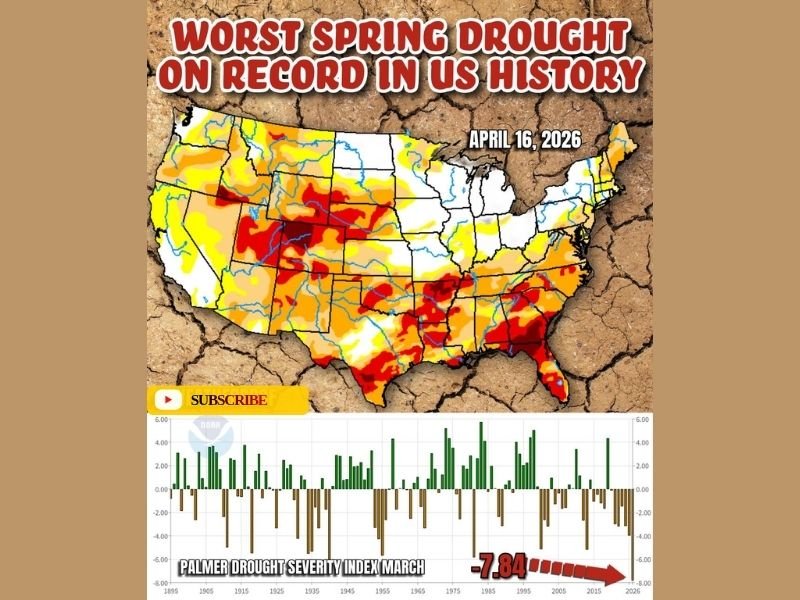
UNITED STATES — The spring drought gripping the United States as of April 16, 2026 has officially become the worst spring drought recorded in American history, surpassing records dating all the way back to the 1890s and even exceeding the infamous Dust Bowl springs of the 1930s. Approximately 80% of the United States is currently experiencing drought conditions, with 40% of the nation sitting in severe drought or worse. The only comparable period on record was the summer of 1934, near the absolute peak of the Dust Bowl era.
Historic Palmer Drought Severity Index Tells the Story
The Palmer Drought Severity Index for March 2026 has plunged to a staggering reading of negative 7.84, a figure that places the current spring drought in historically unprecedented territory when measured against data stretching back to 1895. The index chart clearly shows the current reading as the lowest or near lowest value recorded across the entire 130-year dataset.
This single number captures just how extreme and widespread the current drought conditions have become across the continental United States. No spring on record has produced soil moisture deficits of this magnitude across such a broad geographic area.
80 Percent of the US Currently in Drought Conditions
The drought map dated April 16, 2026 paints a sobering picture of conditions across virtually the entire country. The most intense and darkest red drought designations are concentrated across the central Plains, the Southwest, portions of the Southeast, and the Gulf Coast region.
The drought footprint stretches from the Pacific Coast eastward through the Rockies, Great Plains, Midwest, and into the Southeast with very few areas of the continental US escaping some level of dryness. Only portions of the upper Great Lakes and parts of the Pacific Northwest show relatively normal conditions compared to the rest of the drought-stricken nation.
Florida Among the Worst Drought Areas in the Nation
Florida stands out as one of the hardest hit states in the entire country, with some of the most severe drought designations on the map concentrated across the Sunshine State. The combination of below-normal rainfall and record warmth has been particularly damaging to Florida’s soil moisture levels, pushing the state into some of the worst drought conditions seen anywhere in the nation.
The severe drought conditions across Florida raise significant concerns for wildfire risk, water supply, agriculture, and ecosystem health as the state heads deeper into what is already shaping up to be a challenging spring and summer season.
Record Warmth Accelerating Drought Beyond Just Rainfall Deficits
Forecasters note that this drought is not solely the product of a lack of rainfall. The warmest year on record so far for much of the nation is playing an equally significant role by accelerating evaporation of soil moisture at a rate that even above-normal rainfall would struggle to overcome.
The combination of rainfall deficits and record evaporation rates is pushing drought conditions deeper and faster than historical drought events driven by precipitation alone. Copious and sustained rainfall across multiple weeks would be needed to begin making a meaningful dent in the current moisture deficit across most of the affected regions.
Wildfire Season Concerns Grow With Drought at Historic Levels
With drought at historically unprecedented levels heading into the traditional spring and summer wildfire season, concerns are mounting significantly for fire conditions across large portions of the country. Dry vegetation, depleted soil moisture, and the ongoing heat create a recipe for an elevated and potentially severe wildfire season across multiple regions.
Forecasters and fire weather officials are closely monitoring the situation as the season progresses, with the hope that significant rainfall events in the coming weeks can begin to ease the historic drought conditions before fire season reaches its peak intensity. Stay with NapervilleLocal.com for the latest weather updates and local forecast coverage.
I’ve lived in Naperville long enough to see how quickly our community changes — from new developments downtown to sudden shifts in our Midwest weather. Reporting on Naperville news and daily forecasts gives me the chance to keep neighbors informed about what really matters. My goal is simple: deliver clear, timely updates so you always know what’s happening in our city and what to expect from the skies above.