
Florida Faces Widespread Freezing Temperatures Friday Morning as Cold Air Pushes Lows Into the 20s and Low 30s
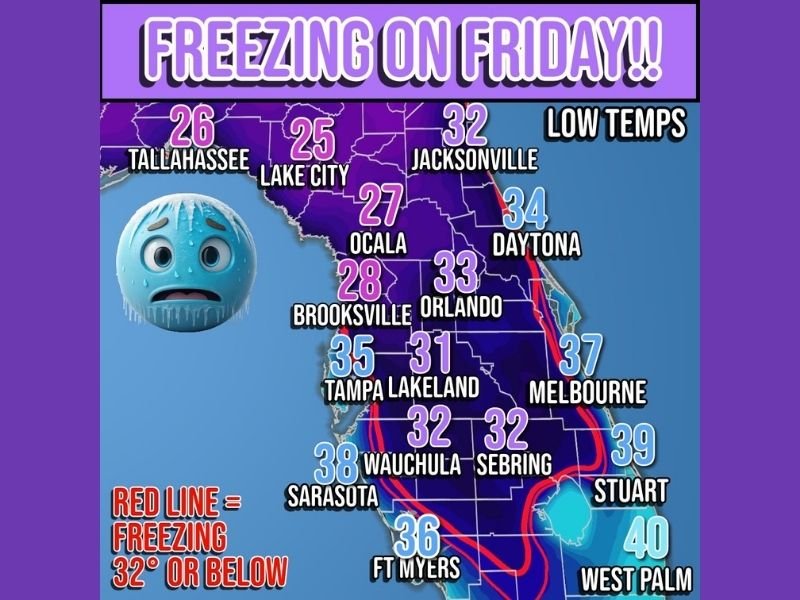
Florida — A significant cold outbreak is set to impact large portions of Florida early Friday morning, with actual air temperatures — not wind chills — dropping to or below the freezing mark across much of the state. Forecast data shows that many inland and northern Florida communities could wake up to lows in the mid-20s to low-30s, a rare and potentially damaging event for a region not accustomed to sustained freezes.
Meteorologists emphasize that this is a true freeze, meaning temperatures themselves will fall to 32 degrees or colder, posing risks to plants, pets, agriculture, and exposed plumbing.
Freeze Line Expands Across Much of the State
The forecast graphic highlights a red freeze line, marking areas where Friday morning temperatures are expected to reach 32 degrees or lower. Cities inside this line — particularly east of Interstate 75 and west of Interstate 95 — are most at risk for freezing conditions.
Communities expected to reach or fall below freezing include:
- Tallahassee: around 26°
- Lake City: near 25°
- Ocala: around 27°
- Brooksville: near 28°
- Lakeland: around 31°
- Orlando: near 33°
- Jacksonville: around 32°
These temperatures represent actual lows, not wind-adjusted values.
Central and Interior Florida Especially Vulnerable
While coastal areas may remain slightly warmer due to ocean influence, central and interior Florida are expected to experience the coldest conditions. Areas such as Sebring, Wauchula, and inland portions of central Florida are forecast to hover right at or just below freezing. Southern coastal cities such as Sarasota, Fort Myers, and Melbourne may stay above freezing, but even these areas will feel unusually cold for January.
Why This Freeze Is Concerning
Freezing temperatures are uncommon across much of Florida, particularly outside the Panhandle and far north. When lows dip into the 20s:
- Sensitive vegetation and crops can be damaged
- Outdoor plumbing may freeze
- Pets and animals left outdoors are at risk
- Heating demand spikes in homes not designed for extended cold
This type of freeze often has greater impact because infrastructure and landscaping are not built for repeated cold exposure.
Timing: When the Cold Hits Hardest
Temperatures are expected to drop rapidly Thursday night, with the coldest readings occurring just before sunrise Friday morning. Calm or light winds overnight could allow temperatures to fall efficiently, increasing freeze coverage.
Residents should not assume brief cold — some areas may remain near freezing for several hours.
What Residents Should Do Now
Officials urge residents in affected areas to:
- Cover or bring in plants
- Bring pets indoors
- Protect exposed pipes
- Check on elderly neighbors
- Prepare for cold-sensitive equipment issues
Even short-duration freezes can cause damage when temperatures fall into the mid-20s.
Why This Matters Beyond Florida
This freeze is part of a larger winter pattern impacting the southern United States, demonstrating how Arctic air masses can push deep into typically warm regions. For Midwest readers, it highlights how winter weather behaves differently across regions, with southern states often facing higher impacts from cold events due to lack of cold-weather preparation. NapervilleLocal.com will continue providing accurate, location-verified national weather updates when significant systems impact large populations.

I’ve lived in Naperville long enough to see how quickly our community changes — from new developments downtown to sudden shifts in our Midwest weather. Reporting on Naperville news and daily forecasts gives me the chance to keep neighbors informed about what really matters. My goal is simple: deliver clear, timely updates so you always know what’s happening in our city and what to expect from the skies above.