
Florida Needs 3 to 4 Feet of Rain Over the Next 5 Months to Eliminate Historic Drought Across Miami Orlando Tampa Jacksonville and North Port
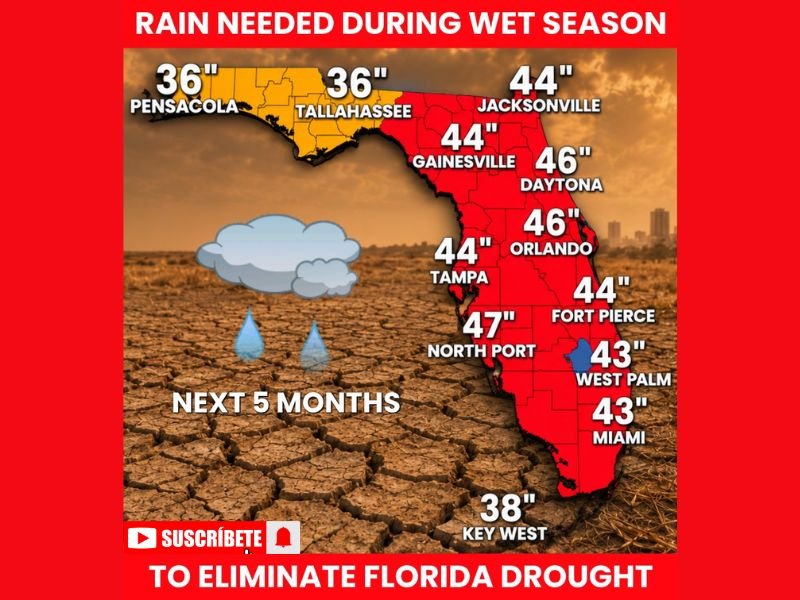
FLORIDA — Florida is facing a staggering rainfall deficit as it enters rainy season, with the state needing between 3 and 4 feet of rain over the next five months just to eliminate the historic drought gripping the region. The amounts needed vary by location but are extraordinary across the board, ranging from 36 inches across the Panhandle to as high as 47 inches around North Port on the southwest coast.
While achieving these totals is possible during a robust rainy season, it is far from guaranteed and will require near or above normal rainfall consistently through the wet season months. The good news is that El Nino fall and winter patterns are historically wet for Florida, meaning any rainfall deficits that linger after summer could potentially be addressed as the season transitions into fall and winter.
Central and South Florida Face the Largest Deficits With 43 to 47 Inches Needed
The deepest drought deficits are concentrated across Central and South Florida, where rainfall needs are among the highest in the state. North Port leads all locations at 47 inches needed, followed by Orlando and Daytona Beach both requiring 46 inches and Jacksonville and Gainesville each needing 44 inches over the next five months.
Tampa sits at 44 inches needed while Fort Pierce matches that same mark along the Treasure Coast. Miami and West Palm Beach both require 43 inches, confirming that virtually every major population center across the Florida peninsula faces a massive rainfall hole heading into wet season.
Panhandle Communities Face Smaller But Still Significant Deficits at 36 Inches
Northwest Florida communities including Pensacola and Tallahassee face comparatively smaller but still significant deficits, each requiring 36 inches of rainfall over the next five months to recover from drought conditions. Key West sits at 38 inches needed at the southern tip of the state, rounding out a statewide picture that shows no community escaping the drought deficit entirely.
The scale of rainfall needed statewide underscores just how severe and widespread Florida’s current drought situation truly is heading into the 2026 rainy season.
El Nino Fall and Winter Pattern Offers Hope for Lingering Deficit Recovery
While summer rainy season carries the primary opportunity to make a significant dent in Florida’s drought deficit, El Nino fall and winter conditions offer a secondary window for recovery. El Nino historically produces wetter than average conditions across Florida during the fall and winter months, which could help address any remaining deficits that summer rainfall alone does not fully resolve.
Floridians across every region of the state should hope for a generous and active wet season in the months ahead, as the water supply, agricultural, and wildfire risk implications of this historic drought demand a substantial and sustained rainfall recovery. Stay with NapervilleLocal.com for the latest weather updates and local forecast coverage.

I’ve lived in Naperville long enough to see how quickly our community changes — from new developments downtown to sudden shifts in our Midwest weather. Reporting on Naperville news and daily forecasts gives me the chance to keep neighbors informed about what really matters. My goal is simple: deliver clear, timely updates so you always know what’s happening in our city and what to expect from the skies above.