
Meteorologists Warn of Possible “Super El Niño” by Late 2026 as Pacific Ocean Temperatures Could Rise More Than 2°C Above Normal
Pacific Ocean — A new long-range forecast from European seasonal climate models is raising attention among meteorologists, suggesting that a powerful “Super El Niño” event could develop by late summer and fall of 2026, potentially becoming one of the strongest El Niño events recorded.
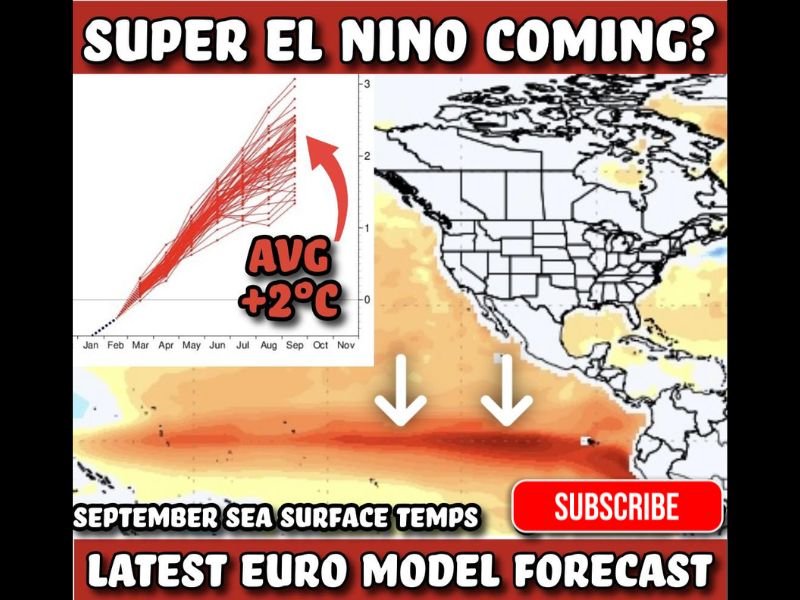
According to the latest projections, sea surface temperatures in the central and eastern Pacific Ocean could climb more than 2°C above average, a threshold often associated with extremely strong El Niño events. If those projections verify, the upcoming system could rank among the top three most intense El Niño patterns on record.
Climate experts say such a development could have major global weather implications, influencing hurricane activity, heat waves, and seasonal storm patterns around the world.
What the Forecast Models Are Showing
European climate models show a steady rise in Pacific Ocean temperatures throughout 2026, with anomalies steadily increasing as the year progresses.
The model projections suggest:
- Ocean temperatures climbing steadily from spring through summer
- Average anomalies reaching around +2°C or higher by late summer and early fall
- A broad area of warm water stretching across the equatorial Pacific
When ocean temperatures reach this level of warming, meteorologists classify the event as a strong or “Super El Niño”, which can significantly alter atmospheric circulation patterns across the globe.
The warming shown in the models appears concentrated along the equatorial Pacific Ocean, which is the primary region where El Niño events develop.
How El Niño Could Affect Weather Around the World
El Niño events occur when warmer-than-average water develops across the Pacific Ocean, changing wind patterns and shifting the jet stream.
Meteorologists say a strong El Niño could influence several major weather patterns, including:
- Reduced Atlantic hurricane activity, as El Niño often disrupts storm formation in the Atlantic basin
- Increased global heat, as warmer ocean waters release additional heat into the atmosphere
- Stronger storm systems and flooding potential in some regions during fall and winter
Climate scientists note that heat currently stored beneath the Pacific Ocean surface during recent La Niña conditions could rise toward the surface, contributing to the projected warming.
If that stored heat is released, it could amplify global temperature records during the 2026–2027 period.
Potential for Record Global Heat
Another major concern surrounding a strong El Niño event is the potential for record-breaking global temperatures.
During previous major El Niño events, such as 1997–1998 and 2015–2016, global temperatures surged as heat from the ocean entered the atmosphere. Meteorologists say a similar scenario could occur again if the forecast warming materializes.
In addition to influencing temperatures, a strong El Niño could also intensify non-tropical weather systems, including winter storms and heavy rainfall events in certain regions.
Why Scientists Are Watching the Forecast Carefully
Despite the dramatic projections, experts emphasize that long-range seasonal forecasts still carry uncertainty, especially when predicting ocean conditions many months in advance.
Climate models can change as new data becomes available, meaning the strength and timing of any El Niño event could shift before it fully develops.
However, the strong warming signal appearing in multiple model projections is drawing attention from meteorologists who monitor global climate patterns. If the projected warming trend continues through the coming months, the world could see one of the most powerful El Niño events in modern climate records by late 2026.
For ongoing coverage of major climate developments and global weather trends affecting the United States and beyond, readers can follow the latest forecast updates and weather reports on NapervilleLocal.com.

I’ve lived in Naperville long enough to see how quickly our community changes — from new developments downtown to sudden shifts in our Midwest weather. Reporting on Naperville news and daily forecasts gives me the chance to keep neighbors informed about what really matters. My goal is simple: deliver clear, timely updates so you always know what’s happening in our city and what to expect from the skies above.